
Artist Lauren Saunders talks us through the new exhibition by Malet Lambert pupils currently at Hull’s Central Library.

Artist Lauren Saunders talks us through the new exhibition by Malet Lambert pupils currently at Hull’s Central Library.

It would appear – according to our ecumenical reservations correspondent – that it was possible to double-book the church even in the 17th century.
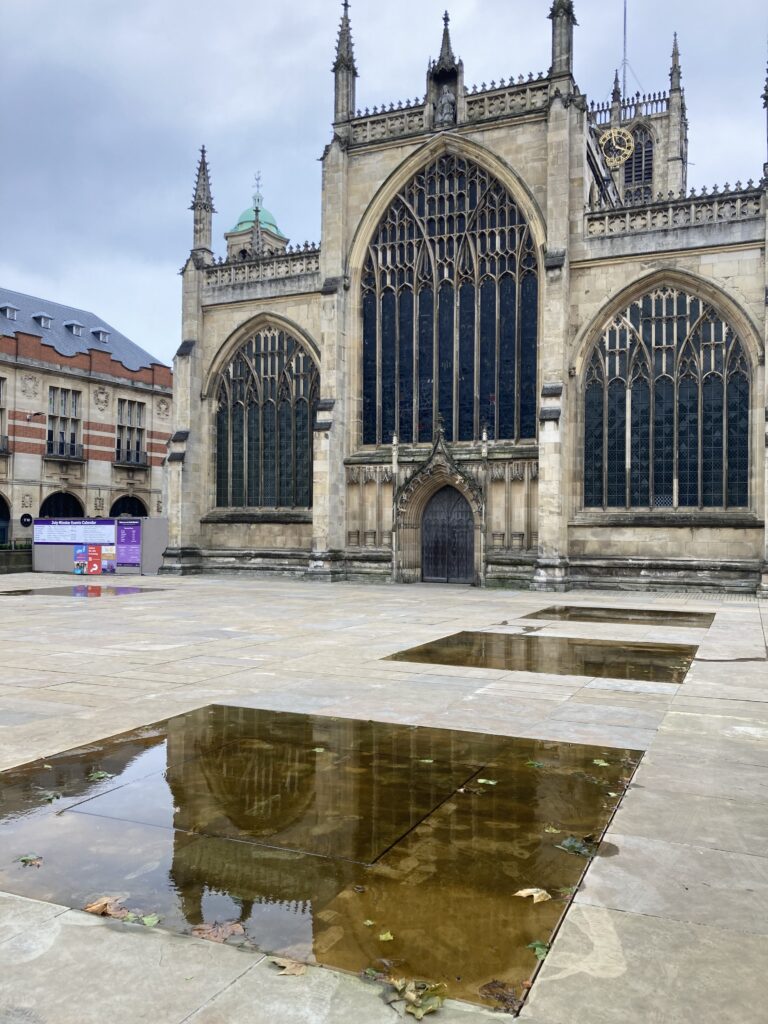
Nearly a decade ago the then Archbishop of York John Sentamu announced historic Holy Trinity Church would be given a new status and renamed Hull Minster. A special rededication service was subsequently held in May 2017 when the Archbishop arrived in the city at the head of a flotilla of boats having sailed along the Humber from Hessle.
The church’s new status coincided with a £4.5m facelift which saw most of the Victorian pews being removed to create a new open multi-use space which has since hosted numerous events including concerts, exhibitions, banquets and talks. Outside, a new cafe was added and most of the Victorian boundary walls were removed as part of a wider transformation of Trinity Square.
Ten years on the space inside the church has become a familiar feature, allowing visitors to take in sweeping views of the interior. However, back in the 1650s things were very different.
When the English Civil War ended in 1651 religion and politics had become intertwined with sectarian cliques appallingly intolerant of each other’s beliefs. This hostile environment spread inside Hull’s Holy Trinity Church.
An ugly dispute first erupted between the vicar William Styles and the church’s Presbyterian preacher John Shawe over which of them should preach on Sunday mornings. Eventually, it had to be settled by the town’s corporation which held an inquiry into the matter.
The corporation – the forerunner to today’s city council – often held meetings in the church and even used to house the town’s first engine. Then a new religious row led to an extraordinary physical sub-division of the church. To accommodate services for members of the staunchly Puritan military garrison based at the nearby Citadel across the River Hull, a wall was built inside the church across the chancel and transepts. This allowed John Shawe to conduct his services in the nave while the garrison’s chaplain John Canne could preach to his soldiers at the east end.
The two congregations entered the church through separate entrances, with Mr Canne’s followers having to climb through a chapel window. As the Puritan troops attracted much hostility from certain figures in the town, it was a way of keeping the peace. Once the congregations were in place simultaneous services were then held on either side of the wall with the words of the two preachers mingling together above the divide.
Angus Young