
Poet and Lord of the High Seas Dean Wilson outlines the life of a remarkable writer who referenced Hull throughout her work.

Poet and Lord of the High Seas Dean Wilson outlines the life of a remarkable writer who referenced Hull throughout her work.

During its centenary year, Burnsy nips in to talk to users of the Deaf Centre about what they get up to in there.

At Curiosity, we like to think we’re not afraid to handle the big questions. Here, our animal ownership correspondent Angus Young takes on a surprisingly important one.
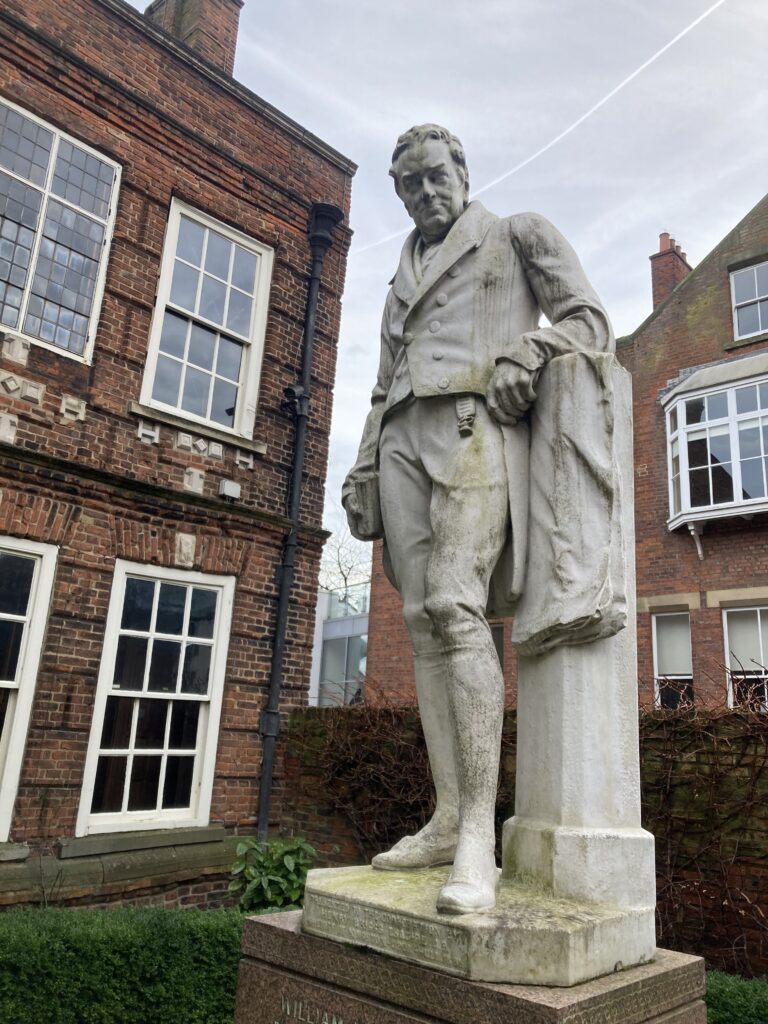
In June 1826 a meeting of like-minded people was held at Old Slaughter’s Coffee House in St. Martin’s Lane in London. The gathering was taking place because of shared determination among those present to change animals’ lives and among their number was an MP.
By then, Hull-born William Wilberforce was best-known for heading an ultimately successful parliamentary campaign to end the British slave trade. However, he also had a common cause with most of those present in the coffee house that day. Wilberforce was convinced of the importance of religion, education, morality and championed numerous related causes and campaigns. Among them was a burgeoning movement to protect animals from human cruelty.
At the time, cruelty to animals was widely accepted by society. Few people kept pets and animals were used for working, food and entertainment while setting dogs on chained bulls or bears was considered a sport. Four years earlier the first-ever law protecting animals had been passed after a campaign by an Irish MP Richard Martin. The legislation applied to horses and cattle. Martin was also present in the coffee house along with Wilberforce and the Reverend Arthur Broome, a vocal animal welfare campaigner and vicar of St. Mary’s in the Bow.
Together, the meeting of 22 people agreed to form a new society dedicated to the prevention of cruelty of animals, later re-named as the RSPCA when Queen Victoria gave her permission for the addition of the prefix ‘Royal’. Wilberforce’s interest in the subject was a long-standing one, prompted by his own religious conviction. He wrote many essays on how to combat the mistreatment of animals, including a fierce condemnation of the practice of bull-fighting. His belief was that both man and animal were of the same origin and, as such, they were both meant to live in a harmonious relationship.
Early campaigns organised by the new society covered animal welfare on farms and animal fighting. Until then and like most large towns, Wilberforce’s birthplace was rife with animal cruelty. Bull-baiting continued to be a regular event at carnivals during Wilberforce’s lifetime while cock-fighting remained a popular pastime. A book printed in Hull in 1761 titled The Gentleman’s or Farmer’s Companion even provided extensive advice on how to buy and breed fighting cocks along with tips on their diet and how to house them in coops fragranced with burnt herbs to protect the birds from mites.
Today, the RSPA hosts an annual Wilberforce Lecture allowing leading figures to talk about the relationship between humans and animals and recently published the Wilberforce Report, mapping out a detailed look at the challenges and opportunities facing animal well-being over the next 25 years. As for pets, it’s known that when Wilberforce married his family home in London became a slightly eccentric place with numerous pets living inside the house, including a cherished rabbit.
Alas, we don’t know the rabbit’s name.

Author and musician Martin Harwood met Ally-mai at the Big Malarkey and she put him through his quizzing paces.

Maxine works at St Mike’s Youth Project on Orchard Park. Like everyone else, she loves the place and here she tells us why.

Unless you’re Catholic, you may never have set foot in an undeniably beautiful building right in the city centre. Our tabernacle appreciation correspondent Angus Young had a shufty.
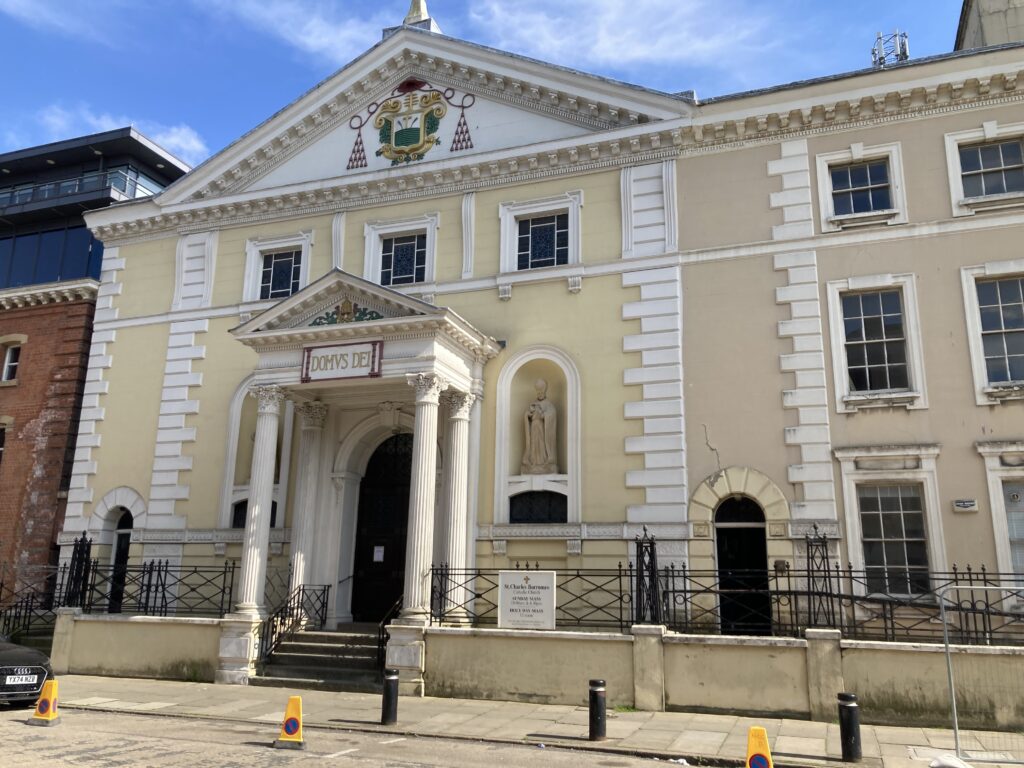
I was prompted to pose this question after reading a new planning application submitted to Hull City Council. Part of it seeks listed building consent to demolish an internal wall between the front and rear reception rooms in the presbytery of St Charles Borromeo Church in Jarratt Street to create a new larger community space. The presbytery was created by modifying two early 19th century town houses to provide a home for several priests, a deacon and a housekeeper required for the new Roman Catholic church built next door in 1829.
Today it is occupied by just one priest Father Phil Cunnah who divides his time between St Charles Borromeo in Hull and two churches in Holderness – Saint Mary and Saint Joseph in Hedon and Saint Peter and Saint John Fisher in Withernsea. As for his official home, it’s now regarded as being too large for just a single priest serving several parishes hence the current conversion plans. The idea behind creating a new larger internal space is part of an initiative to host more public tours of the church highlighting its stunning art and architecture.
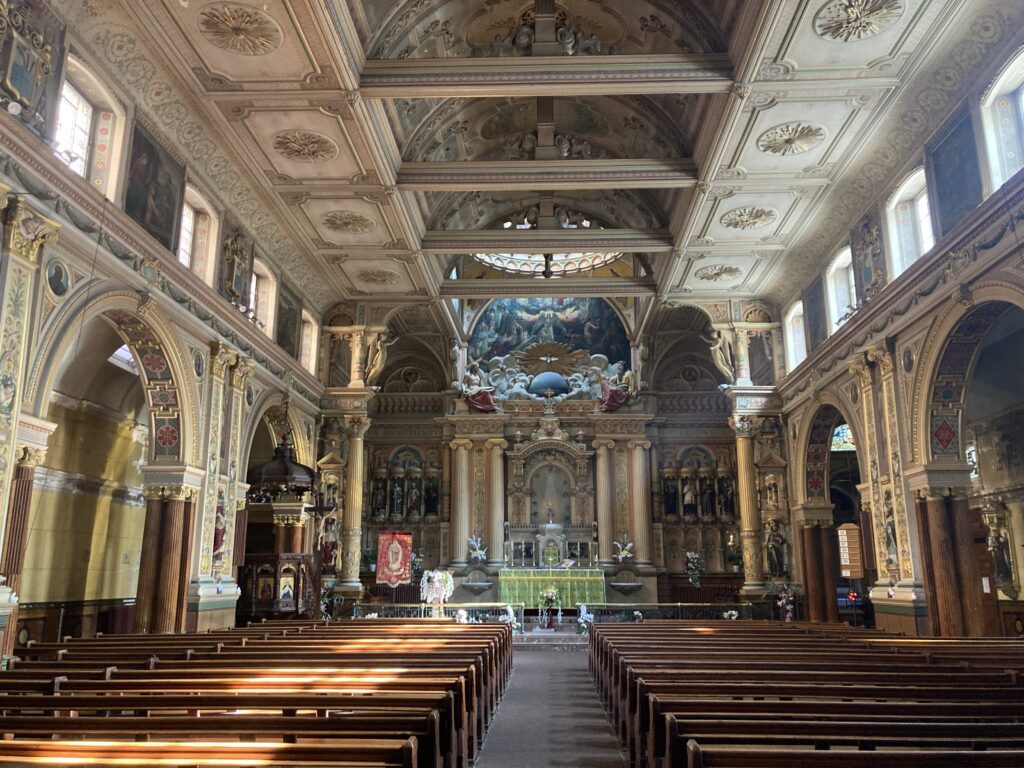
Many places in Hull lay claim to be the city’s best kept secret but, in my humble opinion, none come close to St Charles because unless you happen to be Catholic the magnificent interior remains largely unseen and unknown. Father Phil says he’s hoping to change that by making the church more accessible and by encouraging more visitors to enjoy it.
Originally, the church’s walls were largely bare but the whole interior was painted and decorated in 1841. Just over 45 years later a new senior priest William Sullivan was appointed with grand plans to upgrade the building which was now the focal point for a rapidly expanding Catholic community living in the city centre.
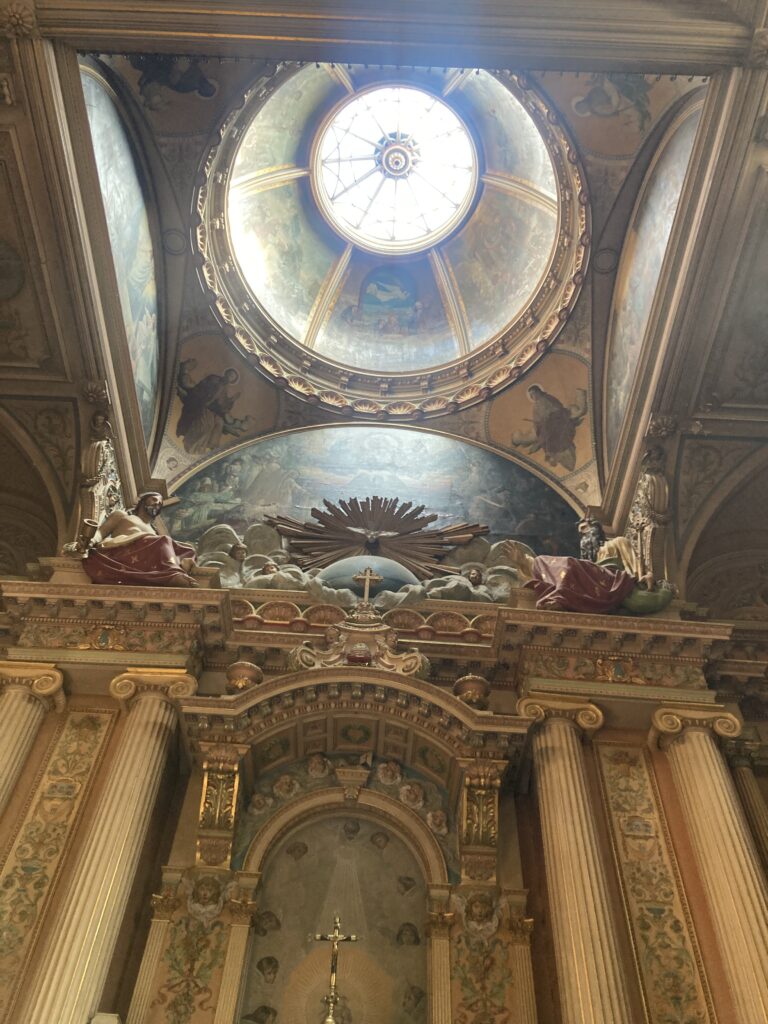
Previously an oblong hall with little decoration, it was transformed at a cost of £3,000 in the style of the Italian Renaissance with many new features being reproduced from the great churches of Rome. The architects responsible were a local firm, Smith Brodrick and Lowther, but the artist behind many of the paintings and decorative work still one show today hailed from Germany. Heinrich Immen-Kamp had moved to Hull and was living in nearby Wright Street at the time of the facelift in the early 1890s. A contemporary newspaper report describes him as a “decorator of much taste and capacity” who had turned the church into “one of the prettiest chapels in England”.
Immen-Kamp is now a largely forgotten figure in Hull but his work at St. Charles remains his lasting legacy. Virtually every wall carries some of his decorative flourishes. Father Cunnah’s predecessor, the Very Rev. Canon Michael Loughlin, said: “St. Charles’ is a magnificent example of flamboyant Austrian rococo and Italian Baroque architecture, more reminiscent of the sunny climes of Italy or Spain than the north of England. “This beauty and splendour in the heart of Hull is one of the city’s best-kept secrets.”
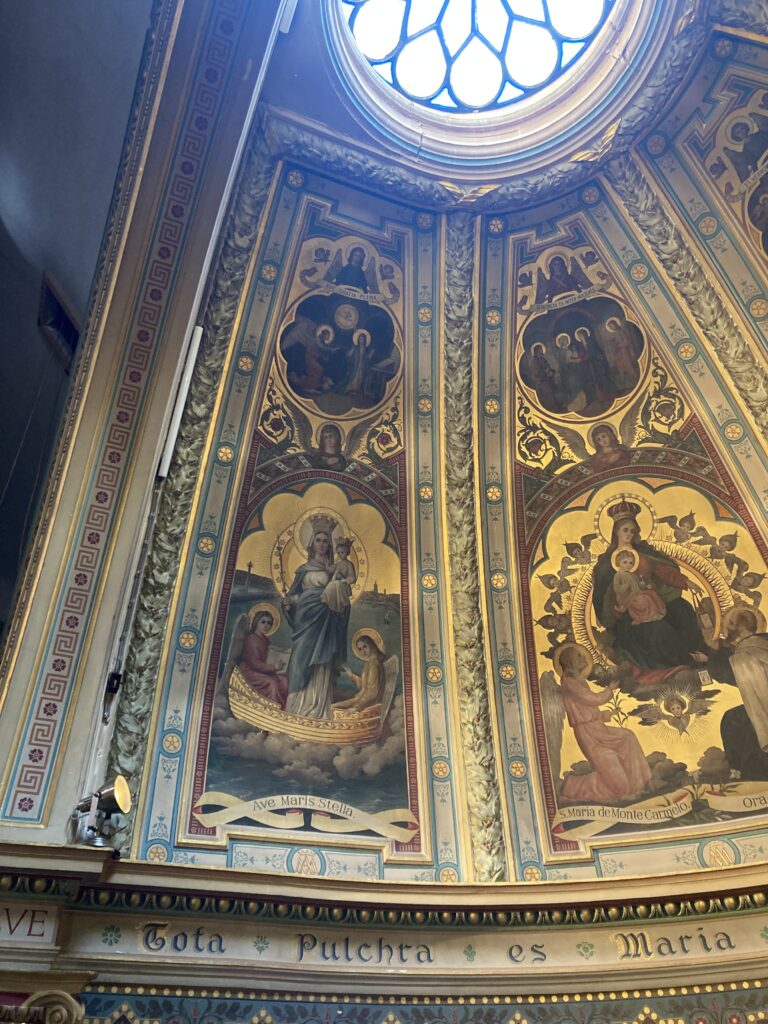
As well as the visual overload, there is a huge chunk of religious history to digest if you happen to spend time in the church. My personal favourite story relates to a painting of the Nativity hung in the north aisle which was brought to Hull in 1798 by a French priest who smuggled it out of his home country to prevent it being destroyed by revolutionaries. The priest reputedly hid the painting in a cart full of hay but was stopped on his journey by soldiers who thrust bayonets into the hay looking for hidden goods. Somehow the painting wasn’t discovered but it was damaged and still features a tear in the fabric made by a bayonet blade.
St. Charles will be opening to the public for guided tours as part of this year’s Heritage Open Days weekend in September.

When we asked theatre type Andy Pearson this question we didn’t expect him to pick something from his own house. Fair does, though, it is a good one.

Sports writer Tony Collins takes a look at a true worldwide boxing pioneer, who came from Cott.

Jason leads a team at Ideal Heating, so he would seem ideally placed to answer this question.

Here, as our environmental oversight correspondent Angus Young reports, is a new way for you to help sort the planet out.
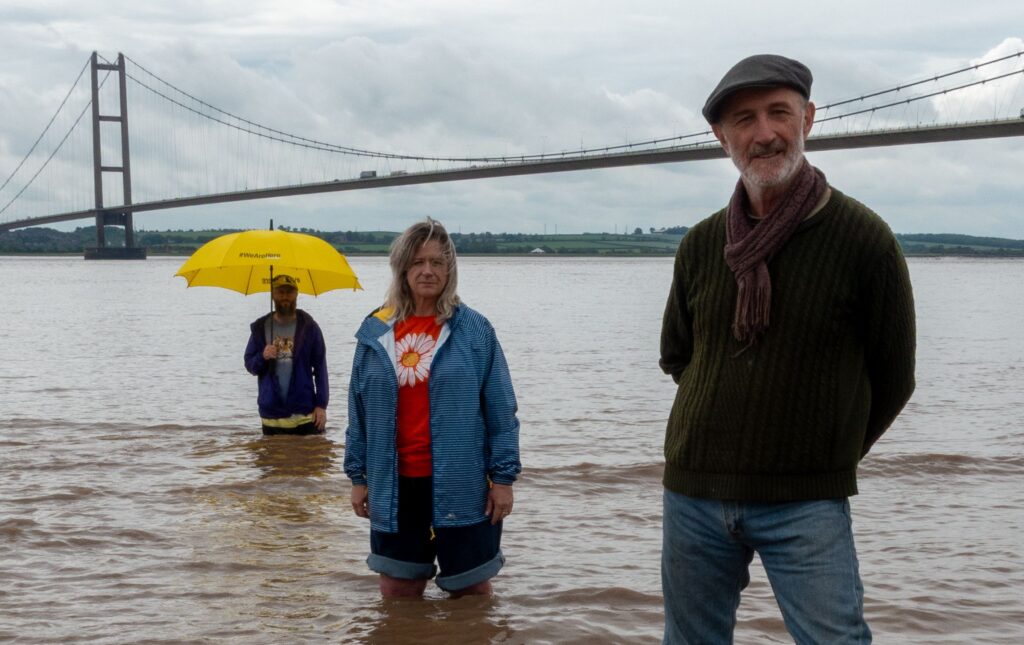
The simple answer to today’s Curiosity question is anyone and everyone. Launched recently, the Rights Community Action project aims to encourage local people to get involved in a citywide response to issues around climate change. Organisers say it’s a chance for ordinary people to be part of the solution by using their passion and local knowledge to help Hull thrive in a changing world. The starting point is simple; people living with climate risk should be involved in decisions that affect them.
Funded by the National Lottery’s Community Fund, the Community Climate Stewards project will run for the next five years with a focus on three areas on the East Coast of England – Hull, Skegness and Lowestoft. Kate Macdonald, joint coordinator of the project in Hull, said that local people know their communities best, so it makes sense to involve them in decisions about their future. “Local people know where flood water gathers in their areas. They know where the green spaces are that need protecting. More than that, they have a stake in their neighbourhoods – it’s where they work and shop and where their children go to school but all too often people think that decision making is out of their control. We want to change that – to recognise that local people are the experts and to show them how they can get involved in these important decisions that are shaping their communities’ futures.”
Louis Dorton, joint coordinator, added: “I love Hull – the land, the people, the rivers. For me this project is about collaboration, across political, economic and even species divides – we all need to be involved in decisions about our future. A lot of us have had our heads in the sand when it comes to floods, droughts, housing, food and all these connected issues. This project is about our right, as the people who live here, to look after the place we call home, building skills and processes to survive, thrive, adapt and be healthy, and to shape the world we want to live in.”
The first opportunity to put this into practice comes as Hull City Council starts a public consultation on its new Local Plan, which intends to set out a long-term vision of how the city will develop and change over the next 15 years, including where new homes, jobs and infrastructure should be located. As part of the consultation, Community Climate Stewards will be encouraging local residents to get involved in not only looking at the big picture but also helping to shape how their local areas can respond to climate change.
One example of this is already taking place in North Bransholme where residents are exploring ideas on how their neighbourhood can adapt to future climate challenges. Affordable low-carbon housing, local food growing and community energy generation are just three ideas being discussed.
Group member Andrew Dorton said: “We really want it to be affordable, and if people are involved in building their own home, that’s one way to lessen the cost. We would also want to incorporate as much electricity generation as possible to make the houses environmentally efficient and just have one area for parking, rather than cars being all over the place.”
The project officially started a couple of days ago and to help local people get involved, the project plans to run a series of community mapping workshops around the city. The first took place on August 8 and 10 at Ground Gallery on Beverley Road, near the city centre, with residents invited to take a walk around the local area and think about and discuss the community’s environmental resources and challenges, share local knowledge and identify priorities for the future.