
Seeing as it’s Halloween, we thought we’d get Burnsy to sink his fangs into a garlic-soaked chat to world-leading Dracula expert Prof. Catherine Wynne of the Uni of Hull.

Seeing as it’s Halloween, we thought we’d get Burnsy to sink his fangs into a garlic-soaked chat to world-leading Dracula expert Prof. Catherine Wynne of the Uni of Hull.

Artist Lucy Brooke (and her friend Little Lucy) of the feminine Urge Collective attempts to both define and blur a line.

Dr Rebecca Hargreaves is a top scientist working for the Daisy Appeal and here she outlines her route to success in her chosen field.

How does him from the radio wandering round Germany herald good news for the region? Our rail technology correspondent Angus Young finds out.

You might know him from his days at BBC Radio Humberside or as a current presenter on Hull’s 107AM community radio station. So what was DJ Andy Comfort doing hanging about in Berlin recently?
A clue comes in his other line of work as features editor at RAIL magazine. “The simple answer is I was looking at trains as part of my job and, yes, it’s a long way to go to look at trains, but these are all new trains and new rail technology on show at Europe’s biggest public transport exhibition, InnoTrans,” Andy revealed. In other words, the trip was a train buff’s’ version of a busman’s holiday.
“InnoTrains is huge. It has an exhibition area of 200,000 square metres with over 3,000 exhibitors from 59 countries, including the UK; there are 42 halls and around two miles of outdoor tracks with 113 trains and vehicles on them,” he said.

As a self-confessed trainspotter, you can tell Andy loves his stats. However, there was also another special reason why he was there and it’s got a link to this neck of the woods. He explained: “One of those trains was the new London Underground Piccadilly line train due to enter service next year. Of the 94 new trains being built, 75 are being assembled at the Siemens Mobility factory in Goole, East Yorkshire.
“The order is supporting up to 1,000 jobs at the site, with another estimated 1,700 jobs in the local supply chain, so good news for East Yorkshire. What is special about these new tube trains – and it’s one of the reasons that they are late coming off the production line – is that they will be London’s first deep-level tube trains to have air-conditioning.
“When I say deep-level tubes, I mean the Bakerloo, Central, Jubilee, Northern, Piccadilly, Victoria and Waterloo and City lines. Because the tunnels are so narrow in diameter, there has never been any room to install air-conditioning on previous trains, but this is why the new trains are described as the most technologically advanced in the world.

“The designers made space for air-con by ‘floating’ some of the carriages between fewer wheel bogies – all clever stuff and happening in Goole. Transport for London is talking to Siemens Mobility about confirming an order for similar air-conditioned trains for the Bakerloo line, which should keep people in work at the Goole site.
“As for the new train, I had a walk through – because you can, from end to end. There are no doors between carriages, which makes it brighter, more spacious and safer. The seats are a bit hard but the train is a vast improvement overall with new digital information screens and, yes, you’ll be pleased to know – it is cooler.”
Cool from Goole? We like it. So if you’re down in London next year, head for the Piccadilly line and try one of the new trains from East Yorkshire yourself.

Hull Tour Guide Paul Schofield takes a look at (and behind) the figure of a well-known figure in the middle of the city.

For those wondering what kids worry about, this question asked at the Big Malarkey by Korinna of HU5 is a perfect insight.

Our unlikely history correspondent Angus Young finds some of the biggest hits in pop began life on top of a local shop.
Search online for famous UK music scene locations and some familiar places pop up. There’s the zebra crossing in Abbey Road made famous by The Beatles, Salford Lads’ Club courtesy of The Smiths and London’s Berwick Street as featured on the cover of Oasis’ What’s The Story Morning Glory?
Here in Hull we also have our fair share of contenders. The Adelphi Club in De Grey Street needs no introduction, a giant sculpted guitar in East Park commemorates Mick Ronson’s days as a council gardener there while the shop which inspired Tracey Thorn and Ben Watt to call themselves Everything But The Girl still stands on Beverley Road although it’s now a home to the Hull & Humber Chamber of Commerce. However, one address in the city and its place in global pop history remains largely overlooked.
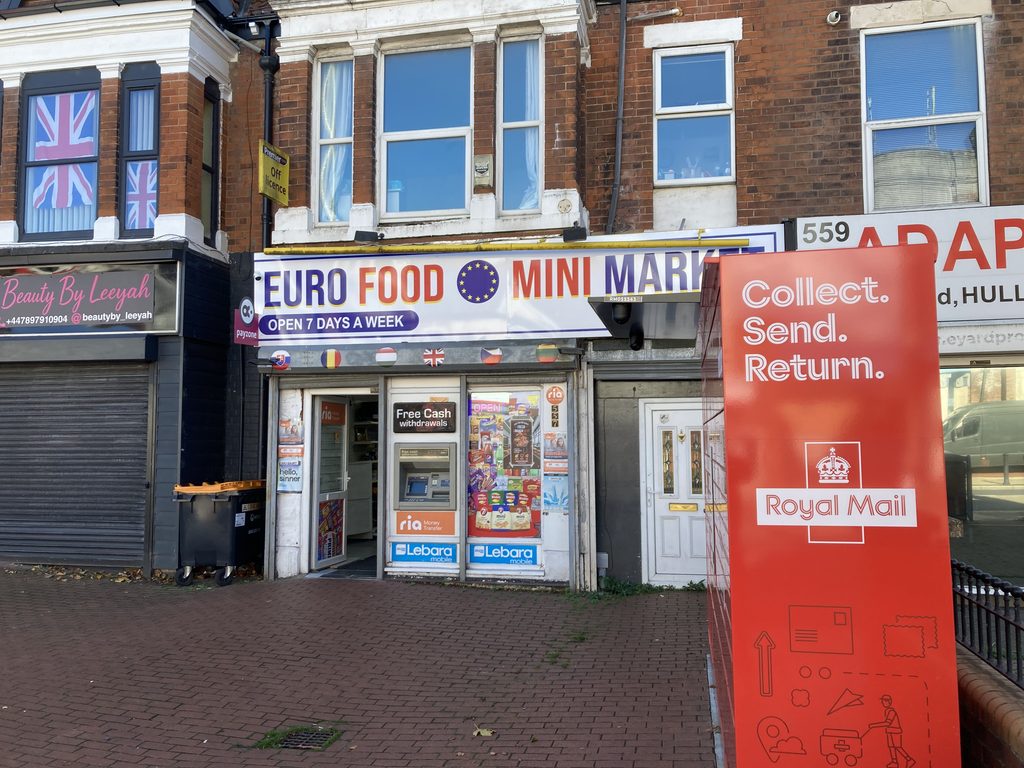
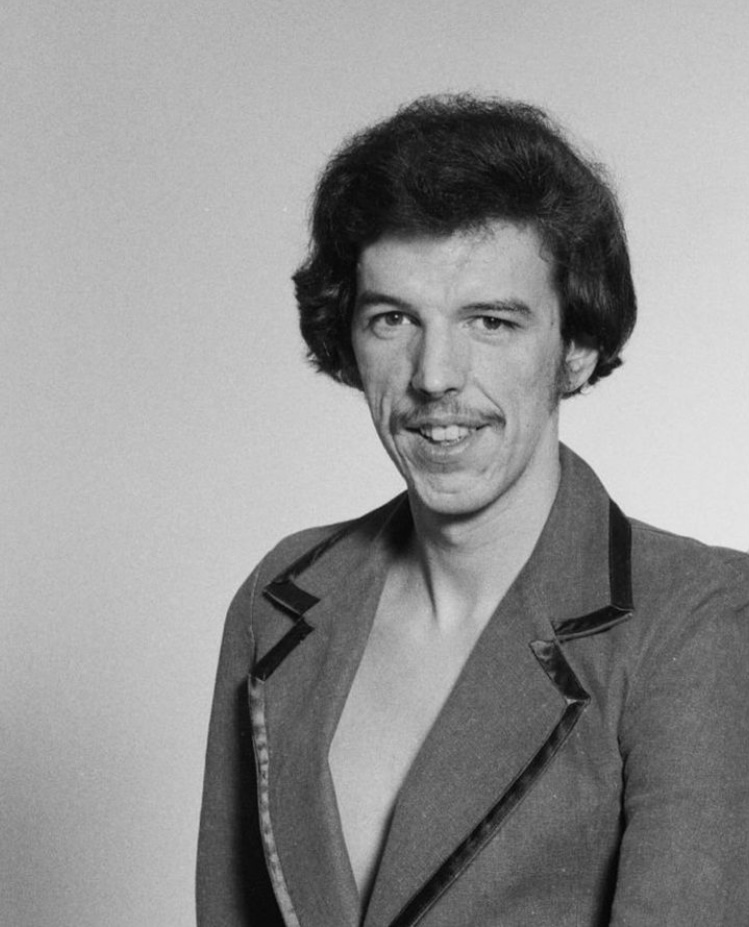
Today, the first-floor flat in Anlaby Road sits above the Euro Food Mini Market. There’s no blue plaque, just a recently-installed Royal Mail postal and collection locker. Back in the late 1960s the flat was home to an aspiring teenage musician who had moved from Grimsby to join a band called The Hammer. Rod Temperton had little in the way of belongings except for a Hammond organ nicknamed Betsy which he kept in the flat between gigs.
Hull entertainment agency boss Peter McLeod was the band’s manager. He recalled: “When Rod joined there was a big change in the music. They dropped all the soul stuff and although they still did pop, Rod was into more far out material like Hawkwind and Soft Machine and he brought that into the group. Rod could disappear for days in his flat with his songwriting and he was absolutely assiduous with it. He used to stay up all night writing through until the next day.”
The Hammer became more popular as a live act in Europe than the UK but were always struggling to make good money. The band relied on the generosity of the owner of a nearby Chinese takeaway on Anlaby Road for free meals while Rod worked a side hustle playing keyboards in the Flamingo Club, a notorious late-night coffee club in Londesborough Street. Hull musician Peter Green was a regular visitor at the flat. He said: “There was always a terrible smell, It wasn’t Rod’s fault because it came from a pet shop next door.”
The Hammer’s hopes of a big breakthrough eventually arrived with a trip to London to record an audition album for the DJM label and play a Friday night gig at The Marquee Club with the music press, agents and studio executives expected to be in the audience. The recording went well but DJM boss Dick James said he would only release an album if Rod relinquished his songwriting rights. The band refused and instead James signed another unknown act who had auditioned material at the same time in a neighbouring studio. The new signing was a keyboard player called Reg Dwight, later better known as Elton John.
The Marquee gig also went badly. The Hammer’s bass player Stan Saye later recalled: “It was the day Jimi Hendrix died. I think we played to an audience of three.” The band returned to Hull and continued touring but, according to Saye, “the spirit had gone”. The inevitable split followed and after four years living in Anlaby Road, Rod packed his bags and relocated to Germany where he joined a band called Sundown Carousel playing covers in a residency in Frankfurt.
In 1973 he answered an advert in Melody Maker magazine from a soul band looking for a keyboard player. Over the next three years Heatwave would adopt Hull as their second home as they rehearsed, recorded and played here before finally breaking through with UK and US chart success with Boogie Nights.
Rod’s musical style had evolved into slick disco and he was soon writing global hits for Michael Jackson, including Off The Wall, Rock With You and Thriller. Were early versions of those songs crafted in a flat in Anlaby Road ? Probably not but without it acting as a musical stepping stone they might never have seen the light of day.

Artistic Director of Hull Truck Mark Babych has very personal reasons to pick a much-loved artwork.

Nigel Kobby Taylor of Beats Bus tell us all about his recent Freedom Festival show.

We return to Hull’s hottest studio, Quizmaster Matt and his gorgeous knees and our expert panel for another round of questions asked by you at the Big Malarkey.