

Nipping off work for an afternoon to watch the match became a joy thanks to the later Malcolm Scott, as our unapproved absence correspondent Phil Ascough reports.
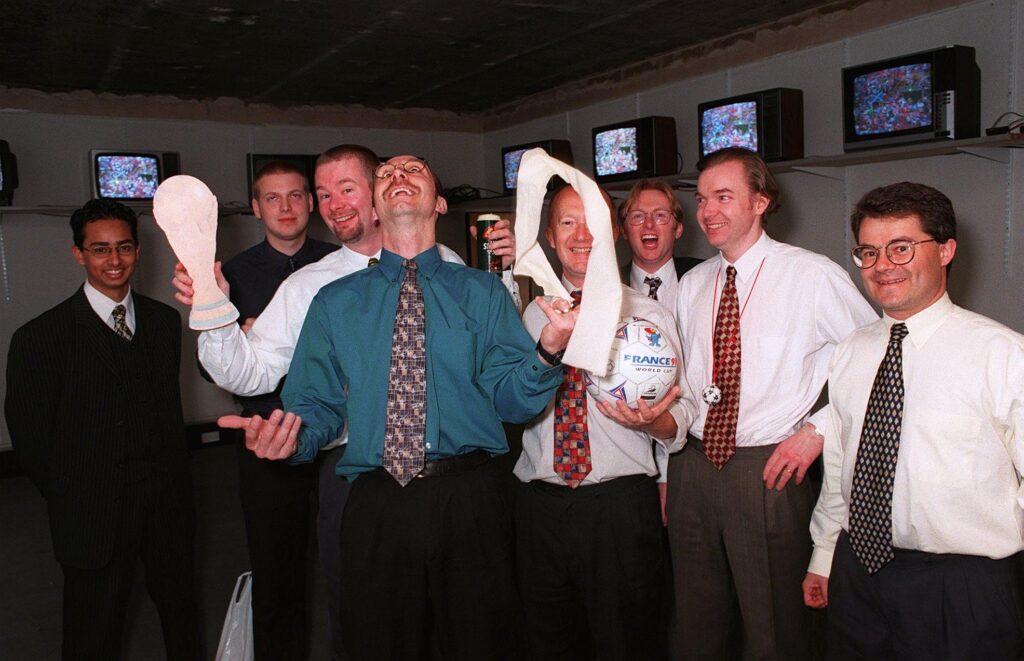
Multi-talented Malcolm Scott is known as the man who built a successful commercial property business, tried to buy the Humber Bridge, and supported Hull’s arts and culture scene by launching Fruit Trade Music recording studio in Humber Street and Kardomah performance space in Alfred Gelder Street. What is often forgotten though is that in 1998 Mal also brought the World Cup to Hull. Sort of.
Having acquired Elsworth House – now the Humber Lofts building – as the new home for Scotts Chartered Surveyors, Mal decided to put the space to good use during the refurbishment period by opening it up for colleagues and contacts to watch matches from France 1998. You could call it “back of the net-working”.
After England opened their tournament with a 2–0 win over Tunisia, the front page of the Hull Daily Mail’s business section reported: “World Cup fever gripped the local business community as England kicked off their campaign. Offices were abandoned and pubs were packed as people rearranged their diaries to accommodate the big match. But one local firm saw the festival of football as the ideal opportunity to mix business with pleasure.”
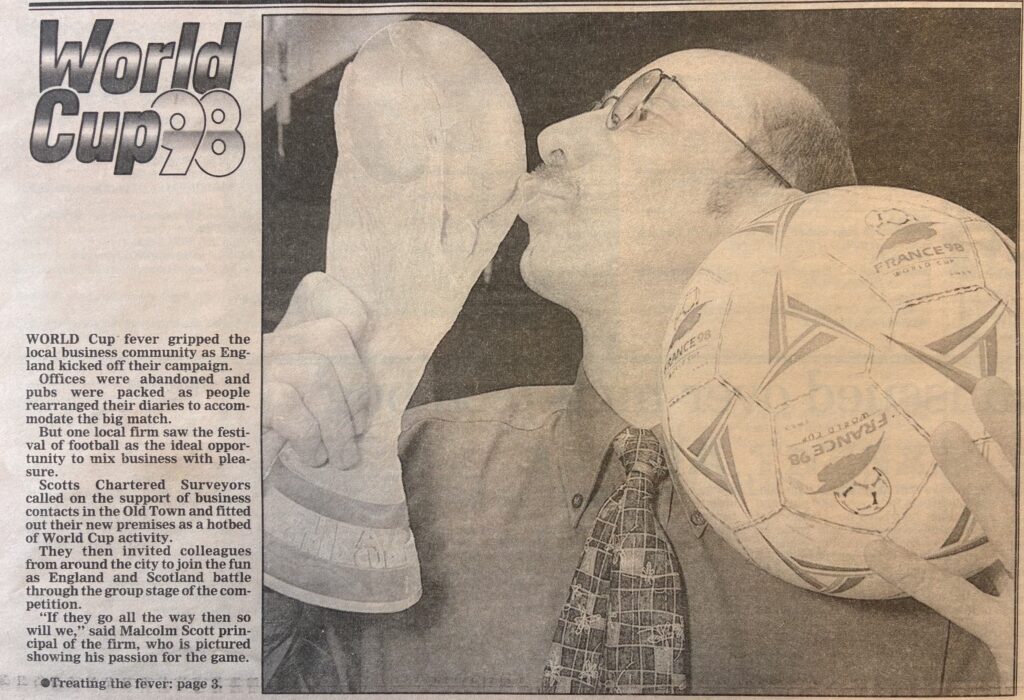
The article was accompanied by a picture of Mal holding a France 98 World Cup football and kissing a cardboard cutout of the trophy. On an inside page, I reported: “Never mind football coming home – this was football coming to work.”
Ever resourceful, Mal had borrowed eight TV sets from Fanthorpe’s in Hepworth’s Arcade. He also brought in two plastic dustbins, filled them with ice supplied by the Varsity pub – now Telstar 2 in Bowlalley Lane – and invited guests to bring their own refreshments. It was typical of Mal, who died in 2022, to introduce a community element by setting up some makeshift goalposts for a penalty challenge to raise funds for the Hull Task Force.
In addition to fun and fundraising, the football parties were a response to Mal’s resignation that the World Cup would just be too much of a distraction for workers across the city. He said: “We did this on the basis that little work is going to be done over the next couple of hours. The penalty shoot-out is the serious bit. The Task Force is trying to raise money to improve the central area of the city and this will help in a small way.”
The paper reported that “lawyers, bankers, accountants and others swelled the crowd to more than 60”. Neil Franklin, at the time a partner at Rollit, Farrell and Bladon and still a member of the team at Wilkin Chapman Rollits, said: “It’s a very important marketing opportunity and a chance to network with clients and business contacts.”
John Edmonds of Lloyds Bank said: “Something like this is typical of Malcolm Scott – and I say that as a compliment!” Peter Hadfield, Creative Director of Land of Green Ginger Design, said: “Our policy is that anyone can watch any of the matches any time they want as long as they make up the time if they need to, deadlines are met and services continue.” Ian Kelly, CEO of the Chamber of Commerce, advised: “It is always helpful to show flexibility when it comes to staff holidays – and moderation with beer and kebabs.”
The paper also published a “World Cup six-pack of big match excuses”.
1. Tube strike
2. Hamstring injury
3. Late call up to Hoddle’s squad
4. Nobody likely to call the office anyway
5. Sick relative – condition may worsen if England progress
6. Had to be there to write the story
Mal committed to matching England’s staying power throughout the tournament. He said: “If they go all the way then so will we.” But sadly England fell in the round of 16. In a match remembered for a red card for David Beckham, England lost to Argentina. On penalties.
Phil Ascough