
It may appear to be just some fields of grass, but the meadows are essential ecological spaces which need protection, as our greenbelt governance correspondent Angus Young reports.
The fields lying either side of Priory Road act as a green boundary between Hull and Cottingham. They also happen to be almost the only surviving relic of the neutral grasslands that once covered the River Hull valley before the arrival of 20th century chemicals-based intensive agriculture. If you are wondering what a neutral grassland is then read on. (Also read on if you’re not – Ed)
According to the Hull Biodiversity Action Plan, the qualifying criteria appears to be somewhere that has not been treated with herbicides or artificial fertilisers. The Plan notes such unimproved semi-natural grasslands in Hull are rare and the best ones can be found on the pastures at Priory Meadows and Snuff Mill fields which have been traditionally maintained for over a century. In that period, the only incursions have been the construction of the Humberside Police HQ, two semi-detached houses standing opposite in splendid isolation and, more recently, the Priory Woods cemetery.
Despite the recent prolonged dry spell, it’s mainly a wet grassland peppered with hollows, ponds and ditches that provide important breeding grounds for frogs and newts and feeding grounds for kestrels and barn owls. They also support a rich variety of flowering plants and plant species typically found in unimproved grassland, such as Adder’s Tongue, Cowslip and Pepper Saxifrage.
Rohan Lewis, who carries out local plant surveys for the Botanical Society, visited Priory Meadows earlier this summer. He said: “I was astounded not only by the colours – the purple of the Knapweed, the blue of Devil’s-Bit, the yellows of Cinquefoil and Meadow Buttercup – but also by the presence of plants like Meadow-Rue, Pepper-Saxifrage and Betony, whose nearest sites otherwise are mostly in the floodplain of the River Derwent.”
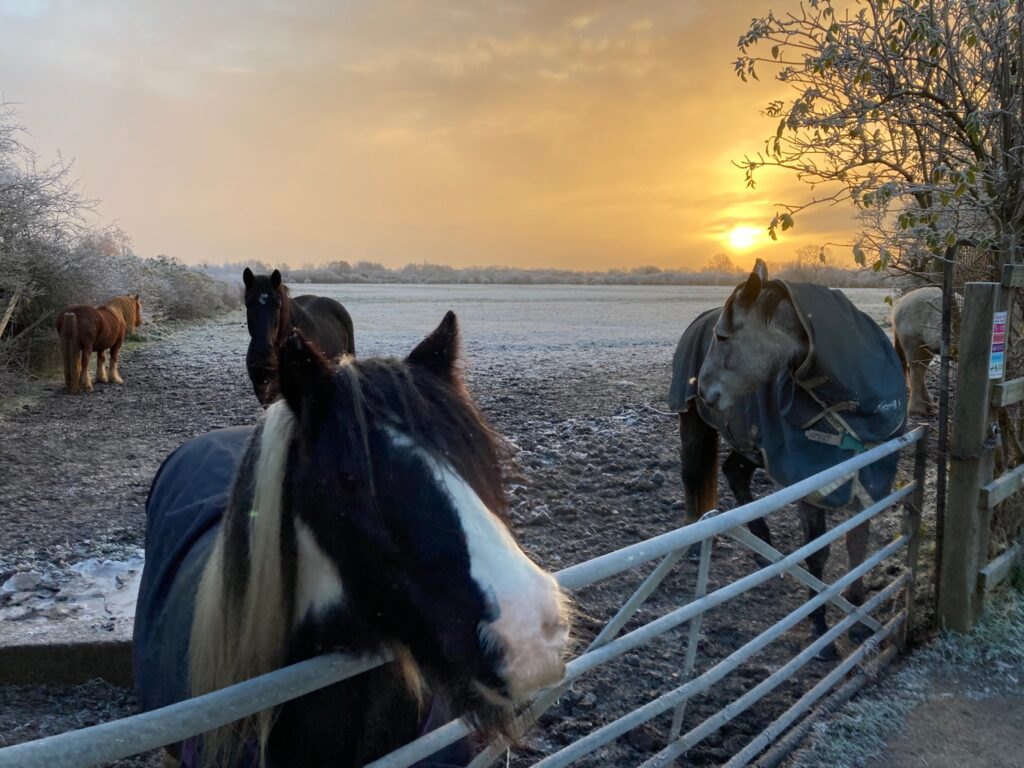
However, he was less impressed by the impact of grazing horses which are kept on the grasslands. “All this land is owned by Hull City Council and though not technically greenbelt land, it has been preserved from development and leased out for grazing, mainly by horses. Unfortunately some tenants have shown little regard for anything but the opportunity to graze as many horses as possible. Some of the fields are now nibbled almost bare and Green-Winged Orchids, which used to occur there, have not been seen for years.”
Happily, there’s a new push to manage some of the Meadows in a more eco-friendly way. A new community interest company has recently taken on a new lease from the city council covering 11 fields. It hopes to restore hedges and clear encroaching scrub from some of the fields as well as creating more public access and reducing grazing on three fields to the west of Priory Road.
Rohan added: “Members of Hull Natural History Society have been out this month performing an in-depth botanical survey on the fields covered by the lease. This data is being fed back to Natural England and will hopefully lead to the award of grant money to Priory Meadows CIC so that the improved management can get underway.”