
We’ve done the widest, so we sent our thin thoroughfare correspondent Angus Young out with a tape measure to find the exact opposite.
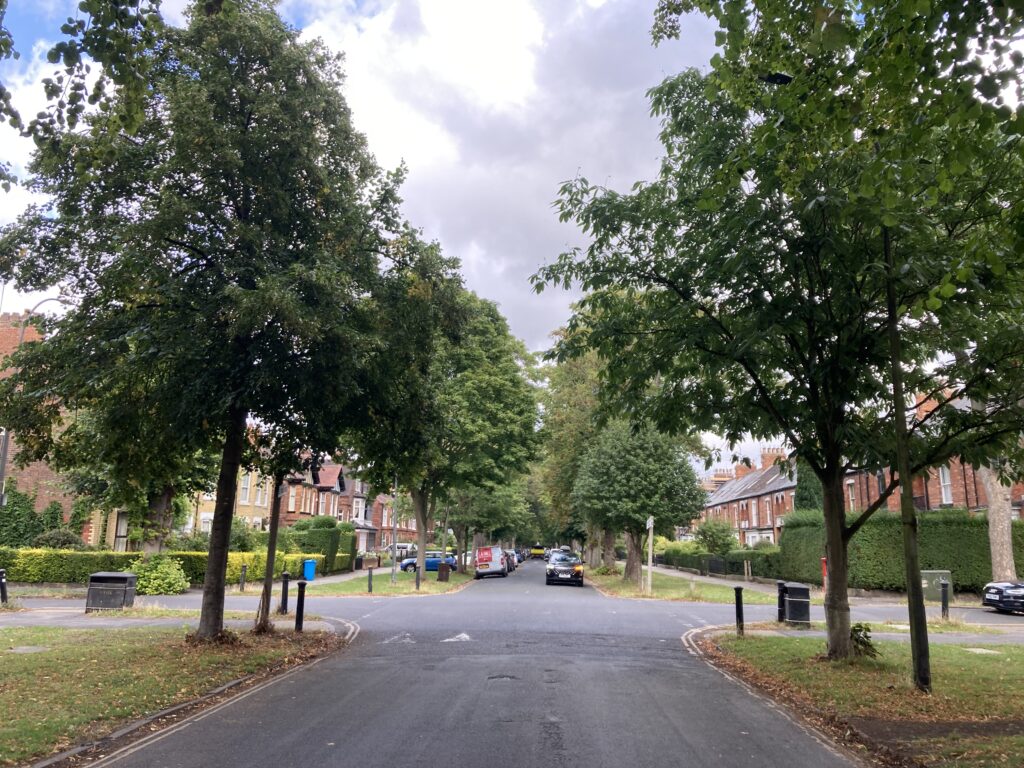
If you are a regular Curiosity visitor, you might have seen Leanne Cloudsdale nominating Westbourne Avenue as her favourite street in the city recently. While taking a stroll along it, she revealed it was the widest of the four main Avenues linking Princes Avenue and Chanterlands Avenue. The 80ft span includes both the road and the generous grass verges on either side, reflecting the grandiose Victorian vision behind what was, at the time of its construction, Hull’s poshest street. If you ignore the subsequent development of dual carriageways with equally generous central reservations, Westbourne Avenue still remains Hull’s widest residential street. All of which got us wondering which street is the narrowest?
Inevitably, our research led us to the Old Town where people have been living cheek by jowl for centuries and, in particular, Bishop Lane. According to our trusty Curiosity measuring tape, there’s a 16ft 4in space between the front doors on either side of the cobbled lane.
Bishop Lane originally ran from High Street through to the junction with Land of Green Ginger, having previously been known as Bishop’s Gate. It would later also be briefly known as Denton Lane. It was first recorded in 1347and poll tax records for 1377 show a total of 43 households in the lane with an adult population of 68.
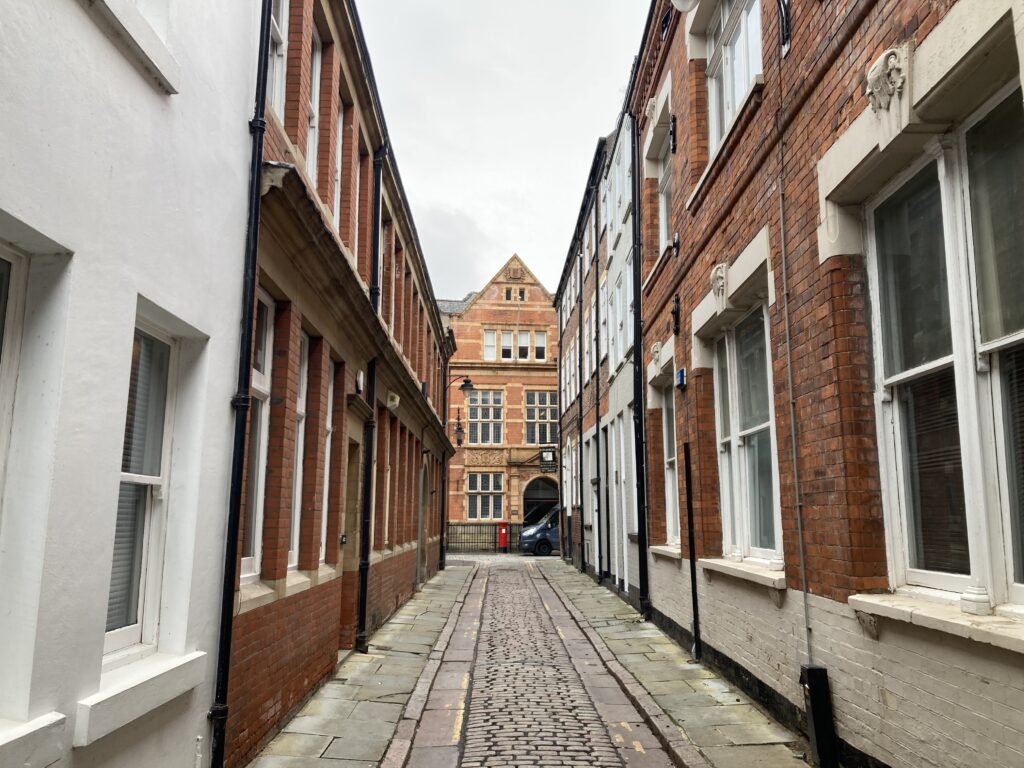
The west side eventually became known as Bowlalley Lane but the eastern end not only retained its title but also maintained a reputation as a highly desirable place to live. In a newspaper advert from 1787 it was described as “a clean and retired street nearly in the centre of the town of Kingston upon Hull, with every requisite, out-office and a spacious garden behind the same.”
Like many streets in the Old Town, Bishop Lane was the result of houses being squeezed into old plots of garden land as Hull’s population expanded. The residential nature of the lane started to change in the late 17th century when a number of businesses opened and in the 19th century it was peppered with drinking establishments. For some reason, all of them opened on the south side of the lane. A 1791 directory of those living and working there gives some idea of the mix of residents and businesses with a surgeon, a shoemaker, a tailor and a pawnbroker rubbing shoulders with a shipowner, a postmaster, a painter and a brandy merchant.
Perhaps the best known address in Bishop Lane is Number One which stands at the south-east corner overlooking the junction with High Street. It is believed to have been built in the late 18th century after the demolition of an arched tenement at the end of the lane. Since then it’s been a merchant’s house, an alehouse, the office of a ship’s broker and the residence of a tailor before it was extended to include the neighbouring property at Number Two.
By the 1960s it was being used as a nightclub, reaching its peak a decade later as the legendary Bier Keller. These days Hitchcock’s vegetarian restaurant occupies the lower floor. Somewhat of a Hull institution, their all-you-can-eat buffets have been filling diners for the last four decades.
Angus Young