
Former top firefighter and Chair of VHEY Chris Blacksell takes a fresh look at a monument we all know well.

Former top firefighter and Chair of VHEY Chris Blacksell takes a fresh look at a monument we all know well.

Avenues Library regular Gill talks us through the best bits of her local branch.

From school to scrap, our handicraft component correspondent Angus Young has been poking round for bargains.

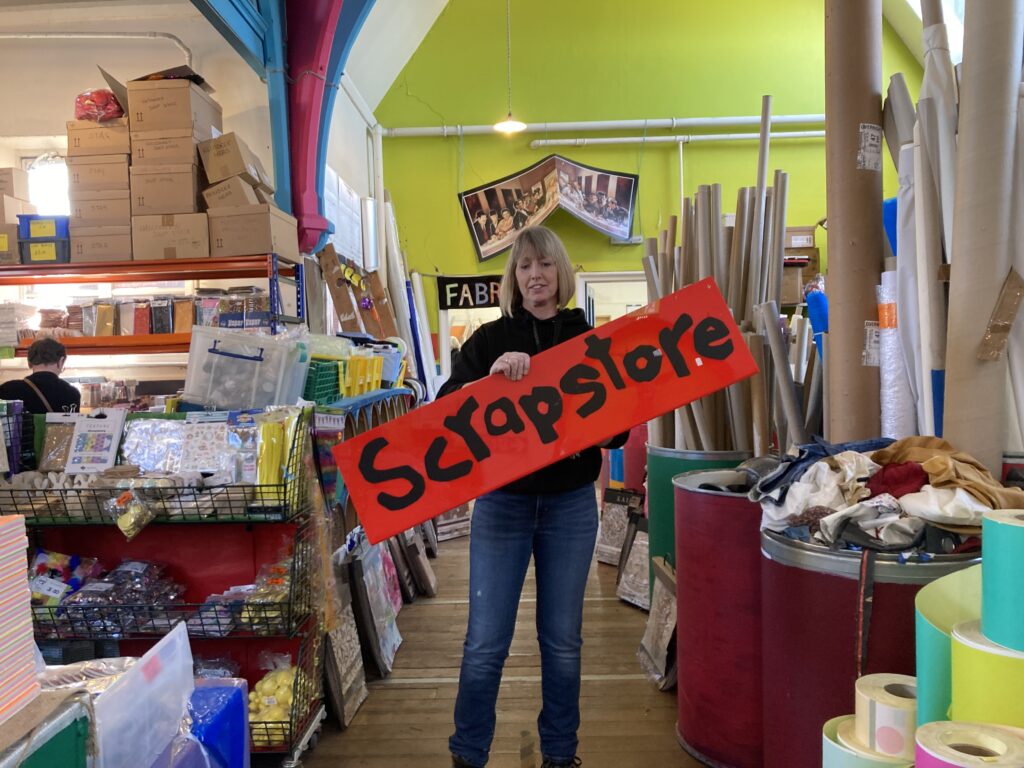
If you’ve never been to Hull ScrapStore it’s probably time to plan a visit. For the much-loved non-profit charity’s resource centre is a veritable treasure trove packed full of things just waiting to be turned into something else.
Housed in a former historic Victorian board school, it’s also probably the most colourful place in Hull. From tins of paint and rolls of fabric to empty plastic cartons and unwanted packaging in all sorts of shapes and sizes, there’s something for every imaginable DIY craft project. Set up in 1988, the charity initially operated a members-only system but these days anyone can pop in to bag a bargain.

The concept behind it is quite simple. Thanks to the continuing generosity of local companies, organisations and individuals, donated unwanted materials are offered for sale at affordable prices alongside a range of specialist branded arts and craft equipment. There’s a large section in the school’s former assembly hall where you can fill a shopping basket with as much stuff as you can squeeze in all for the princely sum of £6 while an old classroom is now packed with more individually-priced fabric than you will find in Boyes.
Manager Tracey Thomas joined the charity 20 years ago. She said: “We get around 800 people in a week which is pretty good considering we are only open four hours on five days a week. They came from all over the place. We get a lot from over the bridge in Lincolnshire, we’ve even had people come from as far as Middlesbrough. Probably the most satisfying thing for me is seeing families coming in and having a good old rummage because they’ve got an idea for a craft project.”
Tracey runs a small team who are supported by volunteers. As well as keeping the place well stocked, they also run regular creative workshops and even host craft-based birthday parties.
Rental income from other tenants at the centre also helps to keep the charity ticking over financially. Long-term tenants include artist Liz Dees and her street theatre company Apus, and children’s puppet theatre company Indigo Moon. Joining them recently is Keith Holmes who runs his own arts performance company Proper Creationz. There’s also a small community hub offering a warm space for people to pop in, have a chat and a cupp, make new friends and learn new skills.
Without making much of a song and dance about it, ScrapStore is now probably one of Hull’s most successful grassroots arts and craft organisations. Forget Humber Street, Dairycoates Avenue is where it’s at. There’s simply nothing like it in the city or the wider region for that matter.
“The nearest place like us is in Selby, beyond that there are others in Leeds and Nottingham,” says Tracey. “We all do things slightly differently but the basics are the same. It’s all about promoting affordable, sustainable creativity for all ages.”

They may look like film props but they are very real and, as Hull Tour Guide Paul Schofield explains, there’s a good reason why they’re there.

Concrete is out and natural flood remedies are planned on Bransholme, our woodland gully correspondent Angus Young reports.
In June 2007 hundreds of homes in Bransholme and Kingswood were flooded when the Bransholme pumping station failed during prolonged heavy rain. Nine years later a massively-upgraded pumping station was opened after a £16m investment by Yorkshire Water. As part of the facelift, six 92 ft-long screw pumps were installed to help move rainwater from the sewage system serving the wider area into an adjacent storage lagoon before being slowly released into the River Hull. Even with the new pumps, efforts continue to divert surface water away from the sewerage system wherever possible to reduce the risk of flooding because of its limited capacity to cope with extreme rainfall.
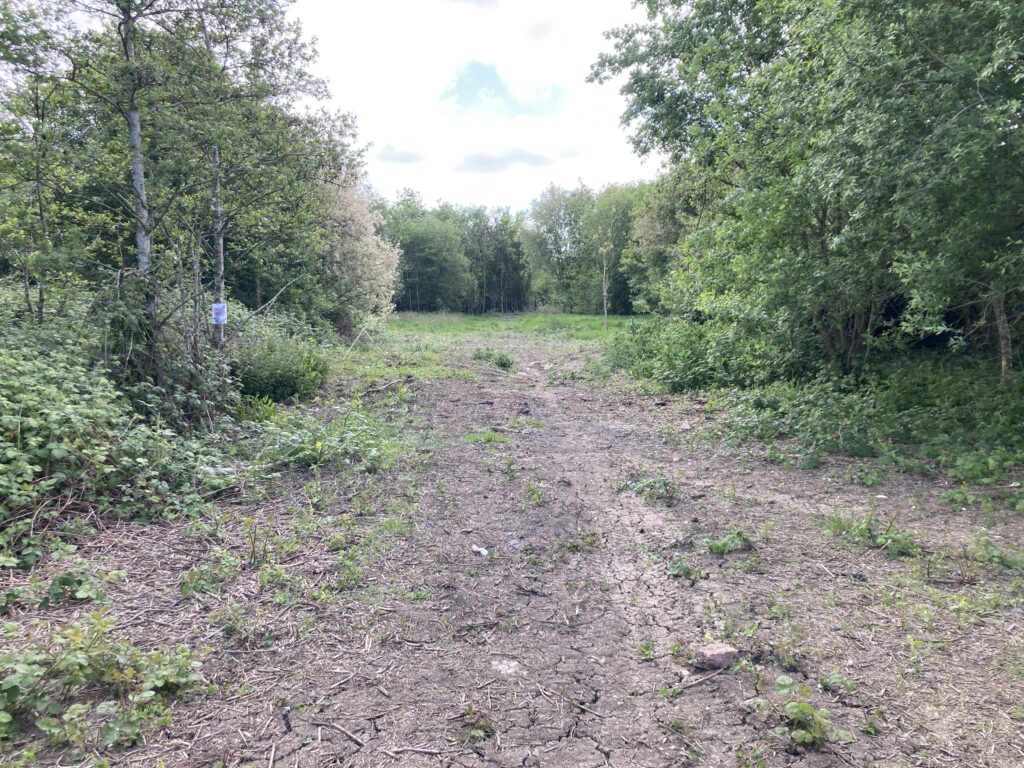
Projects large and small have been completed ever since the 2007 floods and one of the smallest is about to get underway in Hemble Drive in Kingswood. As part of a £100,000 scheme, four roadside gully drains in the street will be disconnected from the main sewer and instead linked to a new natural water storage area set to be created in an adjacent woodland.
The woodland – variously known as Midmeredales or Millennium Wood – was planted just before most of Kingswood was built. It’s now relatively mature but the flat clay ground it stands on means flooding already happens on a regular basis during wet weather, damaging trees and making public access almost impossible at times.

Hiatt Jackson, senior flood risk management officer at Hull City Council, explained: “The woodland is a valuable resource for the local community but it is prone to flooding. When complete, the water will enter the woodland through a surface channel, called a swale. This will look like a long depression in the ground and will be home to wildflowers and reeds. The wetland will use nature-based solutions to completely clean the water of contaminants and will store some of the water for most of the year, providing valuable habitat for amphibians, invertebrates, birds and plants. Any overflow from the wetland will travel along another swale and towards an old agricultural surface channel that empties into Wawne Drain. Water will only travel along this path in very large storm events or during very wet years. This system will reduce flood risk in Kingswood and help the green space to empty during wet weather which will help the woodland to maintain long-term health.”
A second phase of the scheme will see the installation of a new trash screen and a set of steps on nearby Foredyke Drain to help keep the watercourse clear of littler and free-flowing. Rather than using concrete, an earth embankment will be constructed at the site to provide access.
Hiatt added: “Concrete has a very large carbon footprint, so we are aiming to use less of it and to use innovative techniques instead to ensure bank stability and create operational assets that will last for a minimum of 30 years. This watercourse suffers from a high degree of fly-tipping and litter, largely shopping trolleys and drinks bottles and cans so we are hoping that ongoing work with local schools helping to educate young people on the importance of our open watercourses in providing flood resilience and wildlife habit really has an impact.”

Author and pop-fan Nick Quantrill uncovers the little-known links between a huge hit and Hull.

Green-fingered Lauren, of Humber Street Gallery, tells us how her garden grows.

You may think the answer is simple, but Middle Child actor Katie Singh explains the intricacies.

Writer, gentleman, scholar and acrobat Dave Windass heads to Hawthorn Ave to meet a brass aviatrix.

It’s the question on the mind of anyone currently driving down Spring Bank, so our aquatic conduit correspondent Angus Young dives into the causes.

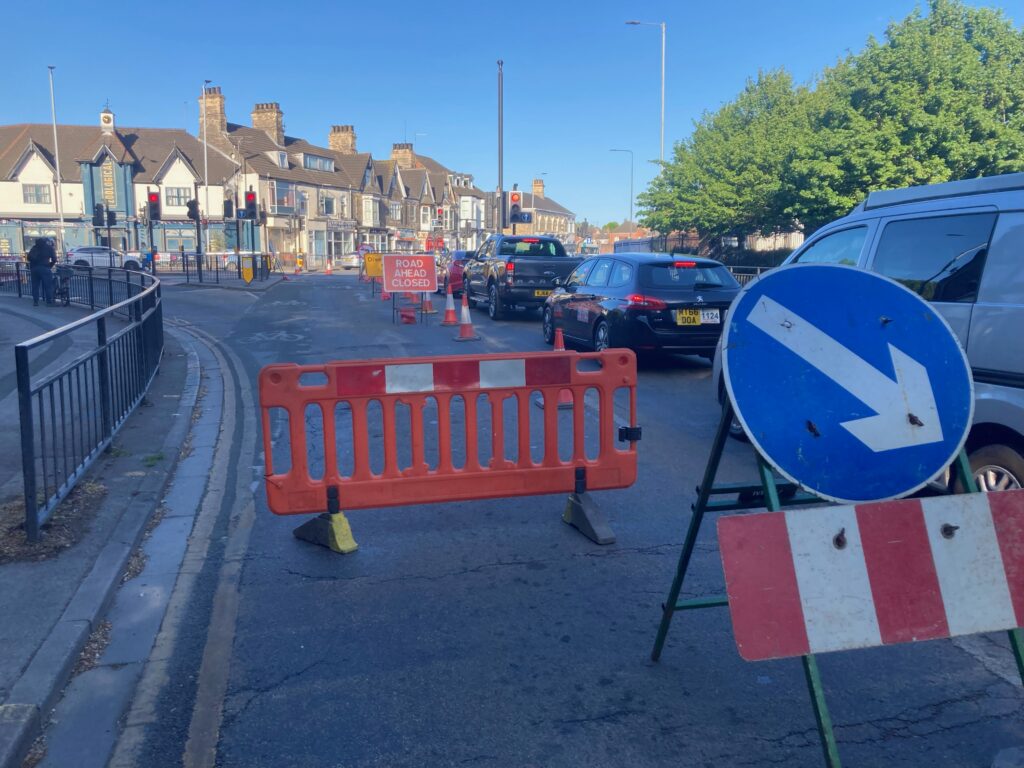
If you happen to be driving on Spring Bank and Spring Bank West at the moment, taking a turn into Princes Avenue is a no-no. The reason for the temporary closure of the junction can clearly be seen in the shape of a big hole in the carriageways in Princes Avenue directly opposite the Old Zoological pub. The crater is the result of a recent burst water main which erupted almost exactly four years after a similar burst at the same spot. Sadly, burst water mains have become a familiar sight for motorists in Hull.
Name any main road in the city and you can probably guarantee there’s been a burst or two in recent years. So why do they happen?
According to Yorkshire Water, the most common reasons are the age and material of a particular pipe, weather conditions and changes in water pressure. Much of Hull’s urban infrastructure has its origins in the late Victorian or early Edwardian era, making it at least eligible for an OAP bus pass. As such, old metal pipes typically suffer corrosion over time making them weaker and more prone to bursting. Equally, lead pipes are also at increasing risk of suffering leaks as they get older.
After a city centre mains burst briefly left Osborne Street underwater in 2018 it was revealed some the ruptured pipework was over 100 years old. Some of the recent bursts in Bankside have involved even older pipes. Extreme weather can also take its toll. While the potential for pipes to burst as a result of expansion of the water inside them freezing is well known, the more common cause of weather-related bursts involves changes in soil temperature and moisture in the ground. Both can cause the earth to shift and damage underground pipework. As Hull lies on a bed of thick clay, its porous nature makes the city even more vulnerable to geological mayhem.
Sudden fluctuations in water pressure within the system can also lead to pipes going pop. A sharp increase or decrease in pressure often triggered by periods of high demand can put stress on pipes and if they’re old, fragile ones then the chances of a burst are heightened.
To address the problem, Yorkshire Water says it is investing £406m over the next five years to replace over 1,000km of mains across the region – including Hull – to reduce leaks and bursts.
Lee Boshell, Yorkshire Water’s capital delivery programme, said: “We have already identified our first two years’ worth of mains replacement and we are working towards year three of the five-year programme. Having long-term visibility of the programme of works allows us to work closely with local authorities, highways and other utility providers, so that we can collaborate with them to renew mains and other services in one go. This is an important investment for our business and customers and will help us to improve the performance of our clean water network to reduce leakage and supply interruptions for our customers.”