
There may have been many of them back in the day, but Hull Tour Guide Paul Schofield discovers this particular windmill has a very significant history.

There may have been many of them back in the day, but Hull Tour Guide Paul Schofield discovers this particular windmill has a very significant history.

Regular music lender David takes us through some of his favourite CD borrows.

Once the beating heart of Hull’s fishing industry, its future now appears bleak. Report by our grass-covered industrial sites correspondent Angus Young.
This coming November marks the 50th anniversary of the closure of St. Andrew’s Dock to shipping. While Hull’s dwindling fleet of deep-water fishing trawlers moved to nearby Albert Dock, businesses around the dock carried on for a few years before they too either relocated or called it a day.
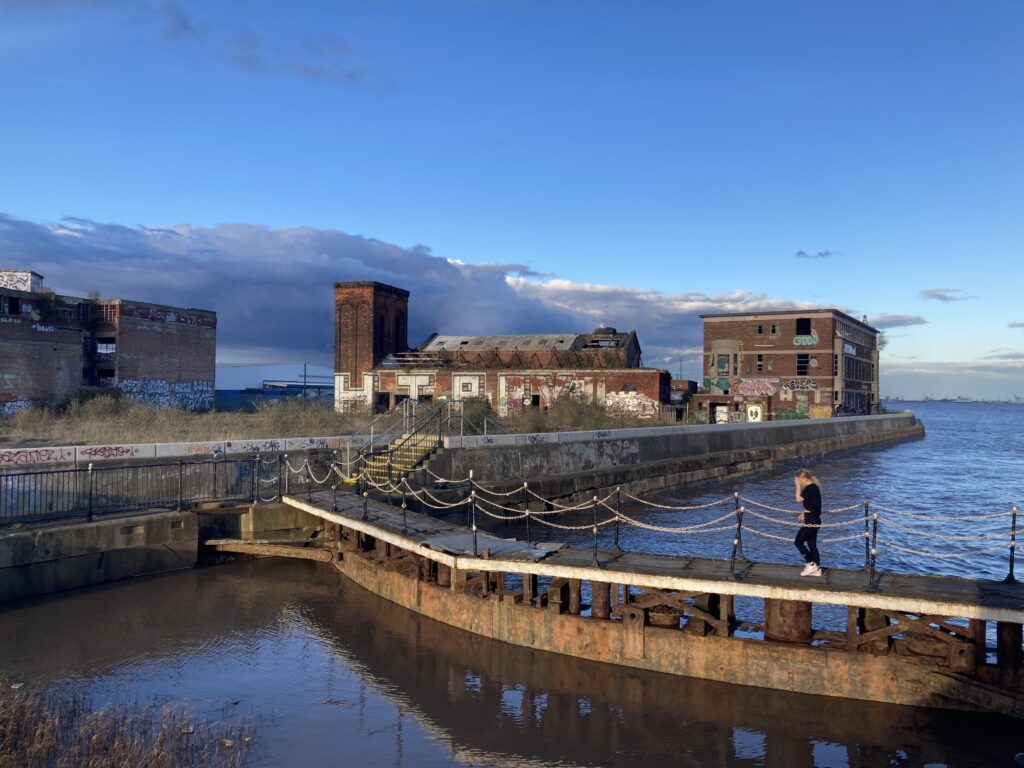
In the early 1990s, part of it was re-developed as a bland retail and leisure park. A cinema, bowling alley and bar were subsequently replaced with more shops. As for the rest of the former dockland, it’s a perfect example of what half a century of slow but steady urban dereliction looks like. The real tragedy is that despite the handful of wrecked remaining empty buildings, the graffiti and the overgrown dock itself, this place still holds a special place in many peoples’ hearts.
Over the course of the dock’s 92 year-history around 6,000 men sailed from this very spot only to lose their lives at sea. All that marks this almost unimaginable loss of life is a small memorial on the dock bullnose, still regularly covered with flowers and messages of love. So what is actually happening at St. Andrew’s Dock? Sadly, the answer is not a lot.
Aside from the recent installation of higher flood defences by the Environment Agency, there’s been no discernible positive activity there in decades. Much of that is down to the mixed ownership of the site. Most of the land is owned by retired vet John Levison. He recently developed the Albion Mills business park in Willerby where a new phase of construction is currently underway. As yet, there’s no sign he’s close to doing something similar at the dock.

Most of the buildings including the former Lord Line offices, what’s left of the dock’s original hydraulic tower and pumping station and the old Seafish building on the bullnose are owned by companies linked to Philip Akrill. Last year he was made bankrupt after a successful court petition by a creditor, a finance company specialising in development finance and bridging loans. Despite a flurry of planning applications relating to the buildings in recent years, there’s no sign of anything actually being delivered. It’s not clear what, if any, influence he still holds.
Two other small parcels of land are also in different ownership. The vandalised former Boston insurance building is believed to be owned by Associated British Ports while Orchard Street Investment Management own a strip of land near the adjacent retail park which they also own. Without any shared vision or grand plan for the dock, it’s just being left to what Nature throws at it.
A compulsory purchase order covering the whole site seems the most obvious solution, although legislation covering CPOs requires feasible development proposals to be in place. As yet, there are none. CPOs also require the city council to submit one. Historically, the authority has always steered clear of any direct hands-on involvement at the site. The sticking point in coming up with a big new plan for the dock is, of course, the money needed to turn it into a reality.
Despite its appeal as a waterfront location, it’s going to take someone with very deep pockets, steely determination and a lot of imagination to reverse the decline of the last 50 years and build something Hull can be proud of once again.
We live in hope.

Crime writer Nick Quantrill takes a wander down a street where he used to live and which still inspires him.

Top manga artist Abbie Rial is in the Makerspace to outline her plans to turn you into a manga-master.
Abbie will be holding a manga drawing workshop at the Western library on Boulevard on Thursday 17th April. Tickets are free and available here.

Hull writer and musician Chris Speck drops in to tell Burnsy about his string of novels and his washboard playing.

Vertigo be damned, as Amy Thompson dons headcam and mountain boots for a trip up the tower to see what can be seen.

Dr Robb Robinson of University of Hull outlines the effect that Dr Sylvia Meeks had on a major global killer.

Today is as good a day as any to look back at how the city once faced up to dangerous extremists. Our populist eviction correspondent Angus Young reports.
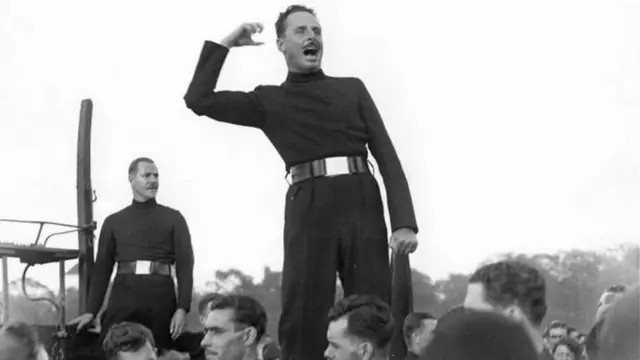
It’s gone down in local political folklore as the Battle of Corporation Field. The date was July 1936 and the location was where the entrance to the Tesco car park at St Stephen’s shopping centre is today. So what happened when Sir Oswald Mosley, the leader of the British Union of Fascists, arrived in Hull to attend a rally there?
Wherever Mosley and his black-shirt supporters went in those days there was trouble and this occasion proved no exception. Several venues, including the City Hall, a swimming baths and the Astoria cinema in Holderness Road, had refused requests from BUF officials to stage the event. Eventually, Corporation Field off Park Street was used and the open-air site, once the home of Hull Fair, ensured a large crowd.
Some estimates put the figure at 10,000 and contemporary reports suggest the majority were present to voice their opposition to Mosley and his party’s embrace of Nazi-style fascism. Local trades unions had ensured their members were out in force to stage a counter-protest as had the small but active local branch of the Communist Party. The BUF was also active in Hull at the time and its members arrived at the site by marching along Park Street to the sound of beating drums.
They were heavily outnumbered but formed a circle around a makeshift stage. Just before 8pm, Mosley arrived with a bodyguard. Wearing his trademark black shirt, he stepped up to the microphone to the sound of jeers from the crowd and Nazi salutes from his supporters.
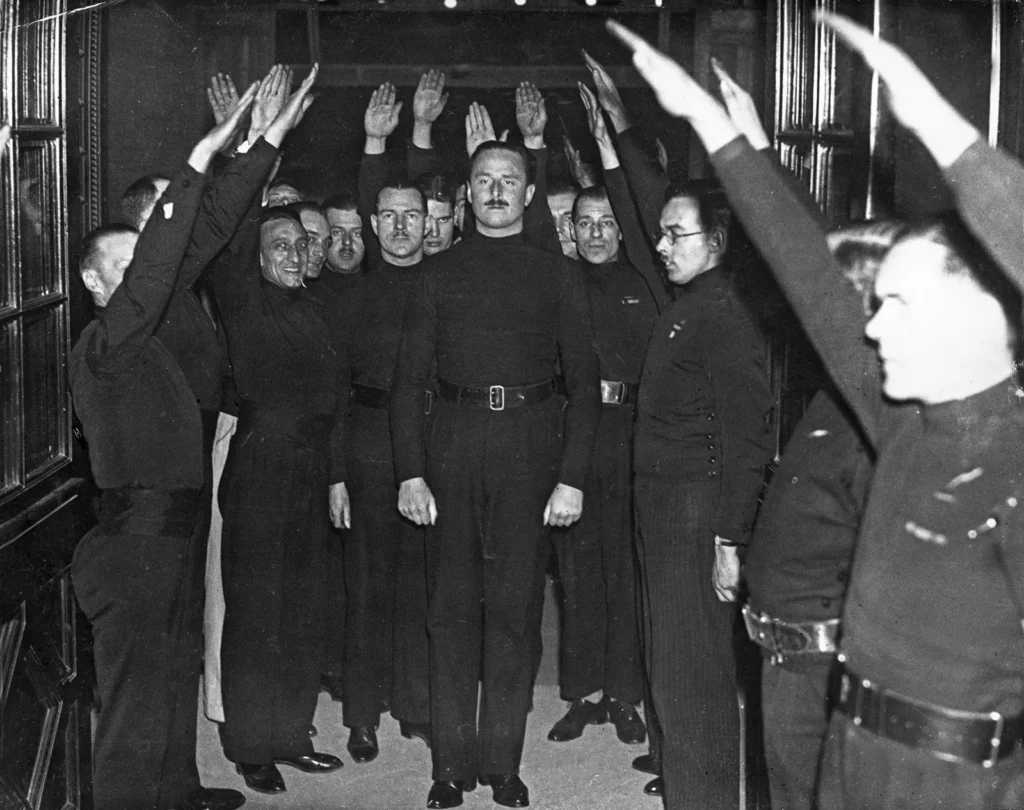
Within a few seconds it became clear the loudspeaker system installed earlier that afternoon wasn’t working. The jeers turned to whistles and cat-calls while bricks started flying through the air. One brick narrowly missed Mosley and crashed into a wall behind him. “Red hooligans!” he was heard to shout. More bricks followed and he gave up trying to speak. Fights broke out in the crowd. At one point, a BUF official ordered his members to use their belts while the police eventually recovered a small arsenal of weapons, including iron bars, bicycle chains and even potatoes containing razor blades. According to one report, 20 BUF supporters ended up in hospital along with 100 others.
The fighting lasted an hour and as Mosley was driven away from the scene, a side window in his car was smashed leading to speculation that a shot had been fired at the vehicle as it approached Park Street bridge. No bullet was ever found.
Three months later another clash between the BUF anti-fascists and 6,000 police officers in London’s East End made national headlines and was dubbed the Battle of Cable Street.
A postscript to the violence in Hull was added 31 years later in a letter published by Hull Daily Mail from an anonymous writer called “Unrepentant”. In the letter, the writer belatedly revealed he had bribed two schoolboys to cut the loudspeaker cable before Mosley’s address, instructing them to attach a length of string between the severed ends before placing it out of sight on a nearby shed roof. “On returning I gave them the largest ice cream cornets available, thus completing their adventures, and I looked forward to seeing the events at the meeting which I am sure the boys themselves would enjoy.”
Mosley would probably never know he was undone that night by two young lads eager to get their hands on some free ice cream.
Angus Young

Sam from The Avenues Library takes us through his suggestions for LGBTQ+ readers.