

The remarkable story of diarist Winifred Essen and her exceptional and essential note-taking is relayed by our siren chronicling correspondent Angus Young.

Sometime on 4th September 1939 Winifred Essen picked up a pencil and carefully detailed the events of the night before on the first page of a small notebook. “Warning: 2.40am. All clear: 3.30am. Sirens: 1. Date: Sep 4th. Description: First night of the war. Length: 50 min.”
Thanks to the 25-year-old grocery shop assistant’s diligent record-keeping we now know just how many times air raid sirens were activated in Hull during the Second World War, giving a new and sometimes terrifying insight into what life must have been like in the city at the time. For Winifred continued making hand-written notes about each warning siren for the duration of the war, recording the length of each episode to the exact minute. She also added brief details about certain air raids including the numbers of people known to have been killed or injured, some of the types of bombs involved, the places and buildings damaged and even the weather at the time as well as snippets of national and international news about the war.
Overall, she counted sirens being sounded in Hull on no fewer than 823 occasions during the war. The shortest siren lasted just eight minutes. The longest on 18th March 1941 continued for eight hours and 50 minutes. On some days, there were multiple siren bursts. On 7th March 1941, the first siren sounded at 11.41am and was followed by three more ending at 5.46pm.
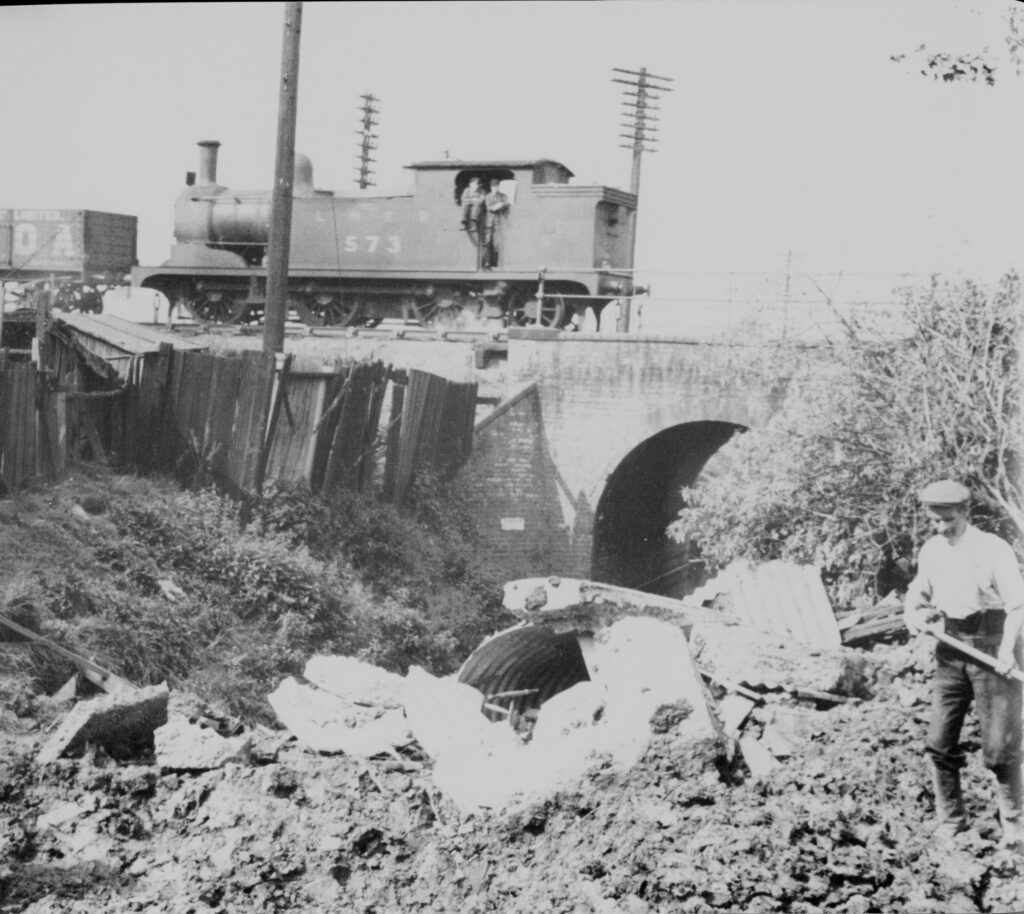
Not every warning siren was followed by bombs being dropped on Hull or the surrounding area. In her notes, Winifred records some sirens going off as Luftwaffe bombers flew high over Hull thought to be heading for targets such as Sheffield and Liverpool. On some nights, she simply states: “Nothing to report”
However, other descriptions capture the sheer terror of warfare arriving on Hull’s doorstep. “Warning: 11.30pm. All clear: 4.25am. Siren: 1.Date Aug 24th. Hull’s biggest raid to date. Dropped high explosive and screaming bombs. Heavy gunfire. A lot of planes over. Dropped flaming onions and tracer bullets. One of our planes hit and caught fire, pilot jumped in parachute. 8 killed, 62 injured. 2 shelters hit. 3 children of one family killed.
It’s thought she filled two notebooks (only one survives) before transferring her records at a later date into a single handwritten chronology which she kept until her death in 1996. Having never married and with no immediate family, she left no will. As a result, it’s believed that her belongings – including her chronology and notebook – were eventually sent for auction.

After being bought by an antique dealer as a job lot, they remained untouched in a box of items until 2023 when the Nottingham-based dealer returned to Hull and offered them to bookbinder Stephen Ingram, who is based at the Carnegie Heritage Centre in Anlaby Road. Once the sale was agreed, the chronology was found but without featuring the author’s name. However, the items also included Winifred’s National Identity Card so volunteers at the Carnegie began piecing together both her story and the remarkable document she had created during the war.
Their combined efforts, which ranged from tracing Winifred’s surviving family to identifying some of the words and abbreviations she used in her handwritten notes, have helped turn the forgotten chronology into a new book – Hull, World War Two’s Forgotten City, published by the Carnegie Heritage Centre. The book also attempts to answer the question of why a young grocery shop assistant living above the family shop in Clough Road embarked on such a personal and detailed diary of the air raids.
Editor Christine Pinder, who also researched Winifred’s life, discovered she enrolled as a fire guard in 1943 and may well have carried out an undocumented voluntary role in air raid operational work before then. As such, she would have been privy to much detail about the bombing raids on Hull and the timings of when the warning sirens were turned on and off. Christine said: “The level of detail in Winifred’s chronology is considerable and how she accumulated this has been the subject of much discussion among the Carnegie volunteers and others who have seen it. We will probably never know for certain.”
Angus Young