

A question resulting from a recent BBC TV programme is tackled by our esturium underpass correspondent Angus Young.
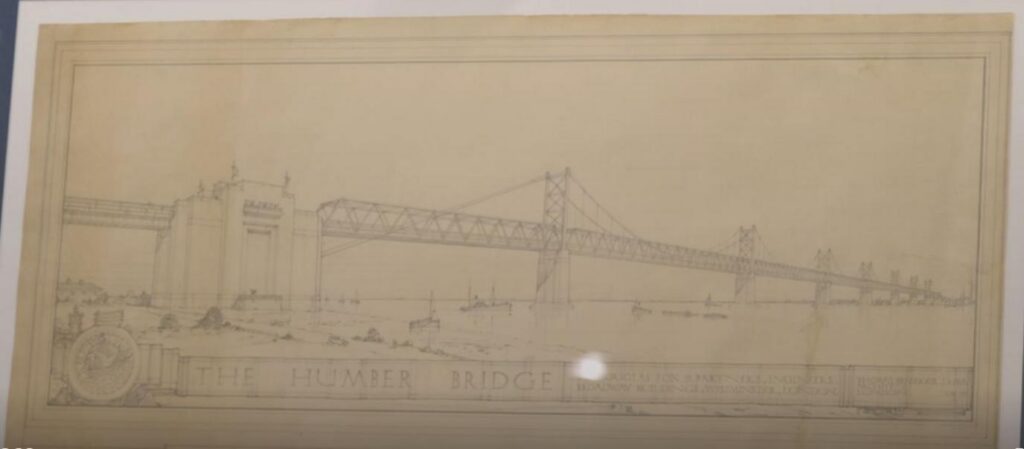
The restoration of a 1930 pencil drawing of a proposed cantilever bridge across the Humber which was never built featured recently on BBC1’s The Repair Shop. We all know an updated design for a suspension bridge was eventually turned into reality when the current crossing opened to road traffic in 1981. At the time, it was the world’s longest single-span suspension bridge. But did you know there were much earlier plans to run trains across the estuary – in a tunnel?
As you might expect, it was those ingenious Victorians who believed they could send steam locomotives underground on one side of the Humber to emerge unscathed on the other. After all, it was the age of the Industrial Revolution and anything, it seemed, was possible.
In 1872 the first proposals for a rail tunnel under the estuary emerged. The estimated cost of the ambitious project was put at £960,000 and it appears finding that amount of money proved to be a major obstacle in progressing this particular initiative any further. However, other proposed tunnel schemes would follow.
One envisaged a railway tunnel connecting Welton and South Ferriby. Another suggested rail link floated in 1914 proposed a tunnel running from Paull on the North Bank across to the South Bank.
While some Victorian engineers favoured going underground, others looked above the water for a solution to transporting folk from one bank to another. The first ideas for a bridge were proposed in 1883 but it would take nearly a century before one finally opened after a ten-year construction project. Until then, the main form of transportation across the Humber was by ferry.
Ironically, after all those abandoned rail tunnel projects, the ferry service between Hull and New Holland was operated by a series of railway companies. In its heyday, the former Pier Station building in Nelson Street in Hull was one of the few British Rail stations never to have sold a ticket for a train. Instead, the only tickets were for passenger ferry crossings. It was also a rare British Rail station without any railway tracks.
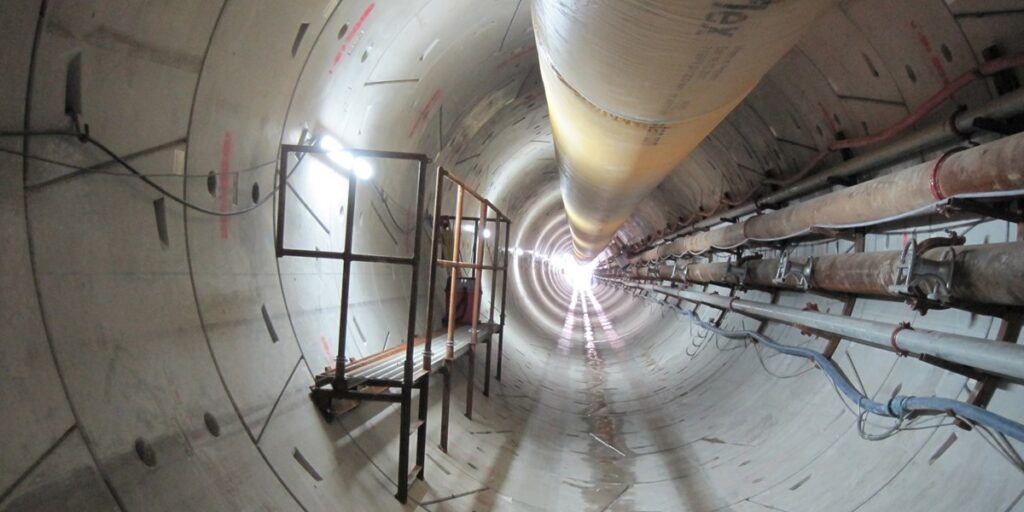
A giant tunnel under the Humber was finally built and completed in 2020, following a similar route between Paull and Goxhill once earmarked for steam trains a century earlier. However, this £100m project is all about transporting energy rather than people. Known simply as the Humber Tunnel, it was constructed by the National Grid to carry a gas pipeline 30.6 metres below the riverbed at its deepest point. The tunnel measures 4,036 metres in length and has replaced an existing eroding one which sat in the riverbed.
Like its lofty cousin linking Hesse and Barton, it also made the record books by featuring the longest hydraulically inserted pipeline in the world. With a diameter of 3.6 metres, it’s big enough to walk in although access, as you might imagine, is strictly limited to essential personnel.
Angus Young