
The soul of culture in Hull, Paul Jackson has passed away aged 71. Legend Jacko improved countless thousands of young lives via his beloved Adelphi Club. The world’s best music venue stands monument to one of the Hull’s greatest sons. Here are personal tributes from our correspondents Angus Young and Phil Ascough.

I got to know Jacko during the very early days of his reign at the Adelphi. He had just taken over the club which was slowly shedding its former clientele and welcoming a new wave of soon-to-be familiar faces. Many of the departing crew were full-time local criminals, comfortable in their various illegal lines of work and tolerated by Jacko probably for his own self-preservation. Bingo sessions, a weekly gay night and menacing middle-aged men prone to violence gradually gave way to young aspiring musicians, students and occasional journalists.
In those days, going to a gig there was a bit like popping round to your best mate’s house for a party with a lanky hippy at the front door checking everyone in and out. Jacko was the doorman, the barman, the venue owner, the promoter and the music fan all rolled into one. His club was as sometimes as gloriously chaotic as the wild mane of hair under his trademark cap but everyone loved him – and his dog Yosser – because of it.
When I took over responsibility for covering the local music scene for the Hull Daily Mail, Jacko and his instantly-recognisable Adelphi flyers became indispensable. Obviously, he never had the money or the inclination to pay for any newspaper advertising. Instead, he argued we had a responsibility to support local musicians and spread the word about visiting bands from out of town. His mission should be our mission.
It was often an uphill task trying to convince my editor that our readers might be interested in Dog Faced Hermans or Death By Milkfloat headlining at 89 De Grey Street later that particular week but Jacko was typically kind enough to acknowledge my efforts. Eventually, my boss cracked. The Housemartins were starting to make national headlines. He’d heard of them and made the connection. “They’re from that place you’re always writing about, aren’t they?” he said.

More than anything else, I think Jacko’s eclectic musical tastes helped shape what followed as the Adelphi’s initial close-knit community of misfits began to expand and embrace all walks of life. Endlessly generous with his time and support, I also rarely saw him lose his temper despite having to deal with all sorts of rock ‘n’ roll bad behaviour.
Once, after a gig by The Primitives at the height of their one-hit fame in 1988, I was sitting upstairs on a sofa in Jacko’s living room interviewing singer Tracy Cattell when a huge fight broke out between two of her band members. “They’re always like this,” sighed Tracy as I spotted a familiar figure looming into view ringside. Within seconds, Jacko had parted the battling duo. Five minutes later he was in a huddle with them chatting about music while sharing a pot of tea.
Years later I was chuffed when I saw him included in Ed Ulyart’s Hull musical wall of fame mural on a gable end in Clumber Street – a much-deserved tribute even though I suspect the man himself was probably quite embarrassed about it.
Thanks for the memories Jacko. Rest in peace.
It was in 2017 when the Adelphi Club became a Community Interest Company that I asked Paul Jackson if, 33 years after opening the venue, this signalled he was now looking for the investment which would take it to the next level. He replied that it was merely a case of him becoming more conscious of his own mortality. A CIC would have a better chance of securing the future of the club.
Much more recently, lying in his bed at Dove House Hospice, Jacko revealed: “I’m on my way out after 55 years of living with type 1 diabetes.” At that point he’d been in Dove House for four weeks. We tried to lift the mood by chatting about his passions. Fishing has always been one, but I know nothing about that so we stuck to cricket and music, sometimes both at once.
Jacko expanded on a social media exchange in which one poster asked Paul Heaton about the time the Housemartins singer was recruited for the Fenners cricket team. “We were about three players short and Paul said he would come along so we put him down to bat at 10 – in a 10-man team,” Jacko recalled. “We needed 179 to win. I was batting at eight and when I was out we still needed 60 or 70. Paul scored about 25 not out and hit the winning run. He’s still got the scorecard somewhere.”
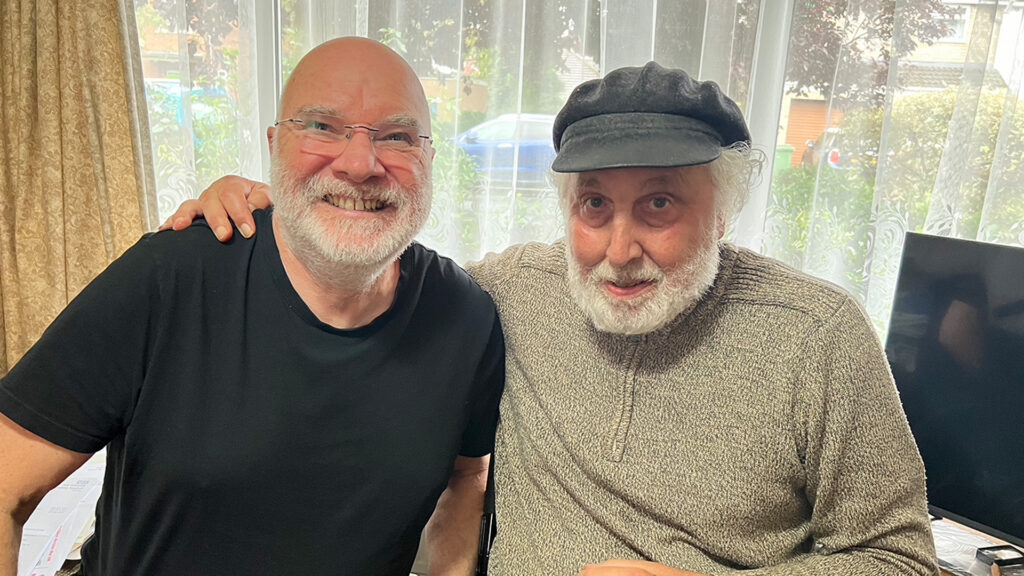
I joined the Adelphi cricket team for a match in Jacko’s home village of Cottingham. He turned out for our media cricket team, which included broadcast legend Burnsy and future national newspaper journalists Andrew Buncombe and Martyn Ziegler. Jacko brought a touch of class and tradition with his floppy cap and orthodox forward defensive – taking the longest stride down the wicket and maintaining the straightest bat.
Turning to music, I congratulated Jacko on his vast and encyclopaedic knowledge, which he demonstrated by running through some of the tracks he has planned into the playlist for his funeral. We didn’t dwell on that too much but spoke of some of the bands and performers who graced the Adelphi during the years when I wrote about music for the Yorkshire Post. From Hull, the Gargoyles, Pink Noise, Milkfloat, Von Trapps. Hope Street from Scarborough, God’s Little Monkeys from York, the Snapdragons from Leeds, and big names including Pulp, The La’s, The Shamen from the national scene. Even bigger names followed in the years after I moved on, and I missed Radiohead, Oasis, Stone Roses and more.
Lately Jacko had chided me for being stuck in the past, challenging me to celebrate the new talent. I stand by my response. You have to write what you know. As time moves on and bands change, so too must the audiences and media. Without that live connection you lose the authenticity, but the Adelphi has maintained it as Jacko’s passion has attracted new generations of people committed to supporting the local music scene. Jacko’s criticism was merely another sign of the frustrations he has faced since opening the Adelphi in 1984. There was no shortage of locals and industry contacts ready to slag off a live music venue in a converted house in a residential street.
In the early years the club was blamed by the City Council for fly posting by bands. World Party cancelled at the last minute cancellation. David Gray came on all prima donna. Police were called after one band was caught messing around with a replica pistol in the car park. But these were one-offs and Jacko’s zero tolerance policy on drugs, fighting and any other antisocial behaviour enabled him to build up strong reserves of trust and goodwill. Lack of money was a more serious issue, as it is with other treasures of the local music scene. When the organisers of Humber Street Sesh tell you they put on last year’s festival without getting paid, it makes you wonder how Jacko managed for so long.
Social media posters talk about statues and plaques, but that’s not Jacko. The best tribute would be a lasting commitment to provide meaningful support to our city’s live music scene from the grassroots up, and the CIC is the perfect vehicle to pursue that. It’s not just musicians who benefit. We spoke about Adelphi alumni who went to the club as children and are now making their mark in the industry – one as a member of Nick Cave’s crew, another who worked on the tech for this year’s BAFTAs.
And then there are the social and community benefits. I found my future wife at the Adelphi. Our eyes met across a crowded Gargoyles gig. We invited Jacko to the wedding. He said he didn’t have a suit. I said it didn’t matter. He turned up on the day wearing a t-shirt from one of the visiting Adelphi bands – The Band of Holy Joy.