
In today’s cashless society, not everyone remembers what handling sacks of cash was like. Our currency reminiscesnt correspondent Angus Young finds someone who can.
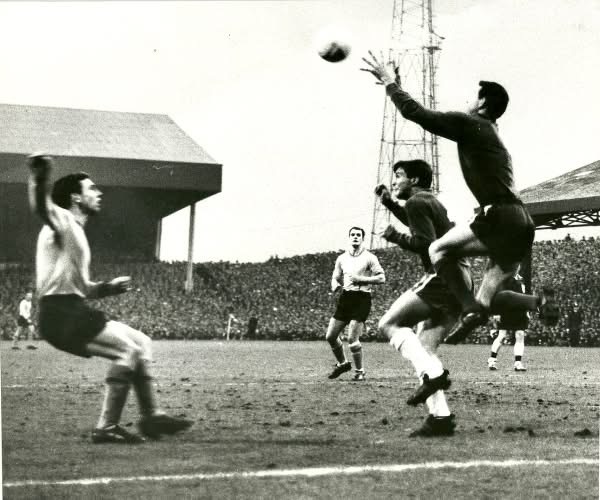
As Hull City head to Wembley for the Championship Play-Off Final nearly every associated financial transaction will be cashless. The final is often dubbed “The £200m match” because of the value to the winning club in securing promotion to the Premier League. However, the days of fans paying in notes and coins for match tickets, transport, hotel accommodation, merchandise and a bite to eat before the game have almost vanished. It was a very different story when lifelong City fan Chris Smith was a lad.
Back in the late 1950s he became the third generation of his family to work on City’s turnstiles. Both his grandfather and father had operated the turnstiles at the club’s original ground in Anlaby Road. “My Dad moved to work on the turnstiles at Boothferry Park when the club moved there in 1946. I was born three years later. When I was old enough I used to go to matches with him to help out. On match days, we used to get a bus to the bottom of Bricknell Avenue and then walk to a house nearby where a Mr Boothby lived. He was in charge of all the turnstiles at Boothferry Park. From there, we would all get in a taxi and go to the ground.”
Young Chris was employed as a runner, taking messages to and from each turnstile operator. “There were turnstiles at each corner of the ground as well as up on the rail halt and it was my job to pass on instructions if one needed to close, when they should re-open or if there was a problem. There were no phones or walkie-talkies in those days, everything was done by word of mouth.”
As well as getting fans safely inside, the turnstile operator’s main task was to collect their money. “When I think about it now, I’m amazed at how much actual money was sloshing about on a match day and most of it was in coins.”
The tallying up and banking operation would typically take place immediately after the game. “I remember all the money would be bagged up and put into two taxis with a policeman always in one of them. We would then drive into town and park in Lowgate outside the Midland Bank on the corner of Silver Street. Each bag was taken out of the taxi and stacked up on a four-wheeled trolley. The trolley was then pushed across the pavement to a cellar entrance which opened on the street. From there, the bags were unloaded into a lift which took them down into a vault in the basement.”
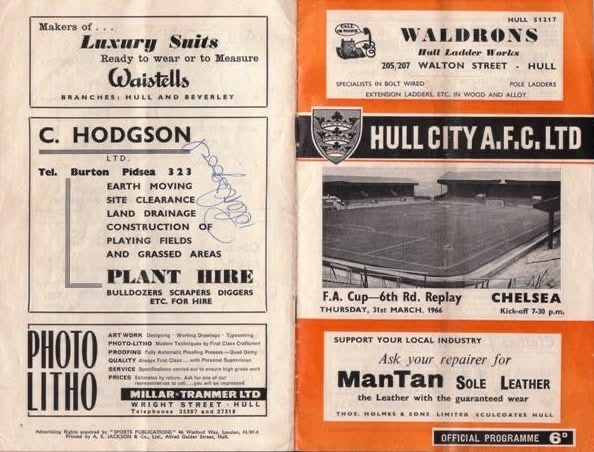
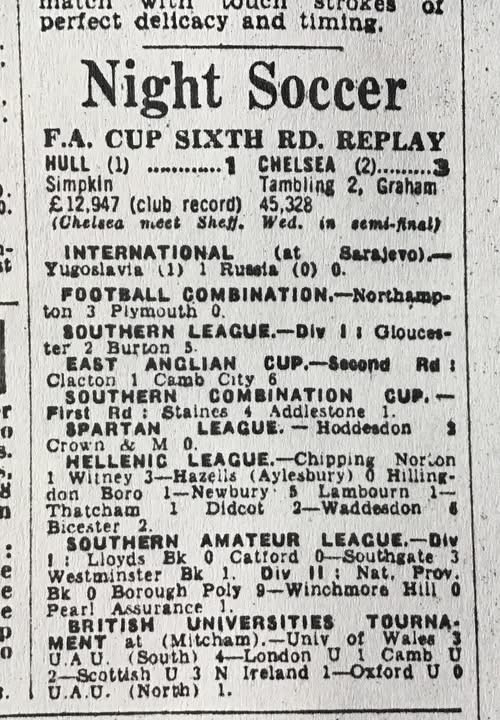
Apart from the drama on the pitch, his abiding memory of those days was the FA Cup quarter-final replay with Chelsea in 1966 after City, then in the Third Division, had snatched a 2-2 draw at Stamford Bridge courtesy of two late goals by Ken Wagstaff. A crowd of 46,328 turned up at Boothferry Park for the replay five days later. “The replay was on the same day as the General Election but most of all I remember there hadn’t been enough time to print any tickets, never mind sell them in advance, so it was all pay on the door and most people paid in coins.”
Admission for the game was 12 shillings and sixpence and ten shillings for seats, five shillings standing and two shillings for juniors. The total gate receipt for the match came to £12, 947 – a club record.
Chris said: “I can’t recall if they put on an extra taxi for the delivery to the bank afterwards but I do remember the enormous weight of carrying all those bags of coins around. It can’t have done the taxis’ suspension any good but it probably made anyone planning a heist to think again.”