
Any trip down Chants Ave currently involves dodging bird poo, but is that about to change? Report by our avifuana excrement correspondent Angus Young.
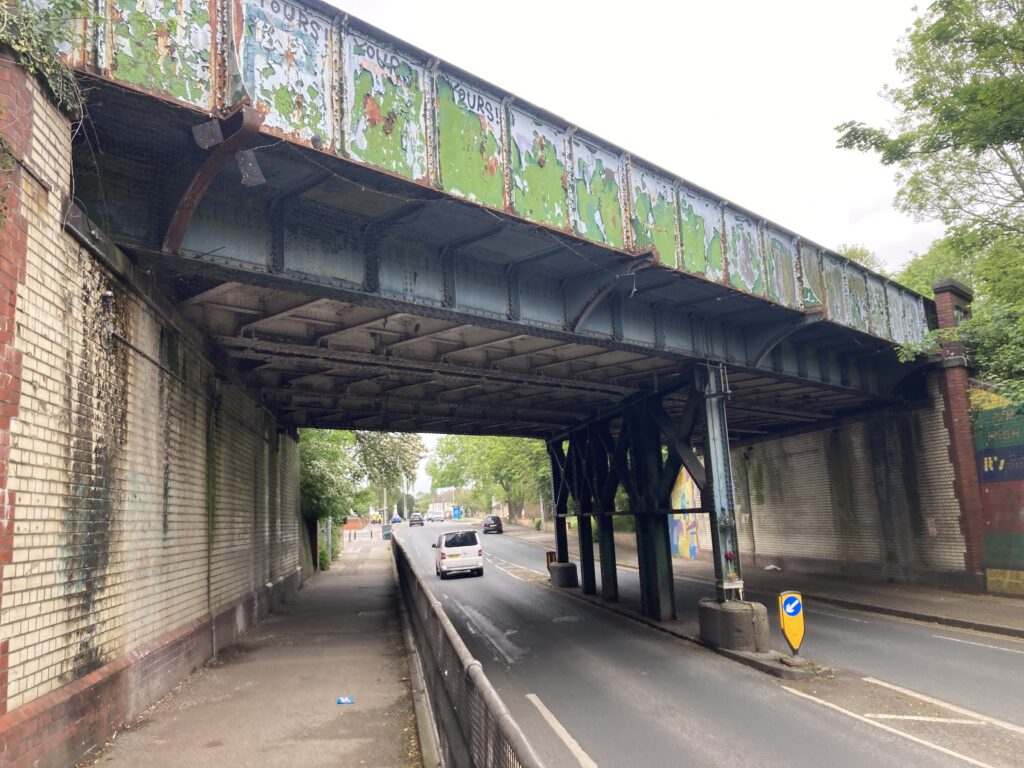
When the grandly-named Hull, Barnsley and West Riding Junction and Dock Railway Company opened its new line in 1885 part of it created a new physical city boundary. While railway bridges spanned existing routes such as Beverley Road, the raised embankment carrying the line effectively placed some developing suburbs inside a wall of earth.
Three decades later, the idea of extending Chanterlands Avenue and creating a new road under the railway line to ultimately connect with Cottingham Road started to take shape. Extensive subsequent negotiations between Hull Corporation and the line’s then owners North Eastern Railway eventually led to the construction of a new underpass road and the installation of a new bridge.
The lowered road opened to vehicles in late 1925 and a century later Chanterlands Avenue bridge is still there with its unusual design feature of a series of supporting columns which divides the carriageway below. Fifteen hours of solid rain a few months later caused the first flooding incident at the bridge with passengers in a taxi having to be rescued from the rising water. Flooding has been a problem ever since, including in 2007 when the road became impassable for several days unless you happened to own a canoe.
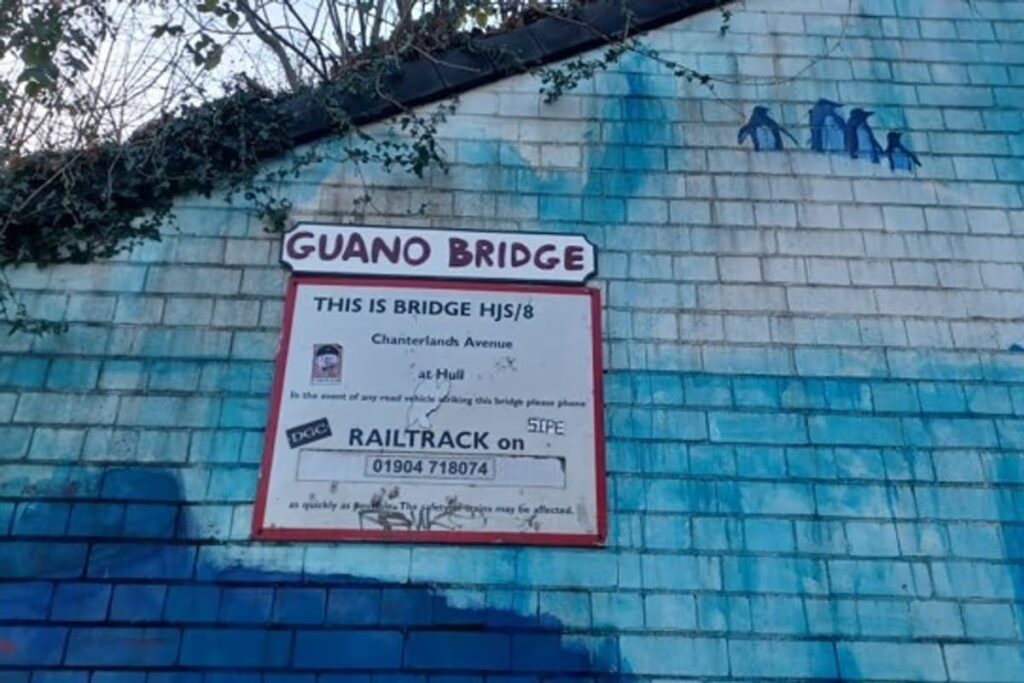
Another recurring issue has been the bridge’s appeal to nesting pigeons and the resulting mess they create. Anyone who has strolled along the raised walkways on either side of the road will know that avoiding stepping into some freshly-deposited guano is an everyday challenge. A few years ago some unknown local wit even decided to celebrate this by attaching a homemade sign unofficially re-naming the landmark as ‘Guano Bridge’.
Both the sign (now with a few missing letters) and the mess is still there but soon things could change on the cleanliness front. After several previous unsuccessful attempts to shift the pigeons involving netting and spikes, the city council has come up with a new plan. The initiative will see pots of bird-repellent gel being fixed to all of the bridge’s structure to scare the pigeons away. A typical gel mixture contains a colouring agent called pyranine. This fluoresces when triggered by UV radiation, causing the gel to glow with ultraviolet light. Invisible to the human eye, this light creates the impression of a burning fire to a bird which deters it from landing on nearby surfaces. In addition, the gel also contains peppermint oil – a long-standing bird repellent.
As a road closure is required while the gel pots are applied, it’s not going to be a cheap job to install them but the council hopes it will eventually save money currently being spent on cleaning up all the pigeon poo. A new council report says a budget of £18,534 has been set aside to close the road and carry out preparatory and cleaning work before buying and applying the gel pots.
The report adds: “Current bird proofing methods are not acting as a deterrent – the birds are building nests on top of the spikes currently installed and finding a way around them. The decision is a public health investment – by reducing exposure to guano, it could help reduce health impacts on vulnerable residents such as those with disabilities and those who are pregnant, particularly those with compromised immune systems. The decision improves living conditions – the environment will be cleaner, free from excessive bird droppings, which will improve the quality of life for those who live close to or pass by under the bridge regularly.”
Will it work? We shall see in a few months.