
A small square of concrete gives clue to the power once created in the city, finds our aged energy correspondent Angus Young.
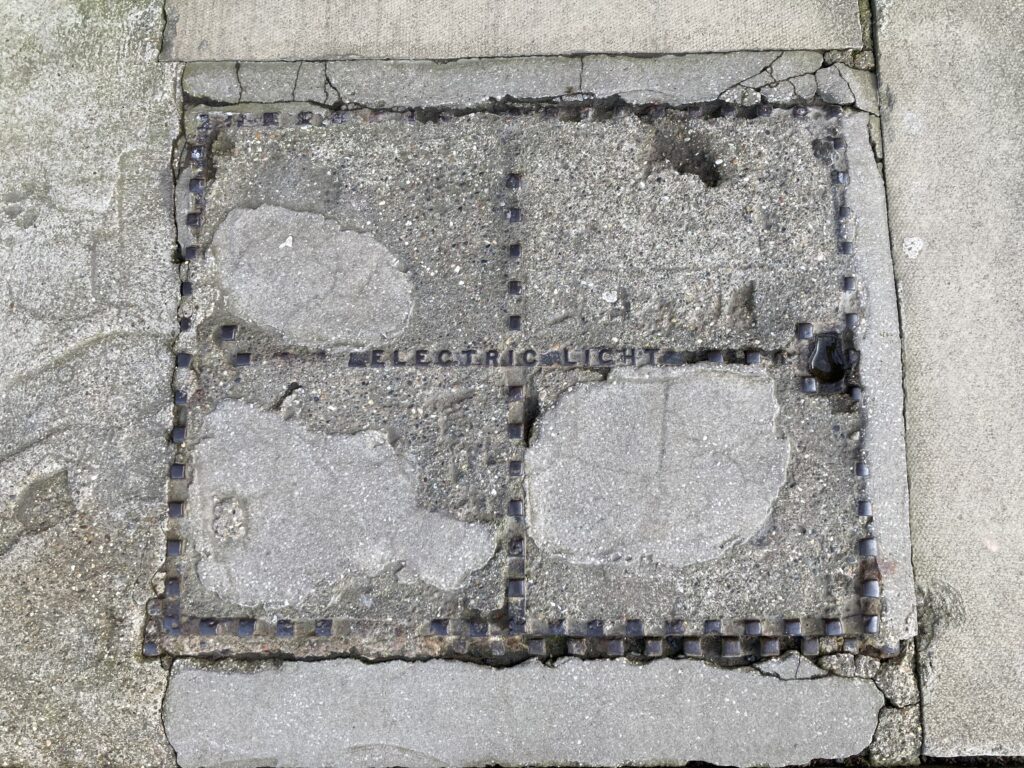
Hull’s history is often to be found under our feet and there’s a perfect example embedded in a pavement in Guildhall Road in the city centre. At first glance, the battered manhole cover doesn’t look very interesting and is in stark contrast with all the adjacent shiny new public realm in Queens Gardens. But closer inspection of its metal nameplate reveals the words ‘Electric Light’. It’s a rare surviving throwback to the days when Hull generated its own electricity to create publicly-owned power.
The first steps were taken in 1880 when Hull Corporation successfully lobbied for new parliamentary legislation allowing a private company to generate and supply electricity for public lighting in the Old Town. The Hull (Corporation) Electric Lighting Act 1880 was only the second such legal authorisation in the country following similar legislation passed for Liverpool. However, technical problems would plague the early pioneering days of electricity in Hull and in 1884 the street lighting scheme was scrapped because it was so unreliable.
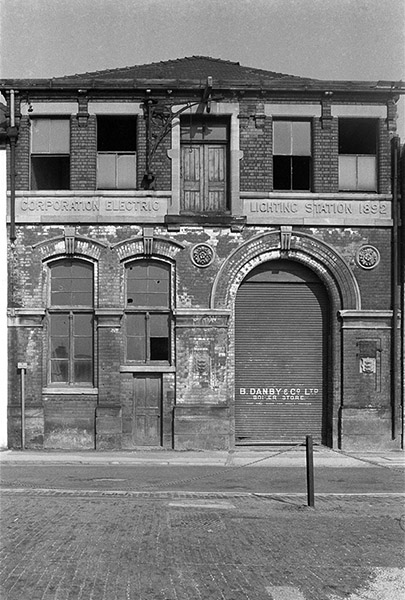
Undaunted, the Corporation decided to press on and build its own municipal power station in Dagger Lane which opened in 1893. Having secured further necessary parliamentary orders, electricity generated from the Dagger Lane station was initially supplied to 33 customers. Within five years, that number had jumped to 679. By then, the Corporation had established its own Electric Lighting Committee to oversee the management and supply of the electricity being generated.
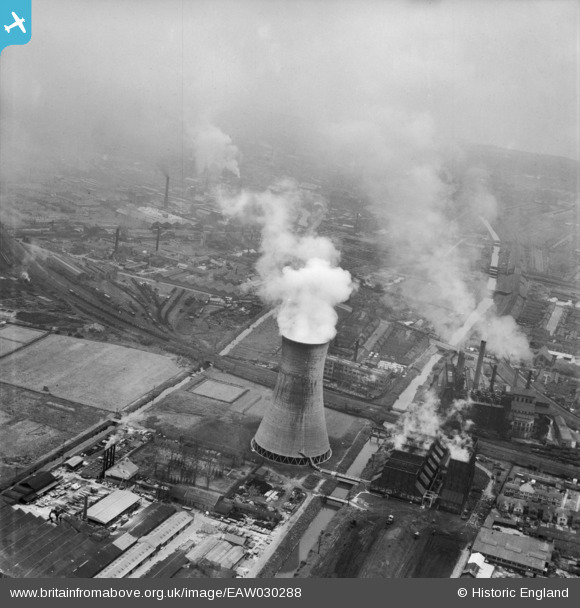
The committee’s formation coincided with the opening of the Sculcoates Power Station next to the Beverley and Barmston Drain. Built and operated by the Corporation, this much larger power station not only provided power to expanding industries to the west of the Old Town but also to the east side of the River Hull. Its location next to the railway line running to the docks allowed for regular deliveries of coal to feed the station’s boilers while water from the drain provided all-important cooling. Operating data for 1923 show nearly 4,000 domestic customers were using electricity from Sculcoates while 122 street lights were illuminated every night courtesy of the same power source.
Two decades and a number of upgrades later, the station was supplying 95,000 customers, many of them beyond Hull’s boundary in Cottingham, Beverley, Hedon and Skirlaugh. Hull’s electric street lighting was also rolled out into neighbouring twins and villages in the East Riding where old lamp posts featuring the city’s famous Three Crowns logo can still be seen today.
For many years the Corporation’s Electricity Department operated a shop under the City Hall where the venue’s ticket and sales office is based today. Customers could pay their bills at the shop as well as see a range of new electric appliances and household gadgets. Later, a new shop opened in Ferensway in the same block as the Regal (ABC) cinema.
When the Central Electricity Board was created in 1926 with a remit to construct a national grid, Sculcoates was designated as a key supplier to the new system which connected large regional power stations to the grid. In 1939, almost one quarter of all the power generated in Hull was sold to the Central Electricity Board.
Sadly, the heyday of local power in local hands generating healthy profits to be spent locally were coming to an end. In 1948 the British electricity supply industry was nationalised and ownership of the Sculcoates power station was transferred from what was now Hull City Council to a new national body while distribution and sales responsibilities were switched to the new Yorkshire Electricity Board. The Sculcoates station was eventually decommissioned and disconnected from the national grid in 1976.
Three years later its distinctive chimneys and 300ft high cooling tower were demolished. Today the old power station site is a housing estate.
Angus Young