

The Arctic Corsair has one last, crucial journey to complete before becoming a star of Hull’s Maritime year. Our silt defeating correspondent Angus Young outlines the steps.
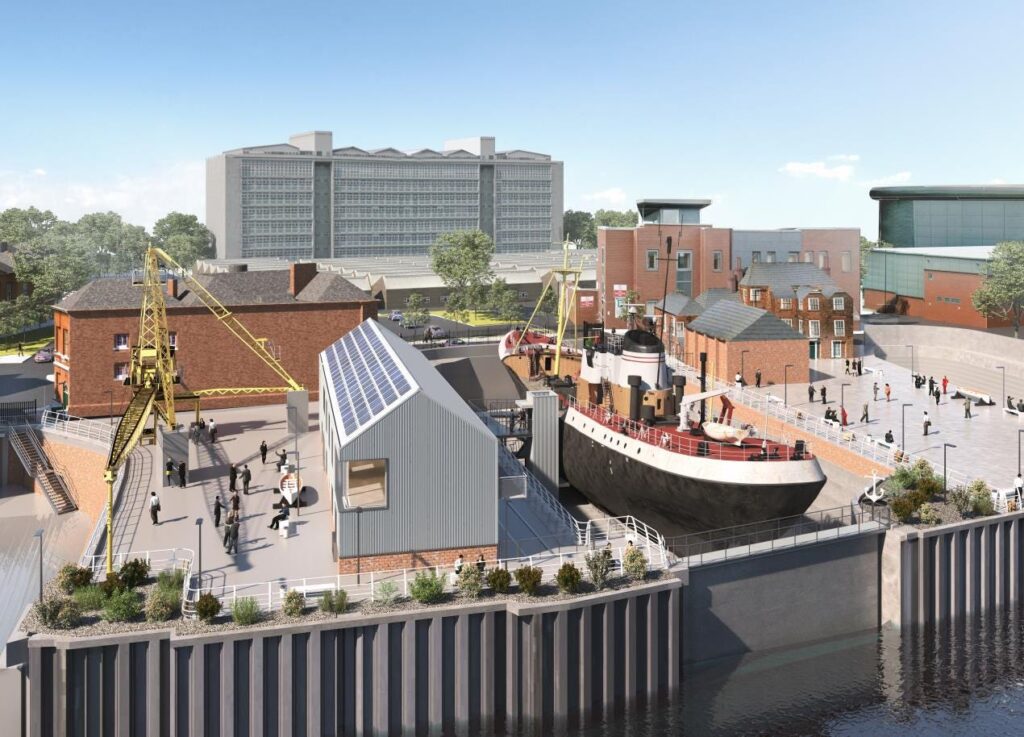
The countdown is underway for the final voyage of Hull’s last sidewinder trawler Arctic Corsair. For those not paying attention at the back, the vessel has spent the last couple of years undergoing restoration work at Dunston Ship Repairs in William Weight Dock. Before that, the Corsair was berthed on the River Hull as a floating museum. Now its owner Hull City Council has issued an update on the next steps in a multi-million pound project creating a new fishing heritage attraction at the former North End Shipyard further along the River Hull.
Crucially, all required permissions and licences to pave the way for the trawler to be moved to its permanent new home are now in place. In the short term, that means dredging will start in the river next month (JUNE) to create an access channel for the Corsair when she will eventually be towed to the river from William Wright Dock. The dredging will take place between Drypool Bridge and North Bridge to establish the necessary depth for the vessel to turn into the shipyard’s main dry dock.
Dredging will also be carried out to create access for the existing dock gate to be removed. Silt removed from the river will be held in a special tank situated on the dock as part of licensing approval for the work. Contaminated material will be sent to a landfill site for disposal. Once complete, a new custom-built gate structure will be installed on a temporary basis which will then be permanently fitted once the Corsair’s dry docking process is complete.
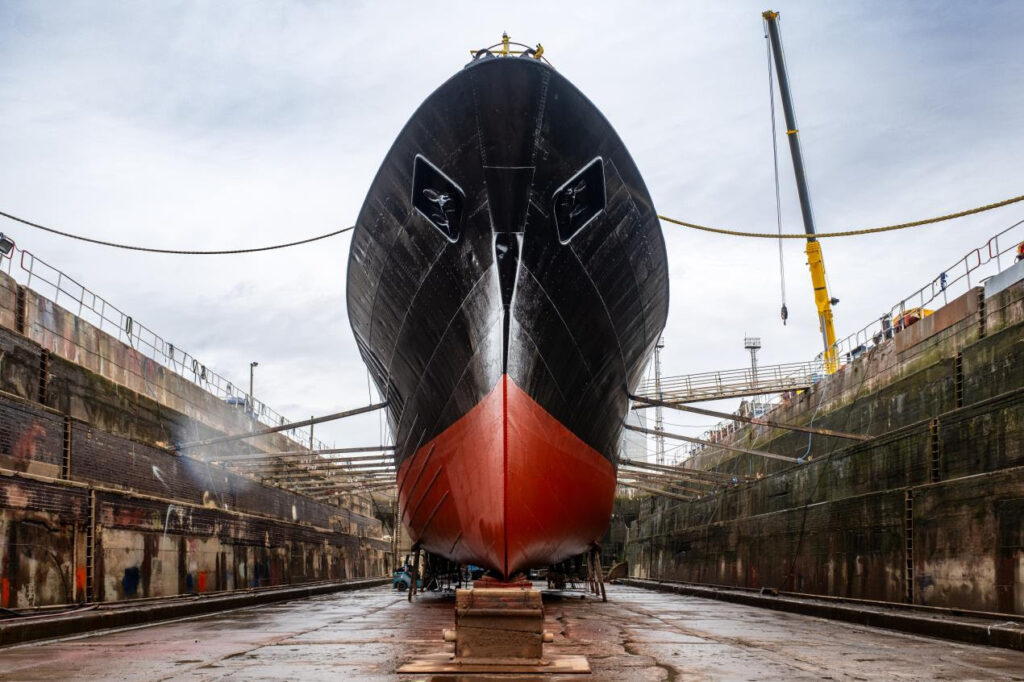
An exact date for the trawler’s journey along the Humber to the River Hull has yet to be confirmed although it’s expected to be later this summer. Precise timings will be confirmed nearer the date as the operation will rely on tide times and weather conditions. A successful trial passage was conducted in April to test various elements of the operation, including bridge movements, deployment of the Tidal Barrier and manoeuvring into the dry dock during a narrow high-tide window. As the trawler no longer has a working engine, it will rely entirely on tugs to move into position.
In the days leading up to the move, the dry dock will be flooded by lifting the new dock gate out and allowing in water from the river in preparation for the Corsair’s arrival. Once the trawler is berthed, the water will naturally clear on the falling tide and the new gate will be reinstated and permanently sealed. After that, the dock will be pumped dry before preservation work is carried out to ensure the long-term stability of the vessel. Then a final programme of work on the vessel and at the new adjacent visitor centre will take place before an opening date can be confirmed.
City council leader Councilor Mike Ross said: “We are now entering the final, critical stages of preparing the North End Shipyard to welcome the Arctic Corsair. This has been a process of collaboration, engineering precision and a shared commitment to our heritage. Seeing the Arctic Corsair move down the River Hull will be a landmark moment for the city. With the course now set, we are counting down the months until we can welcome her into a berth fitting of her history.”
Angus Young