
If you think the city centre is home to old museums, our aged repository correspondent Angus Young has some new for you.
You might think the obvious answer to today’s question lies somewhere in Hull’s Old Town where the Museum Quarter is based. However, all the museums there are actually housed in buildings originally constructed for other purposes. In High Street, Wilberforce House was originally a family home dating from 1656 while the nearby Hull and East Riding Museum of Archaeology sits within the former Corner Exchange first opened in 1855. Overlooking Trinity Square, the Hands on History Museum occupies the old Grammar School. Built in 1583, it’s the oldest secular building in the city.
Elsewhere, the recently re-opened Maritime Museum in Queen Victoria Square was previously the headquarters of the Hull Dock Company. In fact, the only purpose-built museum in the city centre is the Streetlife Museum of Transport, opened in 1989 by the late John Prescott.
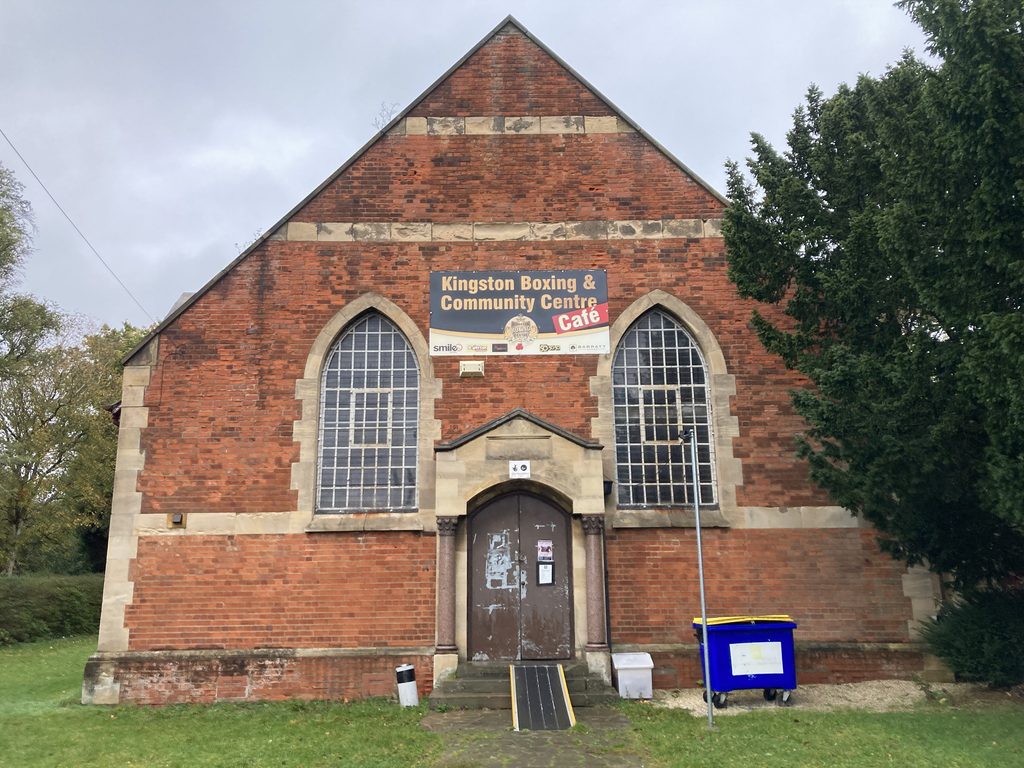
To discover the answer to our question you have to head west to Hessle Road where the Museum of Fisheries and Shipping opened to members of the public for the first time in 1912. While it’s no longer a museum, the building presented to the city by fishing company owner and philanthropist Christopher Pickering still remains in use as the Kingston Boxing Club and Community Centre. Pickering’s wider legacy in the area included donating land for the public park which bears his name and funding the construction of a terrace of almshouses, a children’s home and the original St Nicholas Church.
The museum formed part of Pickering’s vision of a model village and he was closely involved in its design, working with architect Joseph H. Hirst who was also responsible for Beverley Road Baths and the City Hall. Hirst also designed Pickering’s almshouses.
Items in the original collection came from a variety of sources. Donations were made by several local shipping companies and a number of private collectors while relics from Hull’s old whaling industry were transferred from Hull Literary and Philosophical Museum which was later destroyed during a Second World War bombing raid. A huge whale skeleton was hung from the museum’s roof and a whale’s jawbone stood in the grounds.
An illustrated guide to the museum published to coincide with its opening lists a variety of whaling relics on display, including harpoons, knives and skeletons; objects related to native eskimos encountered on whaling trips such as kayaks, clothing and three pairs of wooden snow goggles and exhibits about fishing in Japan presented by the Japanese government. The latter included a number of jars of edible seaweed, turtle eggs, a 10ft-wide giant crab and a large model the size of a snooker table showing a fish hatching station on Lake Hamana in Japan.
As you might expect, paintings and models of ships through the ages were also present along with a collection of corals presented by a private collector from Sussex. It also housed a small library and reading room but a proposed conservation department never opened.
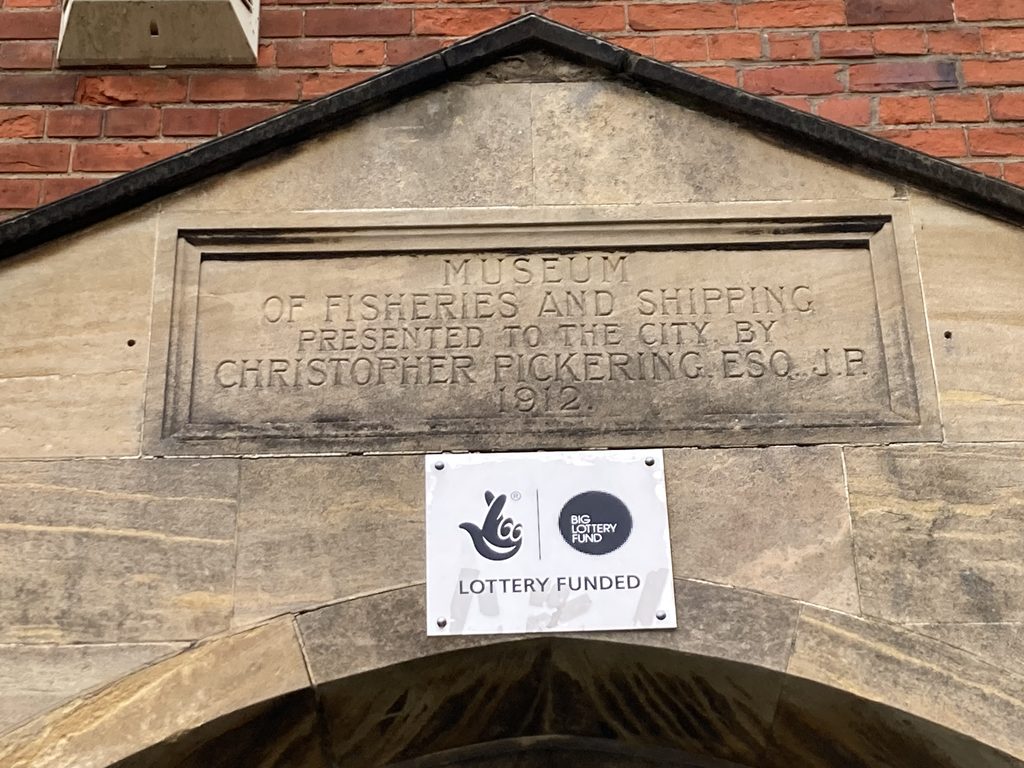
The museum eventually closed in 1974 when its collection was moved to what would initially be known as the Town Docks Museum, later renamed as the Maritime Museum. Now a Grade II listed building, the often overlooked landmark close to the main entrance to Pickering Park features little evidence of its original use. However, two clues remain.
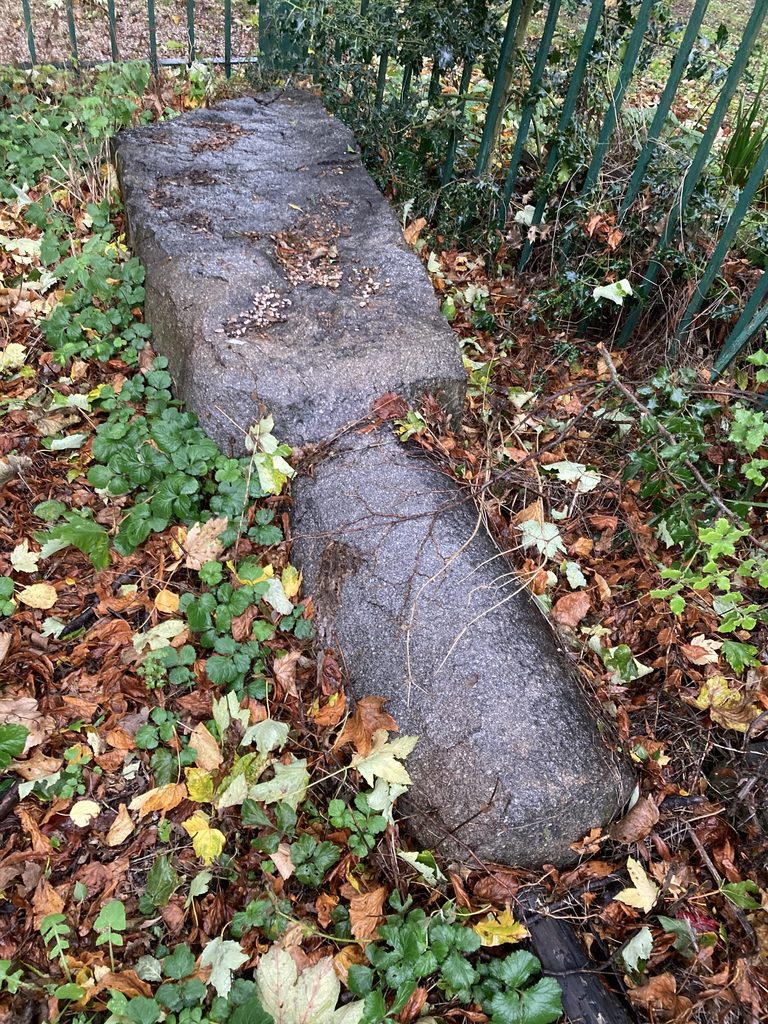
An engraved stone over the main front door commemorates its opening in 1912 and its famous local benefactor. There’s also a curious object half-buried in the rear garden area which might or might not have some connection with fishing or shipping. Roughly ten feet long, it comprises a large rectangular slab of stone and smooth solid rounded stone. We have no idea what it was. If anyone does know, answers on a postcard please.