
Another interesting tale for the ‘Well I Never Knew That’ file from our unrealised suburbs correspondent Angus Young.
Sir James Reckitt’s Garden Village is rightly regarded as one of the gems of East Hull. Constructed between 1907 and 1913, the village featured 600 houses built on 140 acres of land with most of the new homes being occupied by employees of the famous company bearing the philanthropist’s name. Today the neighbourhood retains much of its original charm and is still a popular place to live.
However, relatively few people know about another similar but much smaller historic model village on the other side of Holderness Road.
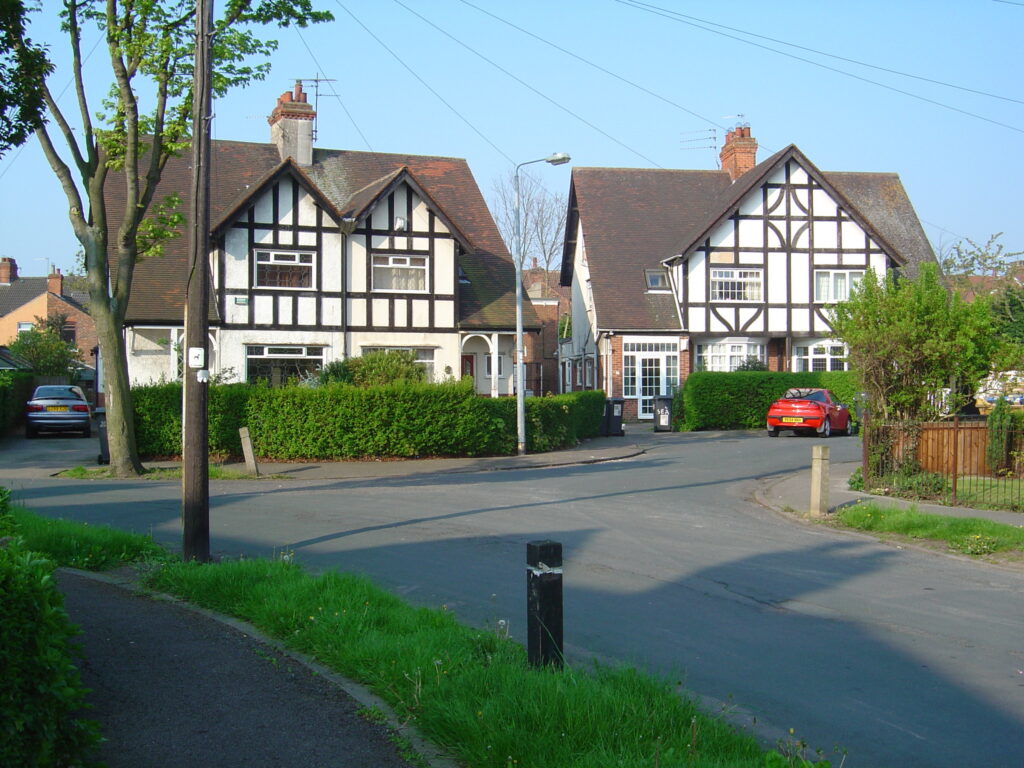
Just after the First World War, the British Oil and Cake Mills Ltd. (BOCM) bought 42 acres of land to build facilities and services for its employees. The plans included up to 500 houses along with a library, concert hall, social club, tennis courts and a pavilion, cricket and football pitches and even a 15-foot wide cinder running track. The first phase of the BOCM garden village was opened in 1921 featuring 56 houses on the south side of The Broadway and one fully completed street – Seafield Avenue.
To avoid uniformity, there were 11 different house types of four different sizes laid out as either semi-detached pairs or short terraces. The aptly-named Sunshine Houses were built in terraces of just four properties, each one with large living rooms positioned to get the sun throughout most of the day.
Further house-building was slow but Maybury Road was developed to the east as part of the original BOCM plan to form a boundary to the village. Intended residential development on the land in between halted when the Second World War began.
The war also saw the sports pitches and cinder track being used for anti-aircraft units while the construction of post-war prefabs on the remainder of the land originally purchased by BOCM effectively ended the stylish garden village project before it had really properly got underway.
Altogether, only 74 BOCM houses were built but thanks to original tree-planting, the intentionally wide spaced-out streets and a healthy amount of mock-Tudor panelling, there’s still a pleasing 1920s urban village feel to the place. As such, it’s officially recognised as a Conservation Area, The designation provides a degree of protection under city council planning policy when it comes to any new planning applications being considered.
Another BOCM legacy can also be found in Cleveland Street in the shape of the company’s former social club which stands on the corner of Mulgrave Street. Built in 1904 for company employees, it was known as both the New Cleveland Club and the Pearson Club over the years. The landmark building is currently being converted into a residential home for adults with mental health issues.