

Last week it was James Bond, this week it’s Mytholmroyd’s favourite son, reports our bilblioteca enrolment correspondent Angus Young.
Thanks to a recent discovery at Hull Central Library, we now know that Sean Connery was a bit of a bookworm. During a recent tidy-up, a copy of a library card application form filled out by the James Bond star was discovered in an archive. The actor signed up to be a library member in 1959 while performing in a touring show at the nearby New Theatre. Sleuths at the Hull History Centre later confirmed the show in question was a play called The Seashell in which he starred alongside Dame Sybil Thorndike. However, the future 007 wasn’t the only famous library card carrier in Hull in the 1950s.
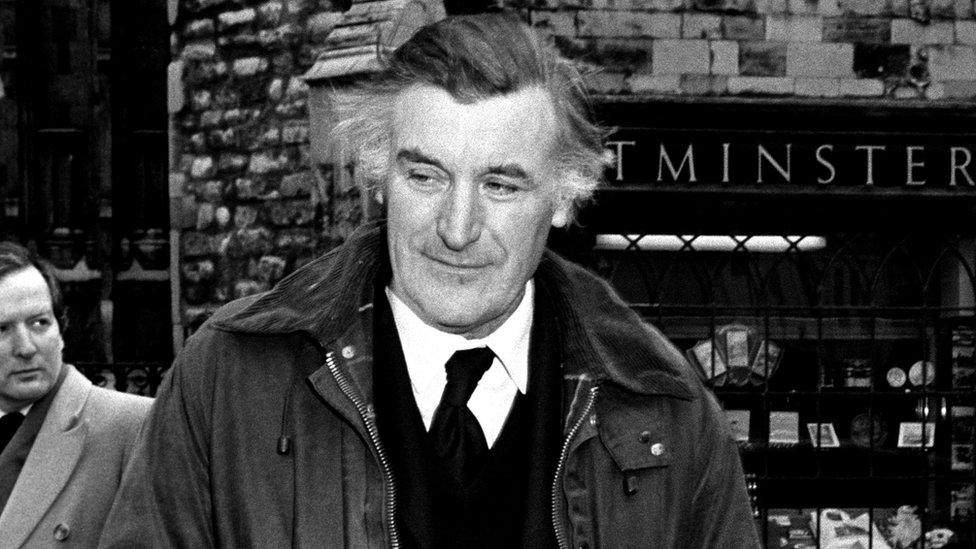
Nine years before Connery’s theatrical pit-stop, 19-year-old Ted Hughes arrived at RAF Sutton-on-Hull (where Bransholme’s North Point shopping centre stands today) to be trained as a ground wireless mechanic as part of his National Service. Once fully trained, he was transferred to a permanent posting at RAF Patrington where he was deployed to monitor and maintain radio equipment that allowed ground radar controllers to communicate with RAF night fighter pilots.
If the Russians were planning a Cold War bombing raid on Britain, the teenager from a small village near Hebden Bridge was going to be among the first to know about it. Fortunately for him and us, such a scenario never played out. Instead, as he famously recalled in a later interview, all he did in Patrington was “read and re-read Shakespeare and watch the grass grow”.
Spending long periods on his own in a remote shed full of listening devices, Hughes also apparently practiced memorising the works of poet W.B Yeats. According to Dr James Underwood, a lecturer in modern and contemporary literature at the University of Huddersfield, his time in Holderness was crucial in shaping his later work which eventually led Hughes to becoming poet laureate in 1984. “At the very least, Patrington was important to Hughes because the undemanding, solitary, often nocturnal nature of his work there gave him time for reading, writing and developing,” he said.
Hughes also worked at a small brick-built radar hut in Sunk Island similar to the one which recently toppled off a crumbling clifftop at Tunstall and regularly explored the surrounding landscape by bike. In his spare time, he took the bus or train into Hull to quench his literary thirst by stocking up on new material from the city’s main library.
Although there is no surviving record of his library membership, Hughes’ own autobiographical notes suggest these trips were made on a regular basis. Dr Underwood believes his library visits allowed Hughes the freedom to explore literature on his own terms instead of being influenced by studying at university. “With two years well away from curricula, from guided reading, away from tutorials and weekly essays, Hughes’ unorthodox personal and poetic identity crystallised, and he arrived at Cambridge in October 1951 already resistant to what he found there, and already willing to engage in culture wars.”
A poem titled Song written in Patrington was later published in his celebrated 1957 collection The Hawk in the Rain while another highly-regarded poem called Mayday in Holderness was written two years later, drawing on his National Service days to paint an evocative picture of the East Yorkshire landscape and the Humber estuary.
Here’s an excerpt:
From Hull’s sunset smudge
Humber is melting eastwards, my south skyline:
A loaded single vein, it drains
The effort of the inert North
Today, Hughes’ association with Patrington and the surrounding countryside is marked by a six-mile walk around the village and Patrington Haven taking in sites associated with the late poet who died in 1998.
NOTE: Should you feel all inspired to follow in Ted’s shoes and join Hull Libraires, you can do it here: https://www.hulllibraries.co.uk/borrowing/join-the-library