
Our wind-powered correspondent Angus Young looks at a time when Hull’s transport network was blowing in the breeze.
The long-running saga over the proposed electrification of the main rail line in and out of Hull appears to be inching towards a conclusion. For years the stumbling block seemed to be the cost of installing the necessary overhead cables between Hull and Selby. Now the development of battery-electric trains has changed the dynamic.
TransPennine Express recently announced a £1bn investment in a new fleet of battery-electric trains and Hull MPs Diana Johnson and Emma Hardy have now written to the bosses of Hull Trains and Northern Trains asking them to consider doing the same. The MPs said: “Operating without fossil fuels would offer future-proofed long-term benefits for all rail-users and for freight transportation.” If they were still around today, I’m sure Charles Hailes and Edwin Hodgson would agree with them
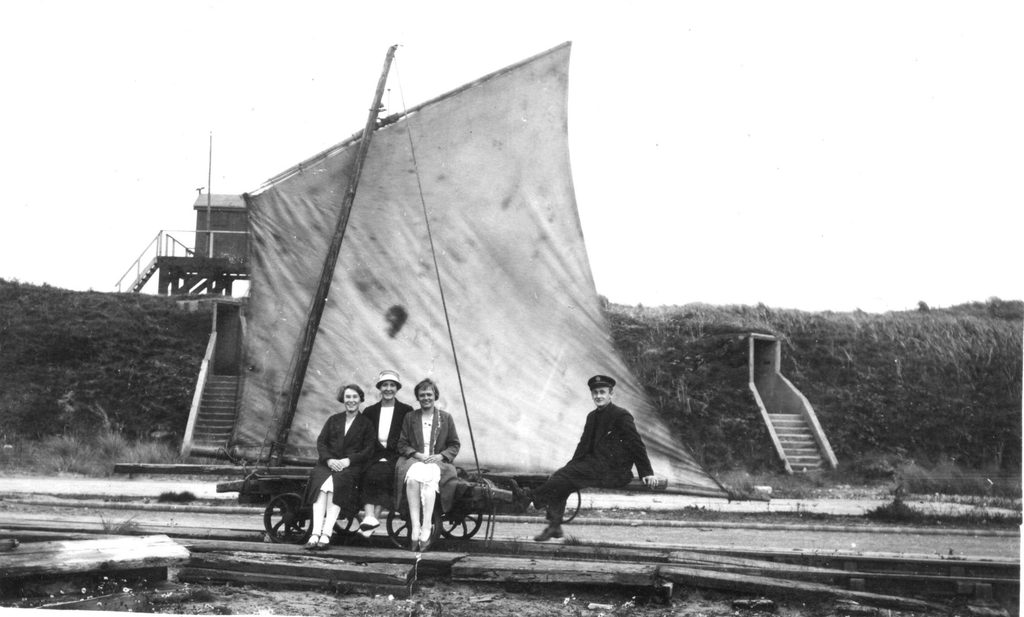
Back in 1922, the neighbours from Kilnsea invented their own fossil fuel-free train and started running it on East Yorkshire’s most remote railway. Seven years earlier a military line stretching for nearly four miles was opened by the Department of War to supply fortifications and gun batteries between Kilnsea and Spurn Point. Goods and materials would be landed by boat at a jetty on Spurn before being loaded onto small steam locomotives.
After the war its use as a railway declined and Charles and Edwin spotted an opportunity. Taking advantage of Spurn’s gusty nature and using an old rail bogie, a wooden pole and a sheet previously used as a makeshift cinema screen for a sail, they created their own wind-powered train. A contemporary newspaper report records the train reaching relatively high speeds but without any brakes, stopping was a bit of a problem and it also experienced several near-misses with the locomotives. In one early run in a gale-force wind, Charles was even forced to use his knife to cut the sail loose in a desperate bid to slow the train before it crashed.
Over the next few years several versions of the ‘Spurn bogie’ were built, some by military men still stationed nearby and others by local lifeboatmen and lighthouse keepers with old wheels and axles being acquired from redundant locomotives. Brakes were also fitted.
One model even featured an adapted racing car which had its wheels adapted to run on the rails and was said to reach 60mph on windy days. Ronald Kendall, who lived on the Point in the 1930s as son of a lifeboatman, shared his memories of growing up there with the Spurn Kilnsea Easington Local area Studies project. He said: “On one occasion a gang of us, without notifying anyone, lifted the bogie onto the line and began pushing it along, running and jumping on. As we came up to the bend and went down a slight incline we came face to face with the Kenyon (locomotive). It was a case of all jumping off and collecting a few bruises as the bogie crashed into the train. We were reported to our fathers who read us the riot act.”
When the first road was built along the Point in 1941, the use of the railway line decreased dramatically and it finally closed ten years later. Slowly but surely, it then got washed away.
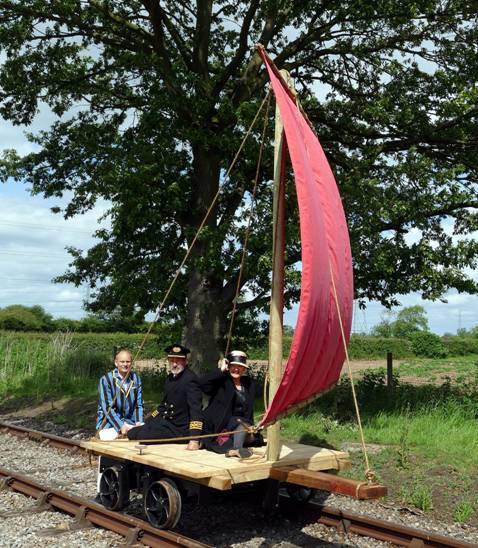
In 2019 local historian and Spurn expert Phil Mathieson turned the clock back with a small team of volunteers to build a replica of the original bogie train, taking some modern day inspiration from the nearby offshore wind farms. “With the Humber region being at the forefront of wind turbines and green energy, we felt it was appropriate,” he said.
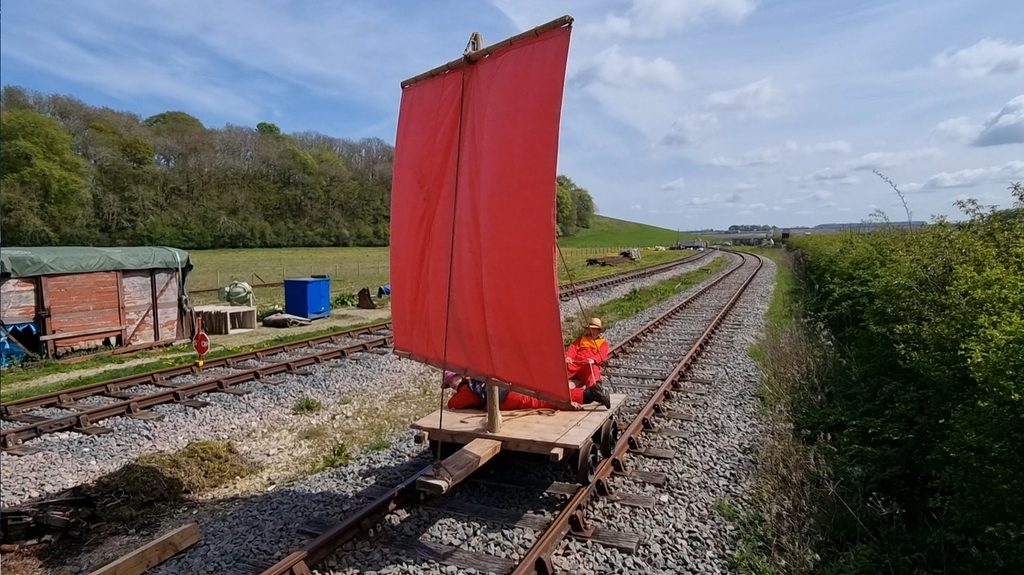
With the old military railway at Spurn no longer intact, the bogie still gets an occasional run-out elsewhere. Most recently, it was one of the star attractions at an event at the Yorkshire Wolds Railway at Fimber Halt.