

It’s a title that’s up for grab. Should anyone want to make a nomination, contact our offensive official correspondent Angus Young
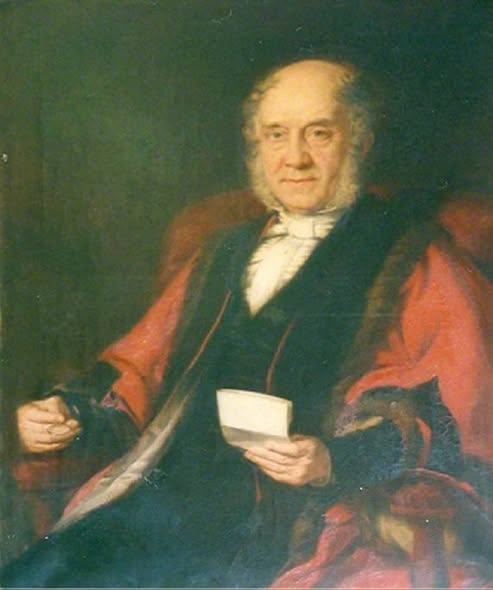
Manners maketh man, as the old saying goes. Living up to this fine sentiment is, however, always a bit tricky. Some are better at it than others. Some don’t even come close. We all probably know a relative or friend who can be offensively impolite at the drop of a hat, capable of a discourtesy without a second thought. But can anyone match the late Alderman Thomas Abbey who currently holds the unwanted unofficial title of being the rudest man in Hull?
Alderman Abbey died in 1875 and was buried in Hull General Cemetery on Spring Bank. Abbey Street off Holderness Road was named after him in recognition of his many achievements during a long life as one of Hull’s most influential figures. However, his legacy also includes a reference to his famously blunt character.
“It was his misfortune to always speak what he thought,” said one associate after his passing. Sadly, there is no surviving additional written evidence of Abbey’s apparent ability to rub people up the wrong way other than the fact that, as a Yorkshireman, it might have been second nature to him. Instead, his death at his home in Posterngate at the age of 80 was mainly greeted with fulsome tributes from his contemporaries.
A shipowner, Abbey had been a councillor on Hull Corporation for nearly 27 years and a borough alderman for 19 years. He was probably best known for his role as chairman of the Watch Committee, overseeing law and order issues in the town.
After his death, the Corporation moved a vote of condolence. It said: “This council, with deepest sorrow, records the death of Mr Alderman Thomas Abbey whose best energies were for many years devoted to the service of the town. He was associated with most of the public bodies of the town and cordially co-operated in promoting such enterprises as we calculated to advance its commerce and general prosperity, and he gave a warm support to all its public and charitable institutions. In discharge of his various duties he was punctual, diligent, independent and disinterested and throughout a long life maintained a high character for moral worth and public usefulness.”
Was being described as “disinterested” a hint at his legendary rudeness? Perhaps, or it could just be an old-fashioned way of saying he didn’t bring any personal bias into his civic business. Either way, Abbey made sure he was always remembered by leaving a portrait of himself to the Corporation. Today it forms part of the Guildhall’s art collection.