

We’ve all heard of places like Gipsyville and Bransholme but, as our revived suburb correspondent Angus Young reports, Thistleton may yet be equally well-known.
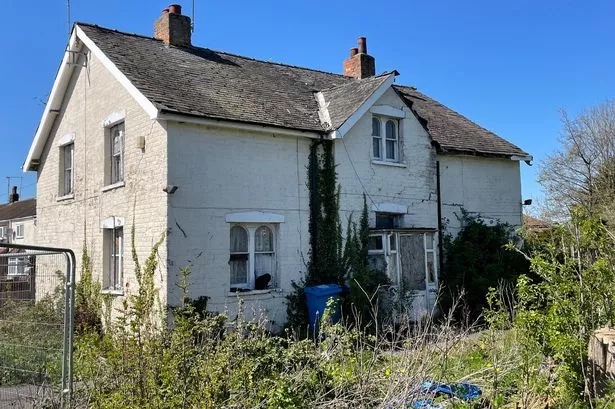
A side street off Stoneferry Road might seem like an unlikely place to revive a lost piece of Hull’s history. But that’s exactly what is currently happening in Woodhall Street. Where the terraced street ends and becomes a narrow footpath which crosses a cycle route is the kind of building project you might see on Kevin McCloud’s long-running TV show Grand Designs.
Two years ago a dilapidated detached property overlooking the footpath had become both an eyesore and an occasional refuge for squatters. Once a farm cottage next to Fordyke Drain and surrounded by open countryside, it had been earmarked for demolition as part of approved plans to build three new homes on the site. But when the owner changed his mind and decided to sell instead, self-employed builder Jason Copping stepped in to buy it.
As part of his ongoing restoration, the area’s historic name of Thistleton has been revived. It’s not clear where the name came from or exactly when but an advert in the Hull Packet newspaper dated June 1808 records the proposed sale by auction of a “new-built dwelling house consisting of six small rooms, pleasantly situated in Thistleton, about half way on the foot-road from Hull to Sutton.” According to the advert, the new property formed one of a row of houses “built and intended to be continued in perfect uniformity and commanding a fine view of Hull, the Humber, etc, together with a garden in front of the house.”
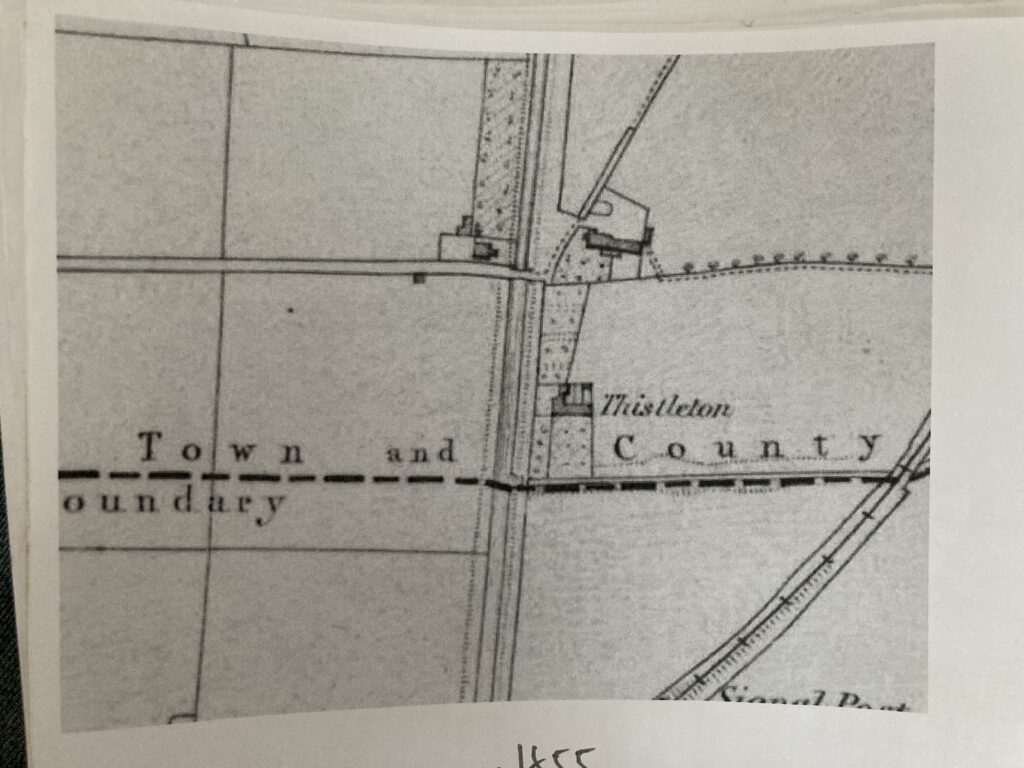
Whether it’s the same property is hard to tell but an Ordnance Survey map from 1855 features five buildings relatively close together. Collectively, they are referred to as Thistleton with Thistleton Farm as the main property.

Despite Thistleton appearing on old maps, it was only ever a small hamlet rather than a bigger village in its own right such as Marfleet or Sutton. Dairy farming and market gardening are both recorded at Thistleton in the 19th century but by 1907 the area’s agricultural era came to an end when most of the land was acquired by Reckiits as part of the company’s industrial expansion in East Hull. It’s likely the aforementioned terrace of four cottages disappeared around this time along with the Thistleton name, making way for a recreation ground for employees at the Reckitts factory.
Establishing the age of the surviving building now being refurbished has been difficult, not least because of the discovery of two large pieces of thick slate which had formed part of a fireplace surround. Both feature the hand-etched date “1762”. However, it’s thought they could have been taken from another older building for use during the cottage’s construction as recycling materials from other properties was quite common back in the day.
Despite its age and being one of an historic agricultural kind in Hull, the cottage is not designated as an official listed building. As such, the current upgrade mixed the traditional with some more unusual quirks. The hallway features stained glass from a former chapel in Grimsby while the impressive wrought iron entrance gates were once part of a farm in Driffield.
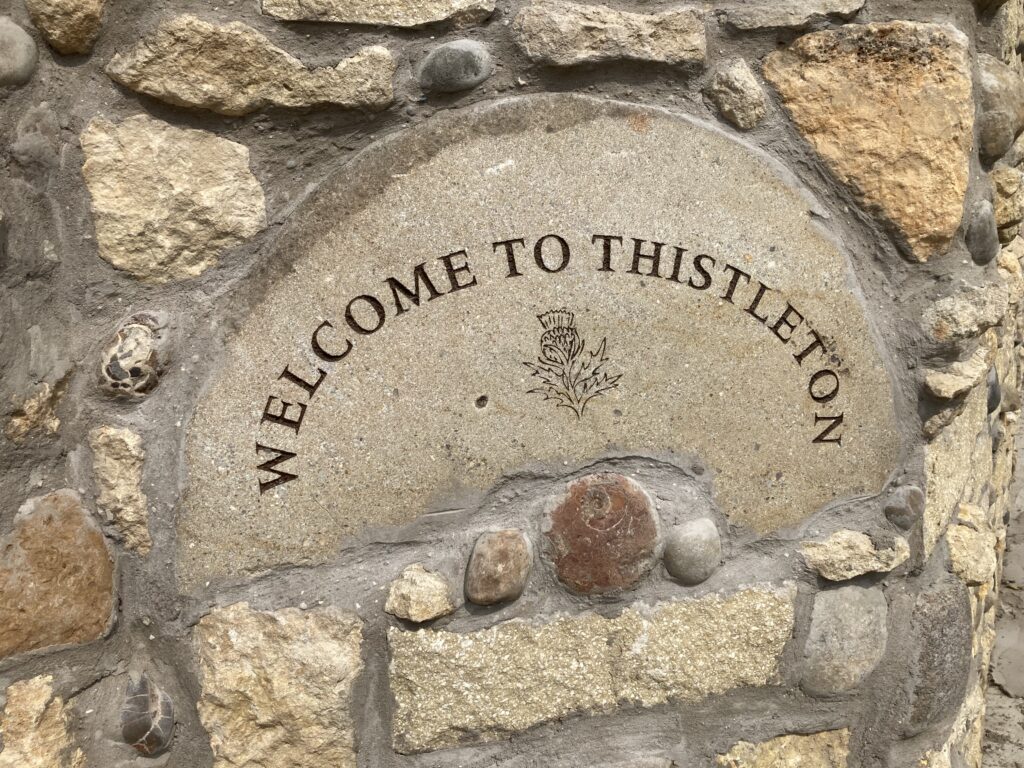
The Thistleton name is also now immortalised on an old millstone set into a new boundary wall, having been engraved by Hessle Road-based monumental mason David Phillips.
Angus Young