
When it comes to being hard, reports our aqua toughness correspondent, it seem nothing beats the water round here.
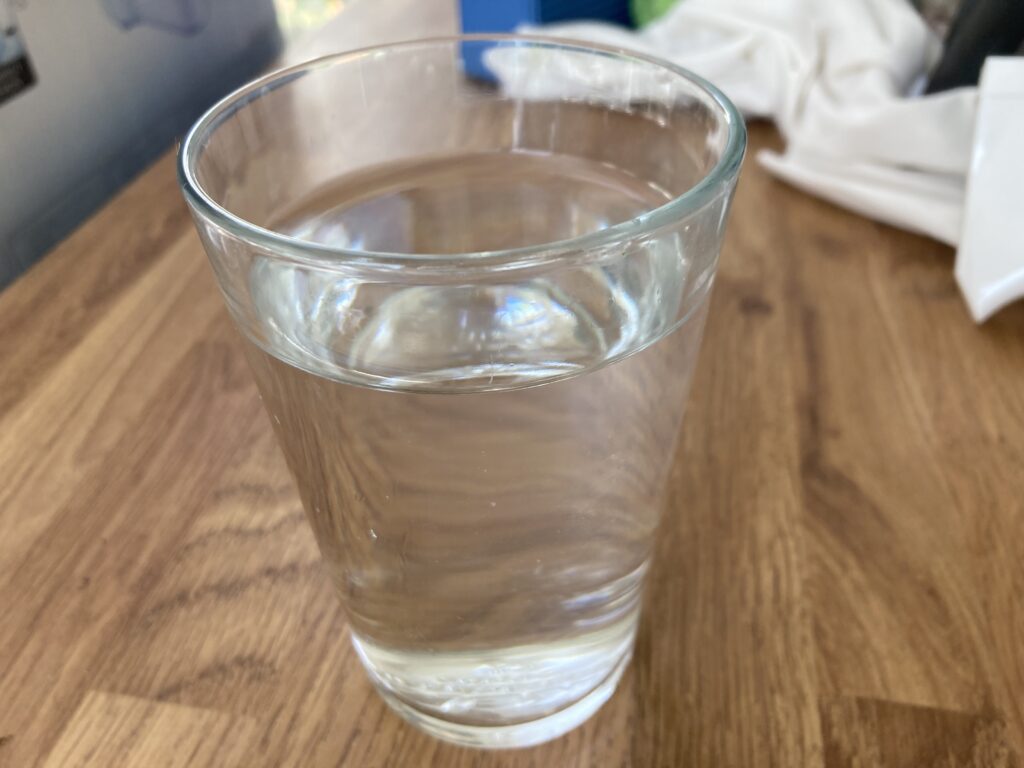
It’s not often Hull gets to be at the top of a UK league table. But that’s exactly what happened recently when some bright spark at wellness brand Kollo Health decided to rank 50 cities across Britain on how hard their drinking water is. It turns out Hull’s wet stuff is not just hard, it’s very hard. In fact, it’s the hardest there is. Harder than London, Luton, Oxford and Cambridge who also made the Top Five.
The reason behind this new accolade actually lies beneath us. Hull draws its water supply from a chalk aquifer beneath the Yorkshire Wolds, giving it levels of hardness typical of southern England despite being in the north.
So what is hard water? Our very hard water contains the country’s highest concentrations of dissolved materials, primarily calcium and magnesium carbonate. These minerals come from limestone and chalk that water can filter through before reaching the water table. As we sit on a thick seam of chalk, our tap water is nearly 19 times harder than the soft water supply in Inverness. It’s also six times harder than that of Leeds and more than five times harder than Sheffield’s.
The soft water in Scotland, Wales and parts of northern England is also the result of geology. Granite, basalt and slate are all far less soluble and contribute very few minerals to the water.
Water hardness is measured in milligrams of calcium carbonate per litre and there’s even an official UK classification system determining what’s soft and what’s hard. In case you’re wondering, very hard drinking water is 310 mgL CaCO3 or above while the softest is between 0 and 60. In the most recent standings Hull topped the UK charts with a whopping 380 mgL CaCO3, well ahead of London and Luton who were both on 320.
While being Number One naturally provides Hull with bragging rights, there’s also a downside because very hard water does create a host of household problems. Kettles and coffee machines are the most obvious casualties as limestone builds up on heating elements, forcing them to work harder and use more energy. A heavily-scaled kettle can use up to 12 per cent more electricity than a clean one.
Washing machines and dishwashers suffer too as limestone clogs up pumps, heating elements and water jets over time, Without regular descaling, appliance lifespans can be reduced significantly. Boilers and pipes can also lose efficiency and ultimately fail as a result of limescale deposits. Because of this, experts recommend using a filter or a water softener to improve taste, reduce limescale and extend the life of appliances.
Hull’s very hard water means soap doesn’t lather particularly well but rinses off much better than if you’re living in a soft water place like Inverness. Many people also find that hard water leaves their skin feeling drier than soft water while hard water is generally believed to have a better taste than its softer counterpart.
There’s also evidence to suggest very hard water is beneficial to human health because it’s a good dietary source of calcium and magnesium. Some studies have even claimed that populations in hard water areas have slightly lower rates of heart disease. Scarlett Gray, registered dietician at Kollo Health, said: “Water hardness has a genuine impact on daily life, from the way skin and hair feel after washing to the limescale build-up in kettles and appliances that millions of households deal with every day. Hull’s position at the top of the national table is striking, particularly given that most of Yorkshire records soft water. For residents, understanding just how hard their local water is can be the first step towards managing its everyday effects.”