
Hull Tour Guide Paul Schofield takes us back over 100 years to learn of a remarkable but little-remembered tragedy.

Hull Tour Guide Paul Schofield takes us back over 100 years to learn of a remarkable but little-remembered tragedy.

Ally-mai has been back in Central Library to sift through her best fantasy picks.

Look up and you’ll spot them, along with some fine architecture, reports our chimerical sculpture correspondent Angus Young.
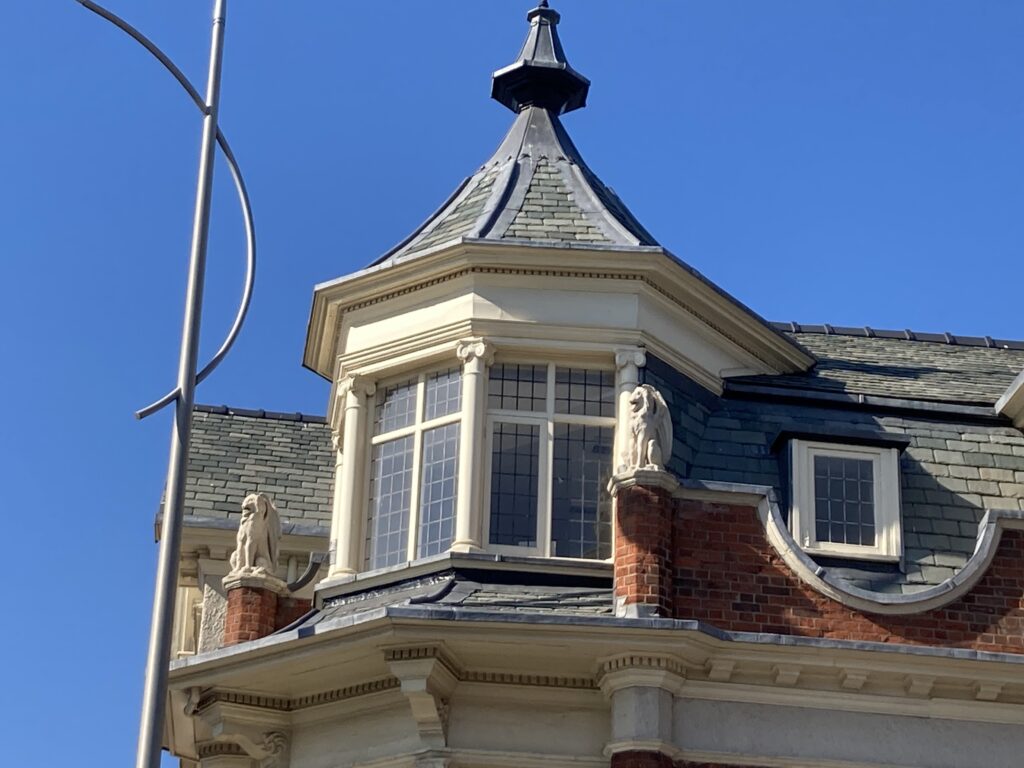
There are plenty of lion sculptures dotted around the city centre but only two have wings. Perched on brick pillars beneath a distinctive roof turret topped by an ornamental weather vane, a pair of stone griffins overlook the junction of Ferensway and Anlaby Road. They’ve been there for 123 years, standing upright as if keeping guard over the building beneath them – Regent House.
The stylish landmark was designed by architect John Dosser to provide new premises for Turner & Drinkwater, one of Hull’s most respected photographic businesses. The company remained there until the early 1970s. Apart from its splendid griffins, Dosser’s building is also worth a long look because it includes a neat design trick.
At first glance, it appears to be three separate properties but architectural details are carried through each one to unite the overall design. Not surprisingly, it was awarded Grade II listed building status in 1994. Historic England’s official listing says: “The external exuberance of the architectural design and detailing of the surviving portion of the 1902 Regent House, designed to appear as three separate properties, is clearly of special interest as a good example of an Edwardian commercial building.”

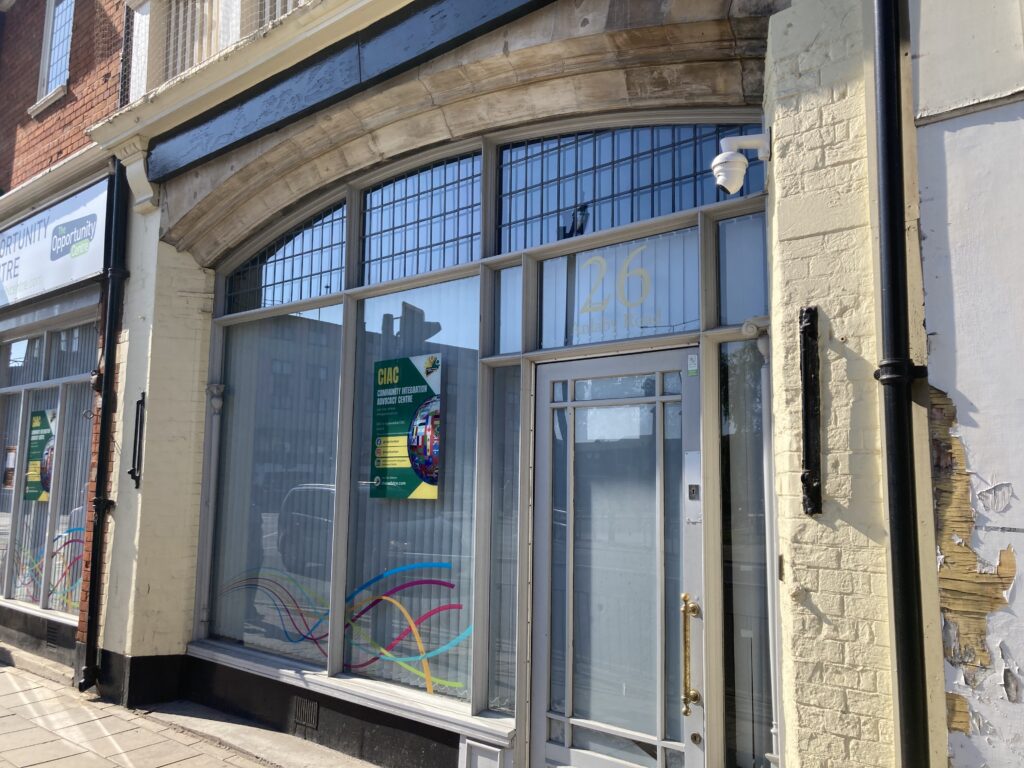
Pleasingly, the original shopfront at No.26 Anlaby Road can now be seen after it was exposed and restored during refurbishment in 2015.
Dossor’s handiwork can also be seen just across the same junction in the shape of the former Kinemacolour Picture Palace which opened in 1910. Later known as the Regent Cinema, it’s now a pub trading under the name G.W. Horner ‘s.
Born in Hull, Dossor was the son of a sea captain who became commodore of the Ellerman Wilson shipping line. Instead of a nautical career, he decided to be an architect. He was an articled pupil with East Yorkshire’s largest practice Smith & Brodrick and later spent a year as an assistant to noted Hull architect Alfred Gelder before starting his own independent practice in 1898.
His initial work involved designing pubs but the Regent House commission really cemented his reputation as one the city’s up and coming architectural talents. By then he had already designed St. Augustine’s Parish Church Hall which still stands at the junction of Princes Avenue and Queens Road and he would go on to design several notable private houses in the Avenues, including a distinctive terrace of mock Tudor-fronted properties in Victoria Avenue.
In 1907 Dosser set up a new partnership known as Wellsted Dossor & Wellsted, designing a new school and parish hall for St. Mary’s Church in Sculcoates Lane. The firm was also responsible for more new housing in the Avenues, including a terrace of four homes in Richmond Street complete with leaded windows, overhanging eaves and cast-iron ventilators in a Garden Village-style design. Dossor’s touch is also in evidence in Newland Park where he designed at least seven properties in what is still regarded as Hull’s poshest street.
In 1932 Dossor became Lord Mayor of Hull having already become an alderman and a magistrate. At the time he was living at 135 Westbourne Avenue, ironically not one of his own designs but still with many internal features he had added over the years.
Despite his residential back catalogue, I still think Regent House is his finest work. Don’t forget to give his grifins an appreciative wave the next time you pass by.

For Pride Month, Dr. Robb Robinson of the University of Hull tells the story of probably the coolest person to have ever lived on Anlaby Road.

Our humorous illustrations correspondent Angus Young draws our attention to yet another little-known but highly-influential figure.

The ridiculously-talented Hull-based Gareth Sleightholme (aka Hesir) is probably the city’s best-known current comic book illustrator. His inky fingers are behind three recent Maritime Tales comic books produced as part of the Hull Maritime project as well as his own popular sci-fi comics However, we’re sure Gareth will concede he’s still got some way to go to match the prodigious output of Ern Shaw.
Born in Bean Street in Hull in 1891, Ern spent a lifetime creating colourful cartoon characters and bringing smiles to generations of readers until his death in 1986. His first artistic success came at the age of 12 when he received a prize of five shillings as the winner of a drawing competition organised by the Hull Times newspaper after submitting a sketch of the newly-completed Guildhall.
However, a boyhood ambition to become a train driver ended shortly after leaving school when he spent a week in a railway shed cleaning engines. Returning home every night covered in grease and oil prompted a re-think and he spent the next seven years working in a draper’s shop in Hessle Road. At the same time, young Ern enrolled in a correspondence course in drawing with the Press Art School in London to learn the techniques from professional artists. It would be the only formal artistic training he ever received.

When the First World War began in 1914 he joined the Royal Medical Corps and would later illustrate a regular magazine produced by a military hospital in Reading where he was based. Some of his drawings of operations being performed there were published in the medical journal The Lancet. After the war he initially worked as an illustrator in London before returning to Hull where he started to make a living by drawing and submitting cartoons to local and regional newspapers.
Over the following decades he produced thousands of drawings and developed a speciality in capturing the funny side of life at the city’s three professional sports clubs – Hull City, Hull FC and Hull KR. Many new players felt they had not ‘arrived’ until Ern had featured them in one of his cartoons. A press box regular, his artwork also regularly featured in match day programmes.
Away from sport, he created long-running cartoon strips for several national magazines featuring animal characters and came up with his own family of mischievous pixies called Tiny, Mac, Toodles, Mick and Twanky known as Dingbats who appeared in annuals, colouring books and games. His first Dingbats annual published in the 1950s sold over 100,000 copies.

Other illustrated comic books included The Daily Deeds of Sammy the Scout and The Jolly Gnomes Annual while, keen to pass on his knowledge as a cartoonist, he also wrote an instructional book called How To Become A Successful Cartoonist, A Guide To Aspiring Artists with a foreword supplied by Percy Bradshaw, his old friend and principal of the Press Art School.
Ern’s incredible output extended to puzzles, card and magic games, jigsaws, greeting cards, board games and advertising but it wasn’t until 1967 at the age of 76 that he staged his first solo exhibition – at the Darby and Joan Hall in Cottingham.
In 1974 he appeared on the TV game show Quick On The Draw hosted by Bob Monkhouse and a year later was invited as a guest of honour to the Walt Disney Studios in Los Angeles where he was given a special behind-the-scenes tour. “I had always admired Walt Disney’s work. Well, they don’t come much better or bigger than that,” he said after returning home.

By then, he was officially acknowledged as the country’s oldest working cartoonist and was made an honorary life member of the Cartoonists’ Club of Great Britain.
He died aged 95 having worked as a freelance cartoonist for over 70 years. In that time, it’s estimated around 25,000 of his cartoons were published in newspapers and magazines. A posthumous exhibition of his work was staged in Hull’s Ferens Art Gallery in 2010, titled “The Boy Who Wouldn’t Grow Up” – a phrase borrowed from Percy Bradshaw’s foreword in Ern’s own 1946 book giving tips and advice to aspiring cartoonists.

Former top firefighter and Chair of VHEY Chris Blacksell takes a fresh look at a monument we all know well.

Avenues Library regular Gill talks us through the best bits of her local branch.

From school to scrap, our handicraft component correspondent Angus Young has been poking round for bargains.

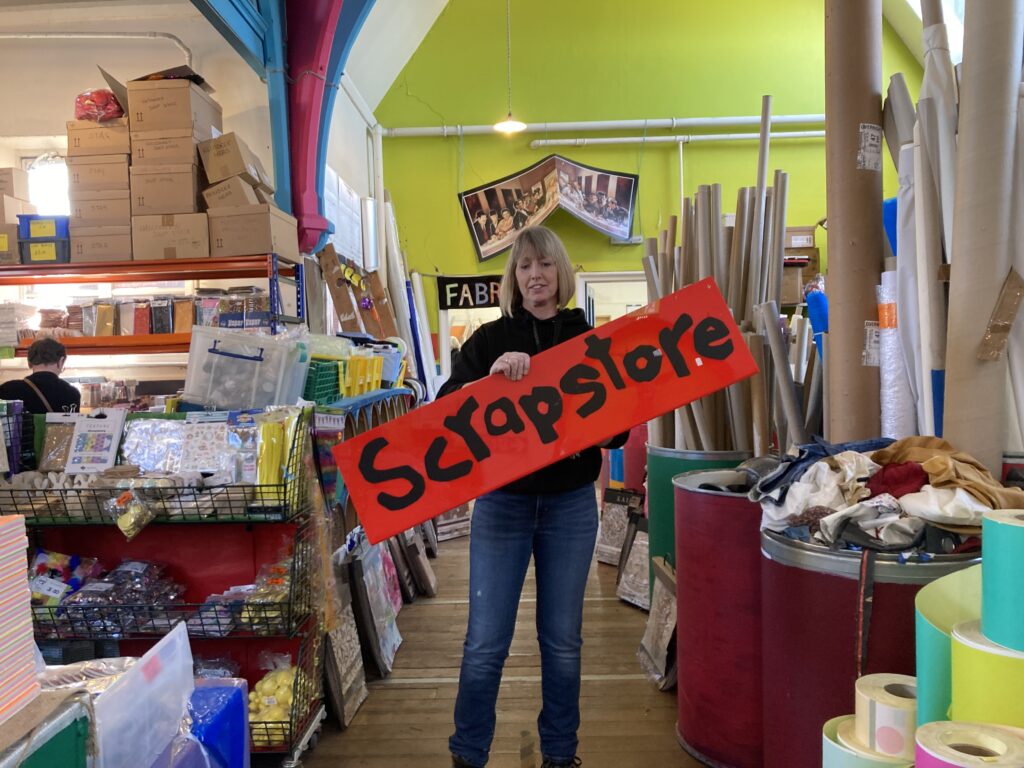
If you’ve never been to Hull ScrapStore it’s probably time to plan a visit. For the much-loved non-profit charity’s resource centre is a veritable treasure trove packed full of things just waiting to be turned into something else.
Housed in a former historic Victorian board school, it’s also probably the most colourful place in Hull. From tins of paint and rolls of fabric to empty plastic cartons and unwanted packaging in all sorts of shapes and sizes, there’s something for every imaginable DIY craft project. Set up in 1988, the charity initially operated a members-only system but these days anyone can pop in to bag a bargain.

The concept behind it is quite simple. Thanks to the continuing generosity of local companies, organisations and individuals, donated unwanted materials are offered for sale at affordable prices alongside a range of specialist branded arts and craft equipment. There’s a large section in the school’s former assembly hall where you can fill a shopping basket with as much stuff as you can squeeze in all for the princely sum of £6 while an old classroom is now packed with more individually-priced fabric than you will find in Boyes.
Manager Tracey Thomas joined the charity 20 years ago. She said: “We get around 800 people in a week which is pretty good considering we are only open four hours on five days a week. They came from all over the place. We get a lot from over the bridge in Lincolnshire, we’ve even had people come from as far as Middlesbrough. Probably the most satisfying thing for me is seeing families coming in and having a good old rummage because they’ve got an idea for a craft project.”
Tracey runs a small team who are supported by volunteers. As well as keeping the place well stocked, they also run regular creative workshops and even host craft-based birthday parties.
Rental income from other tenants at the centre also helps to keep the charity ticking over financially. Long-term tenants include artist Liz Dees and her street theatre company Apus, and children’s puppet theatre company Indigo Moon. Joining them recently is Keith Holmes who runs his own arts performance company Proper Creationz. There’s also a small community hub offering a warm space for people to pop in, have a chat and a cupp, make new friends and learn new skills.
Without making much of a song and dance about it, ScrapStore is now probably one of Hull’s most successful grassroots arts and craft organisations. Forget Humber Street, Dairycoates Avenue is where it’s at. There’s simply nothing like it in the city or the wider region for that matter.
“The nearest place like us is in Selby, beyond that there are others in Leeds and Nottingham,” says Tracey. “We all do things slightly differently but the basics are the same. It’s all about promoting affordable, sustainable creativity for all ages.”

They may look like film props but they are very real and, as Hull Tour Guide Paul Schofield explains, there’s a good reason why they’re there.

Concrete is out and natural flood remedies are planned on Bransholme, our woodland gully correspondent Angus Young reports.
In June 2007 hundreds of homes in Bransholme and Kingswood were flooded when the Bransholme pumping station failed during prolonged heavy rain. Nine years later a massively-upgraded pumping station was opened after a £16m investment by Yorkshire Water. As part of the facelift, six 92 ft-long screw pumps were installed to help move rainwater from the sewage system serving the wider area into an adjacent storage lagoon before being slowly released into the River Hull. Even with the new pumps, efforts continue to divert surface water away from the sewerage system wherever possible to reduce the risk of flooding because of its limited capacity to cope with extreme rainfall.
Projects large and small have been completed ever since the 2007 floods and one of the smallest is about to get underway in Hemble Drive in Kingswood. As part of a £100,000 scheme, four roadside gully drains in the street will be disconnected from the main sewer and instead linked to a new natural water storage area set to be created in an adjacent woodland.
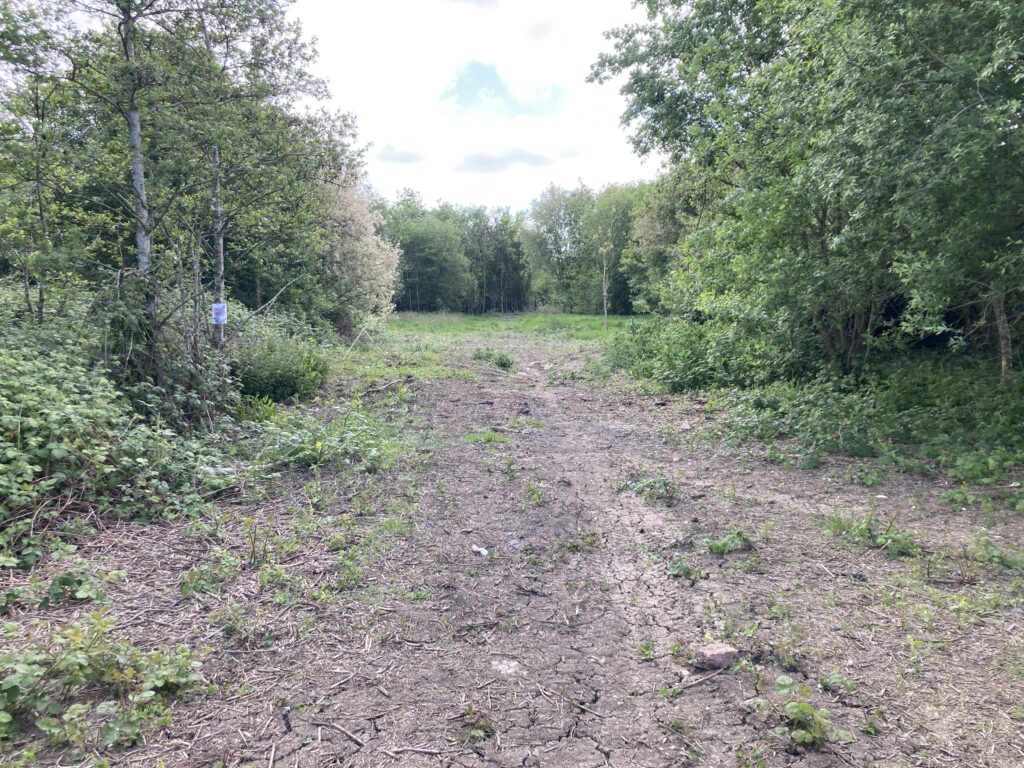
The woodland – variously known as Midmeredales or Millennium Wood – was planted just before most of Kingswood was built. It’s now relatively mature but the flat clay ground it stands on means flooding already happens on a regular basis during wet weather, damaging trees and making public access almost impossible at times.

Hiatt Jackson, senior flood risk management officer at Hull City Council, explained: “The woodland is a valuable resource for the local community but it is prone to flooding. When complete, the water will enter the woodland through a surface channel, called a swale. This will look like a long depression in the ground and will be home to wildflowers and reeds. The wetland will use nature-based solutions to completely clean the water of contaminants and will store some of the water for most of the year, providing valuable habitat for amphibians, invertebrates, birds and plants. Any overflow from the wetland will travel along another swale and towards an old agricultural surface channel that empties into Wawne Drain. Water will only travel along this path in very large storm events or during very wet years. This system will reduce flood risk in Kingswood and help the green space to empty during wet weather which will help the woodland to maintain long-term health.”
A second phase of the scheme will see the installation of a new trash screen and a set of steps on nearby Foredyke Drain to help keep the watercourse clear of littler and free-flowing. Rather than using concrete, an earth embankment will be constructed at the site to provide access.
Hiatt added: “Concrete has a very large carbon footprint, so we are aiming to use less of it and to use innovative techniques instead to ensure bank stability and create operational assets that will last for a minimum of 30 years. This watercourse suffers from a high degree of fly-tipping and litter, largely shopping trolleys and drinks bottles and cans so we are hoping that ongoing work with local schools helping to educate young people on the importance of our open watercourses in providing flood resilience and wildlife habit really has an impact.”