
Ally-mai corners Big Malarkey-goers Jess and Megan and coerces them into attempting our quiz. Inevitably, they do better than most adults.

Ally-mai corners Big Malarkey-goers Jess and Megan and coerces them into attempting our quiz. Inevitably, they do better than most adults.

The Viola Trust’s Norman Court talks Burnsy through the next era for a Hull trawler with links to the Boxing Fleet, WW1, the Falklands War and, apparently, Van Morrison.

Actor Matt Sutton picks the biggest demolition site in the city in order to outline his love for a true icon.

Boss of the Sesh Mak gives us his view on the most interesting bands at the 2025 Humber Street bash.

You may think you have a handle on this job role but Lucy, of Wilkin Chapman Rollits, lays out exactly what’s involved.

This is exactly the sort of mystery our lachrymose females correspondent loves to get his teeth into.
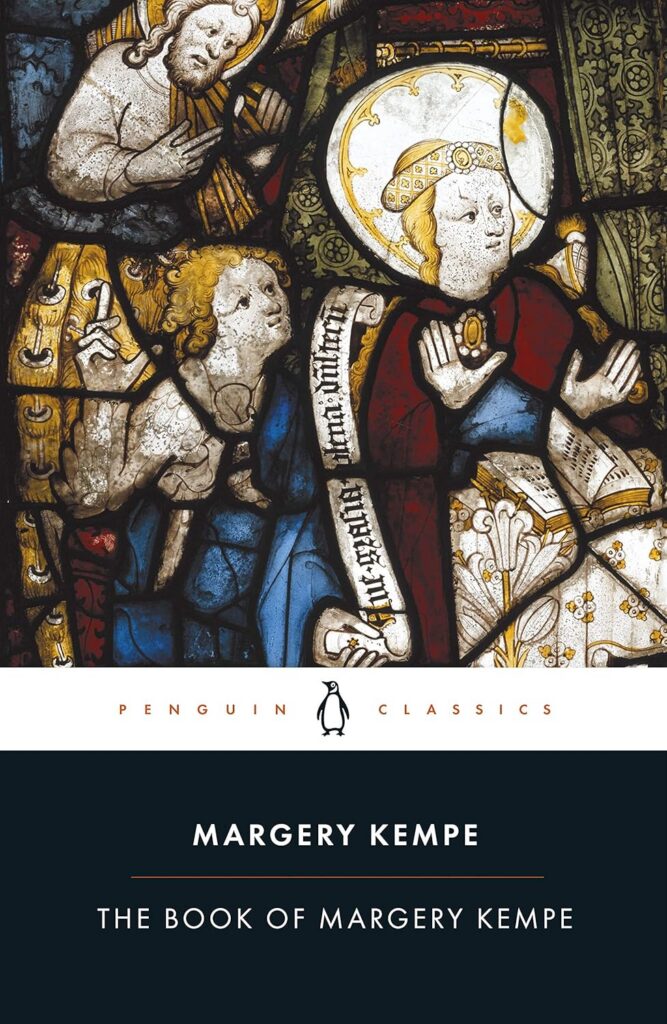
Picture the scene. A woman wearing a white hair shirt arrives in Medieval Hull having travelled on horseback from a visit to Bridlington Priory accompanied by a member of the Archbishop of York’s court. She’s prone to constant weeping, sobbing and crying out loud while begging Christ for mercy. Occasionally, she writhes around flinging her arms in the air and says she can smell things no-one else can.
As a crowd gathers, she starts telling those present about her visions of Jesus Christ, Mary Magdalene and God himself as well as demons and the Devil. Some of the visions, she says, include herself being present at the birth and crucifixion of Jesus Christ. The woman in question is Margery Kempe, a religious mystic who is credited with the first known autobiography written in the English language.
The Book of Margery Kempe tells the story of her spiritual life and details her pilgrimages around Europe and the Holy Land, including her visit to Hull in 1417. Written by an unknown hand from her dictation (she could not write herself), the manuscript was lost for centuries before being discovered in 1934 in a private library collection. It has since been reprinted and translated in numerous editions and has been studied extensively by academics specialising in medieval history.
In her book, an unidentified “good man” provides overnight accommodation in Hull but by the morning “malicious people” were calling for her removal from the town on the ground that she was “not a good woman”. Elsewhere, Margery had been tried for heresy – known as Lollardy – but never convicted. Many claimed that by wearing white, she was trying to fraudulently pass herself as a nun.
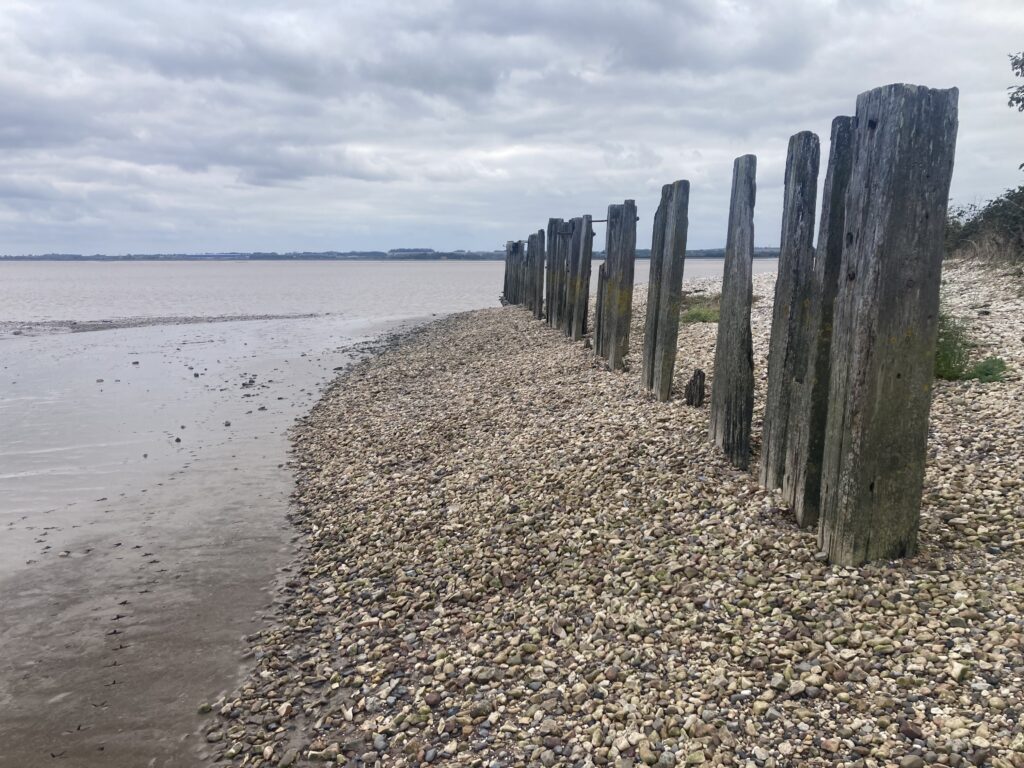
Her host decided it was best she leave before things got nasty so she headed for Hessle Haven with the intention of taking the ferry across the Humber to continue her journey south. However, at the Haven she was arrested by two soldiers employed by the Duke of Bedford who accused her of being “the greatest Lollard in all this country”. Margery and her companion were taken to Hessle where another crowd had gathered. Some started hurling abuse at her, others called for her to be burned at the stake for blasphemy.
The pair were escorted to Beverley where Margery was given “an honest bed” in the home of one of the soldiers but had her purse and jewellery confiscated before being locked in her room. Her companion was put in the town’s prison. In her room, she experienced a vision of Christ who told her to “fear nothing that any man can say to thee”. The next day in a hearing chaired by the Archbishop of York various priests accused her of “depraving men” with “much ill language”.
Fortunately for Margery, the Archbishop allowed her to leave without any further punishment and ensured her safe passage back to Hessle to catch the ferry. She would never return to East Yorkshire again.
Angus Young

So, apparently it was all our fault. Writer and boy band aficionado Nick Quantrill outlines where and why this travesty took place.

We caught up with comic book artist and author Nathan Hawthorne at the Big Malarkey and he outlined his pick of the superheroes.

Get your laughing gear around this chat between Burnsy and Gary Jennison for all the detail surrounding Hull Comedy Festival 2025.

Well, this looks like it would have been ace. Our lost attractions correspondent reports on the museum that never was.

The destruction of the Royal Institution museum in Albion Street during a bombing raid is one of Hull’s best-known wartime stories. However the tale of another Hull museum which suffered an identical fate was, until recently, almost forgotten. Thanks to ground-breaking research by Kyle Thomason, an archivist at the Hull History Centre, new light has been shed on the Old Times Museum in High Street.
In a recent History Centre blog, Kyke reveals how the larger-than-life director of Hull Museums Thomas Sheppard spent most of his professional career collecting and storing items destined for his ninth and most ambitious museum – an enclosed re-creation of a historical street. Sheppard’s idea wasn’t just restricted to opening a new attraction for visitors. He wanted to showcase the work of local craftsmen employed to put it all together.

The museum was earmarked to occupy a four-storey former grain warehouse standing between Wilberforce House museum and the River Hull. Conversion work started in 1932 and concentrated on the first two floors of the warehouse. It featured the construction of a dozen shops and buildings running down the length of the warehouse and standing either side of a cobbled street.

Most of the exhibits featured fixtures or fittings rescued by Sheppard from original buildings before their demolition. A replica of an Old Town tavern, for example, was created using the frontage of the Talbot Hotel in Scale Lane with interior fittings from two other old pubs. A chemist’s shop was assembled with a front bay from a pharmacy in Hertfordshire, a pair of ornamental gold serpents from the doorway at an old chemist’s in Howden and decorative panelling from another chemist’s which once stood at the junction of Spring Bank and Beverley Road.
Virtually an entire blacksmith’s workshop was relocated from Holderness Road while a plumber’s shop featuring re-constructed parts of the salvaged frontage of the former King’s Head Inn in High Street also housed a collection of huge elm trunks originally used as pipes to carry fresh water to Hull from outlying areas. There was even an undertaker’s complete with an elaborately-carved Gothic hearse originally owned by the Annison’s funeral parlour.
A variety of historic vehicles were placed along the central street, including an 18th century stagecoach, an 1840 horse-drawn fire engine and an early motor car. The street itself was lit by whale oil lamps that once illuminated Queen’s Dock and also featured gallows and punishment stocks.

An opening date was pencilled in for March 1939 with plans in place for staff to wear period costume and serve beer from the re-created inns while a real blacksmith would be on hand to demonstrate his skills. However, for reasons which remain unclear, the necessary approval to open the museum to the public from Hull Corporation’s property and bridges committee was delayed.
The start of the Second World War later that year put things on hold indefinitely and on the night of 8 May 1941 the Old Times Museum was destroyed in a huge fireball sparked by intensive German bombing. Having seen his grand vision go up in flames without ever opening, Sheppard retired later that year. Only a few exhibits were recovered from the smouldering ruins.
The bombed site was eventually cleared and replaced with an ornamental garden in 1950 which is still there today.