Why Is A Hull Creative Company Featuring In Bradford’s City of Culture Programme?

Our cultural exchange correspondent Angus Young reports on an outfit from over here doing very well over there.
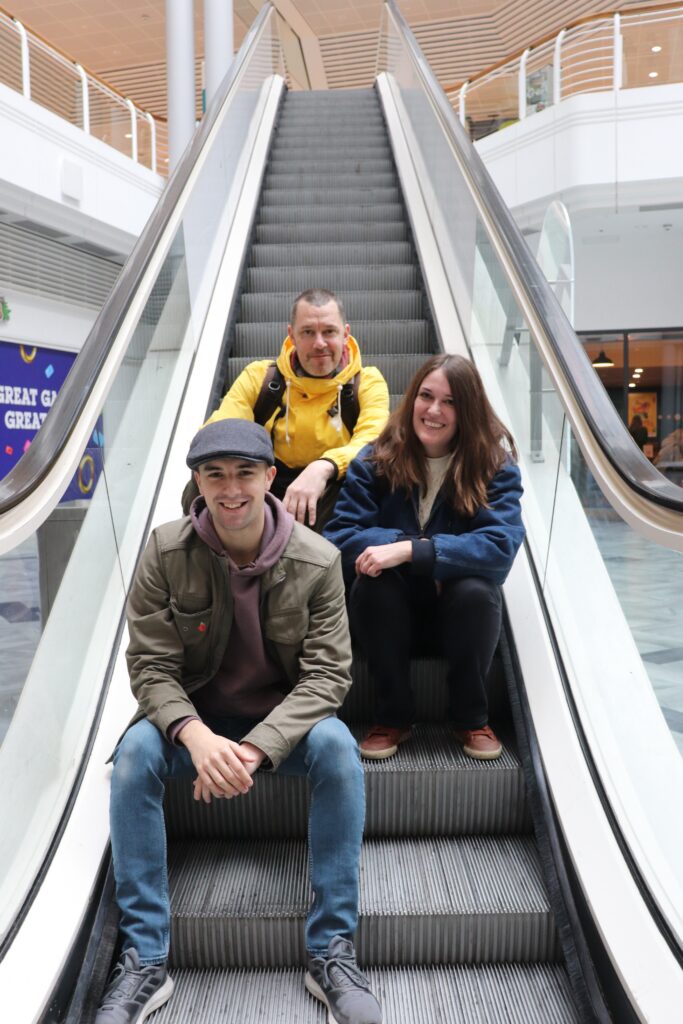
The Creative Briefs creative team unwisely sitting on an escalator.

A Hull-based education company is encouraging young people across Bradford to design their own escape room challenges as part of the 2025 UK City of Culture. Tutors and designers from Creative Briefs spent three days working with a small group of special needs youngsters from Bradford schools earlier this year in the initial phase of the project.

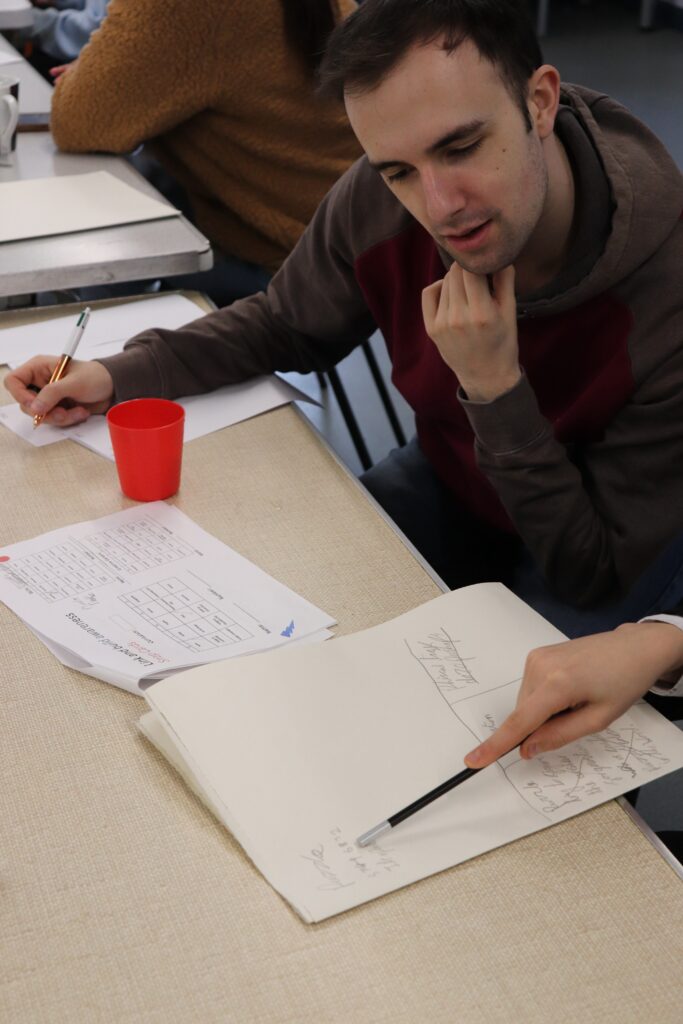
Based in Albert Avenue in Hull, the company specialises in working with young people with special education needs (SEND). Bradford 2025 first approached Creative Briefs after seeing their work on an Arts Council England-funded project with virtual schools in North Yorkshire, recognising its potential for young people in their own area. In the pilot stage, children designed an escape room using locks, codes, puzzles, tasks and clues. It was then tested by a group of participants who had to crack the codes and use clues to escape.
Now the team at Creative Briefs is returning to West Yorkshire in November to oversee a roll-out of the project in select special educational needs settings and alternative provisions in the district as part of Bradford 2025’s PLAY programme. Creative Briefs founder Jason Bowers said: “It’s been a great project so far and we are really looking forward to going back to Bradford later this year. It’s also been a bit of an education for us too because many of our team had never been to an escape room before. As part of our preparation, we did the one in Princes Quay with some of our young people in Hull and it gave us some new ideas. It was a great experience and it was really well designed.

“Doing the pilot in Bradford allowed us to test things out over three days and the young people thrived on the experience. The experience offered more than just fun. It was a deep dive into problem-solving linked to real-world skills and future potential careers in the art, design and digital sectors.”

As well as developing new design skills, the young people taking part also learned about legendary escape artist Harry Houdini and met some of the Bradford 2025 team involved in large-scale creative projects forming part of the UK City of Culture programme. At the end of the three-day sessions, the pupils also received Discover Arts Award, an introductory national qualification aimed at encouraging the creative development of young people.

Jason added: “By embedding Arts Award into the Escape Room Challenge, we created opportunity for skill-building, creative growth, confidence and links to creative careers, while having a lot of fun at the same time. It’s very exciting to be part of Bradford’s year in the cultural spotlight. The Bradford 2025 team have been fantastic to work with and we are looking forward to the next stage of this project and beyond”

Angus Young

Which Is Our Favourite Local Folly?

Our purposeless structures correspondent Angus Young uses a ‘research’ trip to Risby as an excuse to eat cake. Typical.

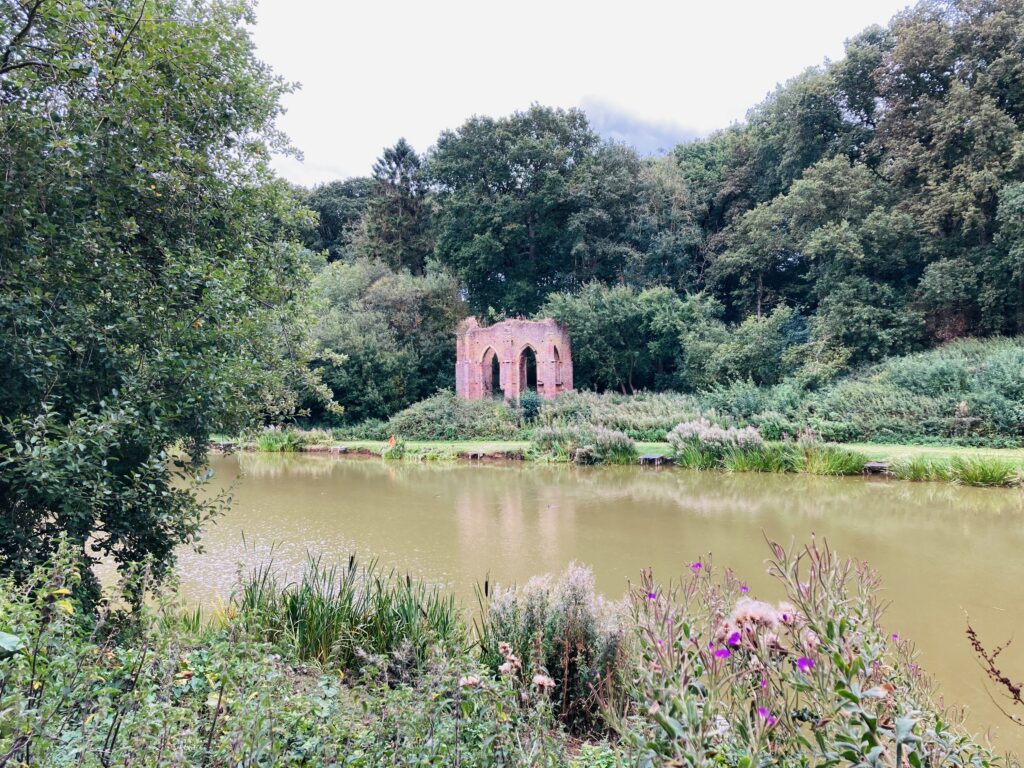
The folly at Risby lake, yesterday. (Cake not pictured)

We love our architectural follies here at Curiosity but we have to admit there aren’t that many in Hull. The cupola from the old Town Hall standing on a raised mound of earth in Pearson Park probably qualifies as the best example as does the Wilberforce Monument. You could, perhaps, argue the wave-like glazed roof above St. Stephen’s is a more modern contender but beyond that it’s a bit of a struggle.

However, decorative landmarks of varying quirkiness abound in the East Riding, from Withernsea’s Pier Towers to Sledmere’s Tuscan-style Rotunda which was built in 1840 by Sir Tatton Sykes in memory of his father Christopher. As you do. We’ve already featured Ellerker’s unusual Sebastopol stone, said to have been built using spare ballast from ships carrying weapons and troops to the Crimean War while Londesborough Hall also features an odd terraced wall. This one was built in 1670 and is peppered with arched alcoves believed to have been designed as shelters for local deer.

But our favourite folly lies next to a man-made lake once part of a now deserted village just a few miles from Hull  where deer also roamed in large numbers. Once home to the ultra-rich Ellerker family, Risby Hall stood at the centre of the Risby Estate for five centuries. The estate featured farms, extensive woodland, a deer park and ornamental gardens.

In 1760 Eaton Mainwaring Ellerker embarked on a radical re-design of the formal gardens with the aim of creating a more ‘naturalistic’ landscaped park. Among his innovations was the creation of a large fashionable serpentine lake in a valley to the south-east of the new park. Naturally enough, he decided to add his own folly on the side of the lake. Ellerker wanted to build a Grecian-style temple with commanding views across his new lake but he died before it could be built. His son and heir Roger died four years later with work on the folly yet to start.

The folly at Risby lake, yesterday. (Cake just visible through the reeds)

Eventually,  the design was changed and a pseudo-Medieval Georgian Gothic octagonal brick structure was built instead. Seven of the eight sides featured tall shuttered, partially-glazed window openings while the interior featured a fireplace, a series of curious wall recesses on either side of each window and elaborate wooden panelling, plasterwork and painting. An original spire is believed to have collapsed soon after the folly was completed, creating the ruinous look which still can be seen today.

The building probably had several uses. As well as simply being a visual attraction, it was also likely a welcome resting point for visitors walking around the estate. The fireplace and the possible storage recesses suggest it was also used to entertain for longer periods, possibly hosting small banquets and fishing parties.

Today the landmark still stands overlooking the lake which is now a privately-run fishing pond. Because access around the lake is restricted to anglers, there’s an air of mystery about it. Even so, the distant views are made all the more enjoyable by the presence of the aptly-named Folly Cafe on the opposite side of the lake. The coffee and cakes are highly recommended.

Angus Young

Did Hull Once Have Its Own Circus?

Another story from the ‘Well I Never Knew That!’ file from our bygone entertainment correspondent Angus Young.

F.S. Smith sketch of Hengler’s Circus.

While New York has Broadway and London has Shaftesbury Avenue, we’ve got Anlaby Road. A century ago it was Hull’s entertainment hotspot with a cluster of cinemas, theatres and dance halls near the city centre, football and cricket grounds and Hull Fair every October. The cinemas and theatres might have closed or disappeared but the MKM Stadium has continued the tradition of live sport, the Fair is still going strong and potential future stars of stage and screen now attend the Northern Academy of Performing Arts in the old Hull Art School building. However, Anlaby Road’s history of live entertainment goes back much further than the arrival of moving pictures.

In 1864 a circular wooden building with seating for 2,500 people was constructed on open land near where the junction with Great Thornton Street is today. Originally a temporary structure, Hengler’s Grand Cirque Variete staged daily performances over a three-month season from October to December. The circus took its name from its showman owner Charles Hengler, the son of a famous tightrope walker and equestrian. A trained musician, Hengler would become an accomplished horse trainer and equestrian performer in his own right before taking on a new role as acting manager of a new circus business set up by his brother Edward.

Two years later Charles launched his own circus, buying a struggling Manchester-based company and turning into a hugely successful one. As well as touring with tented shows, he also started building a series of wooden amphitheatres around the country where more spectacular shows could be staged with equestrian acts usually dominating the bill. Like its contemporaries, Hengler’s Anlaby Road circus was built by local contractors and featured gas lighting, comfortable seating and, most important of all, a solid roof.

Hengler’s Circus poster, image courtesy of Hull City Council.

Hengler used his horses to re-enact military parades celebrating victories across the British Empire as well as popular stories, including a pantomime version of highwayman Dick Turpin’s famous ride to York. His company also staged elaborate aquatic shows, filling the circus ring with gallons of water before driving horses through it or launching fleets of small boats. Traditional circus acts such as clowns and jugglers would also appear while the venue also hosted shows by singing minstrels, public meetings and even religious events.

The circus returned regularly to Hull and was such a success that in 1887 Hengler decided to create a permanent venue in the town as he had already done in places like Glasgow, Birmingham and Bristol. A new wooden circus was built on the same spot and was later rebuilt in 1898 in brick and stone with a grand entrance under a portico supported by a colonnade of slender columns. Now known as Hengler’s Cirque, it hosted the largest indoor hall in Hull and was, to all intents and purposes, a theatre.

The impressive scale of the building was captured by Hull artist F.S. Smith in a contemporary sketch of Anlaby Road which recently featured in a recent exhibition at the Ferens Art Gallery commemorating the centenary of his death.

However, the golden age of the Victorian circus was coming to an end and competition from the more popular Palace Theatre which stood next door saw a decline in its fortunes. The Cirque struggled to compete and underwent a series of reinventions under new owners. In 1912 it hosted a small film studio producing films of local events and two years later started hosting boxing matches.

In 1918 it was re-named the Lyric Theatre after another facelift and billed as “the finished and most up-to-date concert party theatre in the Kingdom”. The Lyric lasted until 1925 when it closed for a year before re-opening again as the grandly-named Palais de Dance. Five years later the curtain came down for the final time and the building was subsequently demolished.

Angus Young

Who Is Douglas Dunn? Dean Wilson

Hull poet and bon vivant Dean Wilson heads just off Bev Road to outline why Terry Street holds a unique place in the poetic pantheon.