
Sam from The Avenues Library takes us through his suggestions for LGBTQ+ readers.

Sam from The Avenues Library takes us through his suggestions for LGBTQ+ readers.

Our historic communication technology correspondent Angus Young uncovers how the city hosted the second phone call ever. Sort of.
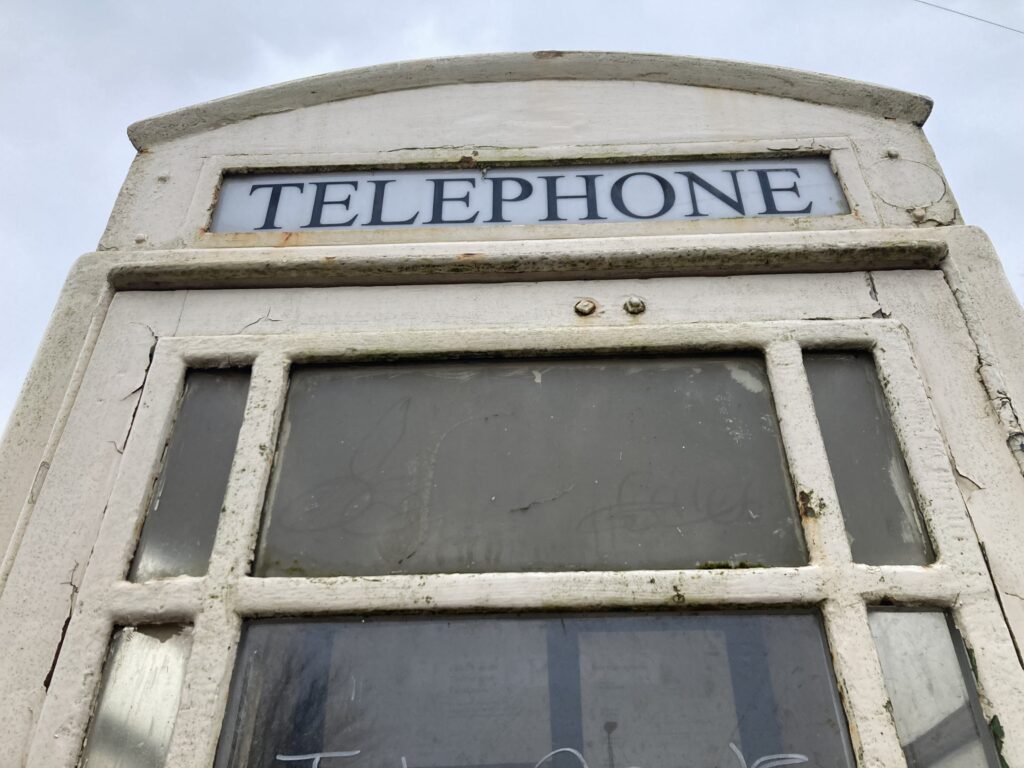
Talking to someone on the other side of the world by phone or zoom call is now part of everyday life for many of us. But back in the early 1870s the idea of being able to speak through a machine to another person in a different room was regarded as a bit bonkers. Scotsman Alexander Graham Bell changed all that in March 1875 when he used his own invention to transmit spoken words via a wire between two receivers for the first time. Based in Boston in America where he worked as a university professor, Bell secured a patent for his device and began staging demonstrations aimed at attracting potential investors. On a visit to London he made the UK’s first recorded telephone call using a private telegram wire belonging to the owners of a Mayair hotel which was connected to their home five miles away.
Bell displayed his device in public for the first time at the annual meeting of the British Science Association in London and it was here that an idea was hatched to stage a similar demonstration in Hull. The brainchild behind it was a man determined to put his home town on the map as the second place in the country where Bell’s invention could be seen in action. The son of the founder of the family law firm which still bears the family name, Albert Rollit was one of Hull’s leading figures of the day.
A lawyer and politician, he also held a keen interest in science and the arts and in 1875 became president of Hull’s Literary and Philosophical Society. His three-year term in office as the society’s president coincided with a surge in membership and the expansion of its premises in Albion Street which included a museum, lecture theatres, reading rooms, a subscription library and laboratories. As president, Rollit used his connections to secure big-name guest speakers, including novelist Anthony Trollope and journalist and adventurer Henry Stanley who had famously tracked down missing missionary and explorer David Livingstone in Africa.
For his final presidential address in 1877, Rollit decided to speak about electricity and, in particular, the telephone. Having built a “rude electrical machine” in his youth, he was convinced Bell’s invention was set to change the world. “I see no reason whatsoever to doubt that before long it will be in general use for communication between the house and the office, or stables, and in large hotels and thus effect an immense saving in labour and expense,” he told the meeting.

At the end of his speech, Rollit revealed he was going to stage an actual demonstration of this new wonder using the same prototype device displayed at the British Science Association. What his audience didn’t know was that he had already carried out secret trials before delivering the dramatic climax to his address. One trial involved running wires around different rooms in his house while another used a telegram wire strung between a post office and the fish market on Albert Dock.
“We have found it possible to distinguish the tones and inflections of different voices and to laugh, cough and sneeze at a distance of a mile,” he announced. “I am bound to say that there can be no comparison, either in principle or execution, between it and other telephones I have heard, such as those which transmit sounds of variable pitch, reproducing a sort of galvanic, sporadic and emasculated music.”
Rollit’s demonstration saw a wire strung between the society and the Church Institute 300 yards away on the other side of Albion Street. With the society’s museum curator John Harrison stationed in the Church Institute, Rollit and others took turns to speak to him via the machine from the society’s premises. At the other end of the line, Harrison confirmed to observers he could distinguish who was on the line by their different voices. The sensational event sparked a rush of new members with 120 joining the society that night.
Sadly, no record of any of the conversations whizzing across Albion Street was ever made. A contemporary report in the weekly Hull Packet newspaper simply says: “Various messages were transmitted to and fro.”
Rollit’s prophecy would come true. Twenty seven years later Hull’s municipal telephone department opened its first exchange for 1,000 subscribing customers. The rest – including our cream-coloured telephone boxes – is history.

Lauren from the Humber Street Gallery explains exactly what her job entails. And it’s not just hanging paintings.

Beverley-born children’s author Philippa Leathley joins Burnsy to talk about her world-conquering debut book Inkbound: Meticulous Jones and the Skull Tattoo.

Burnsy nips down Chants Ave to check out one of the most bustling libraries in the city.

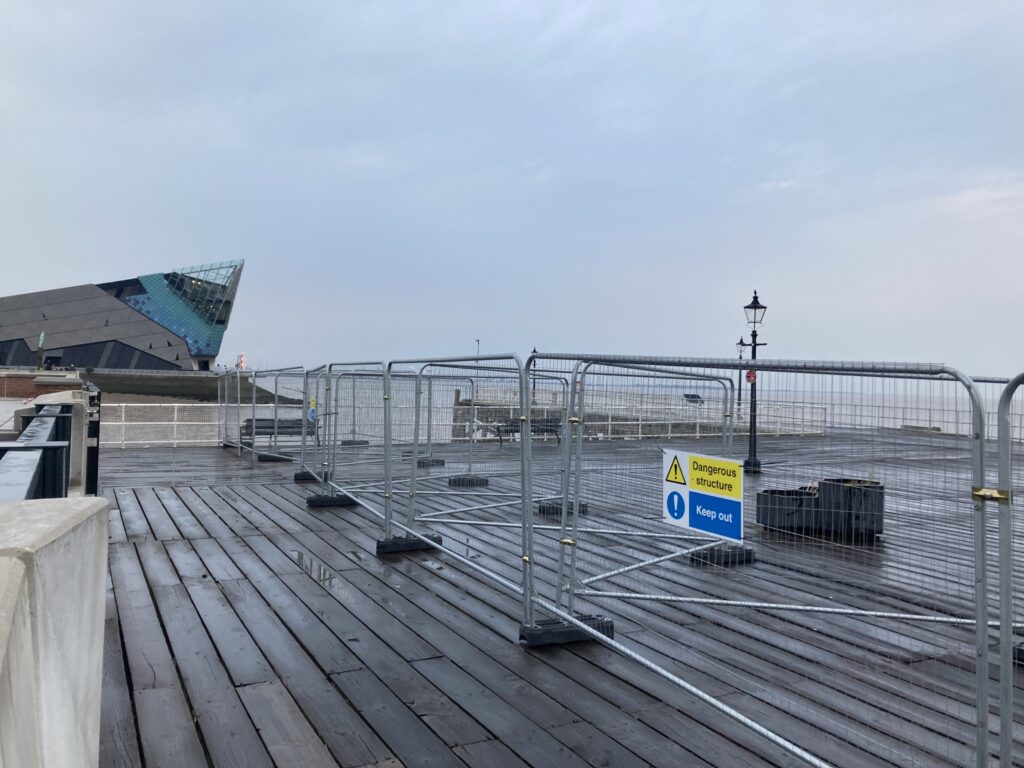
Five years ago public access to a quintessentially Hull experience was closed off. At the time, metal fencing went up on Victoria Pier to coincide with the start of work to build new flood defence walls in the immediate area. However, when that work was finished the fencing stayed up and has remained in place ever since. Warning signs say; “Dangerous structure. Keep off.” Sections of the council-owned pier had been cordoned off on safety grounds before the Environment Agency’ contractors started on the new flood defences and there were rumours that part of the structure suffered further damage during those works.
Now, after stating last October that it was “actively exploring future options” for the pier, the council has awarded a contract to a civil engineering firm to draw up plans for its removal.
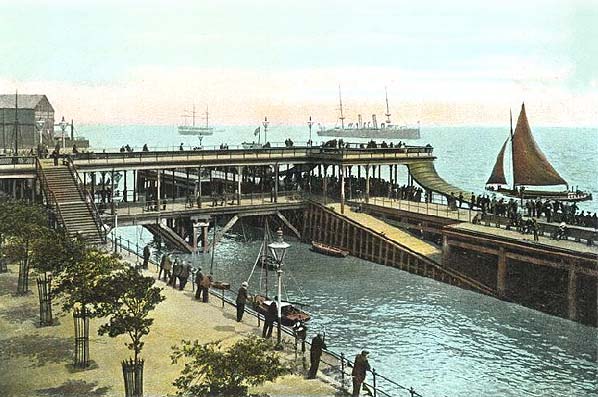
Originally constructed in 1810, the pier has changed a bit since then. It was converted to a T-shaped pier in 1847 and was known as Corporation Pier until 1856 when it was renamed in Queen Victoria’s honour following a Royal visit. It probably reached its peak in the Edwardian era when it featured covered walkways and an upper deck viewing area.
Since those halcyon days, various elements of the pier have disappeared but the main structure remained a popular place for locals and tourists alike to visit. A stroll across the pier’s timber boards with the sound of the Humber tides lapping up against the wooden support columns underneath and the sight of a vast estuary spread out before you with an even larger sky above provided as much a sensory overload as a night at Hull Fair.
When The Deep opened, the pier provided the perfect spot to admire the setting of architect Terry Farrell’s epic landmark at the confluence of the estuary and the River Hull. When French artists Carabosse staged a hypnotic fire spectacular on the pier in 2009, those lucky enough to see it still maintained it was the best-ever Freedom Festival show.
It really is an iconic and unique piece of Hull and an integral part of the city’s maritime history. Thanks to Geore Orwell, Wigan’s pier might be more famous but in reality that one was demolished in 1929. Hull still has its wonderful pier but for how much longer?
The new contract runs until January 2027. By then, a scheme to remove it will have presumably been drawn up ahead of any final decision on the current pier’s fate. There could be an option to build a new one, although nothing official has yet been said about that. Instead, the only clue about the future is a line in the council’s annual budget proposals which are currently going through the decision-making process at the Guildhall.
In the council’s capital programme there’s a £1m allocation listed for Victoria Pier earmarked to be spent in 2025/6. In reality these allocations can be pushed back if necessary and with extra spending now required for urgent repairs to Drypool Bridge, it’s likely the budget for the pier could do just that. £1m would probably cover the cost of removing the pier. As for a possible replacement, piers don’t come cheap. A proposed pier in Withernsea came with an estimated price tag of £8m before the project was abandoned two years ago when the idea was said to be no longer financially viable.
But what price history? What price heritage? The pier is as much part of Hull’s maritime past as any other. Ships carrying cargo from across the globe arrived at the pier, what will remain to teach future generations of this essential part of our city?

Writer and musician Chris Speck invites us all for a swift half in a hostelry he considers more than just a boozer.

Burnsy heads to the Back to Ours chat room for a dance and some company.

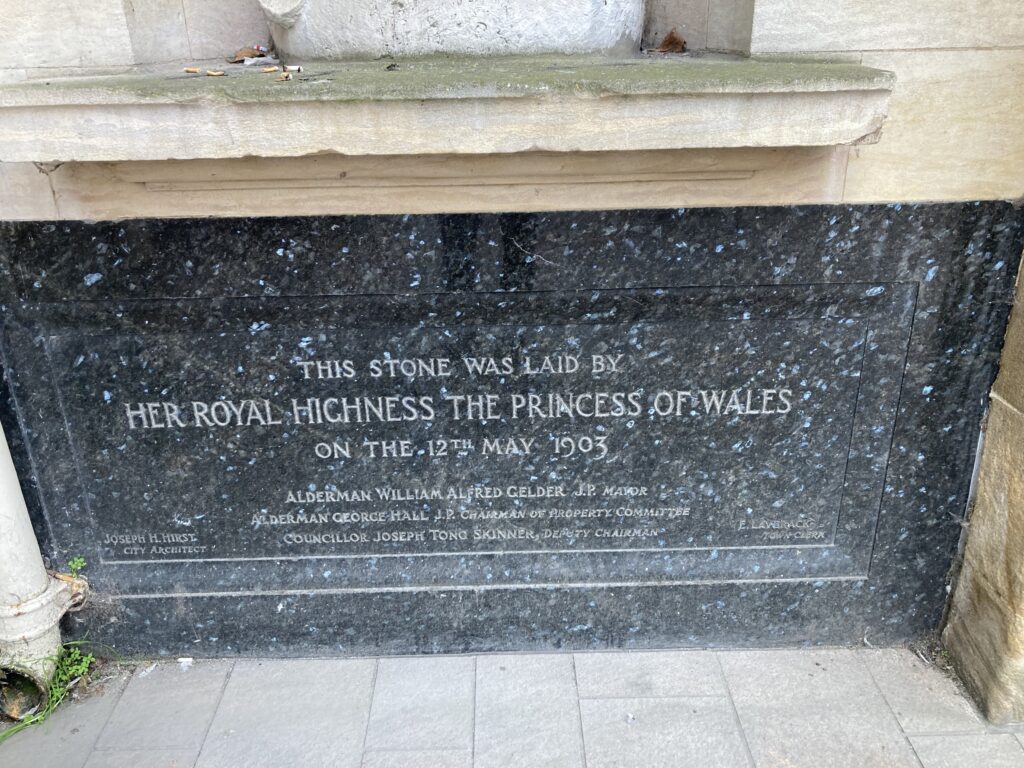
To the right of Hull City Hall’s main entrance there’s a marble foundation stone set into a wall officially laid by Her Royal Highness the Princess of Wales during a royal visit to the city in May 1903. Unusually, it’s not accompanied by another stone elsewhere on the building commemorating the hall’s official opening. Edwardians loved the spectacle of an official opening ceremony yet, for some reason, one was never arranged for this monumental new civic landmark in the very heart of the city. Instead, a trade exhibition – the very first event staged in the building – provided visitors with their first glimpse inside without any fanfare, ribbon-cutting or more engraved stonework.
There’s no documented explanation for it except for some clues lurking in a rather sour newspaper report on the exhibition which opened on December 13, 1909. It said: “The visitors obtained a splendid view of what the hall will be when completed. The design of the interior of the entrance hall was not favourably commented on, the grand staircase at the Old Town Hall being, in the opinion of some, more dignified. Though the City Hall is designed for a bazaar, it cannot for a moment be stated that the building is completed. Simultaneously, workmen have been engaged in the interior of the building with the builders of the bazaar. The City Hall has been a joke with Hull for so long that one wonders how we shall get along when it is really completed”. The report went on to suggest an opening ceremony was being proposed at some point in the future but nothing ever materialised.
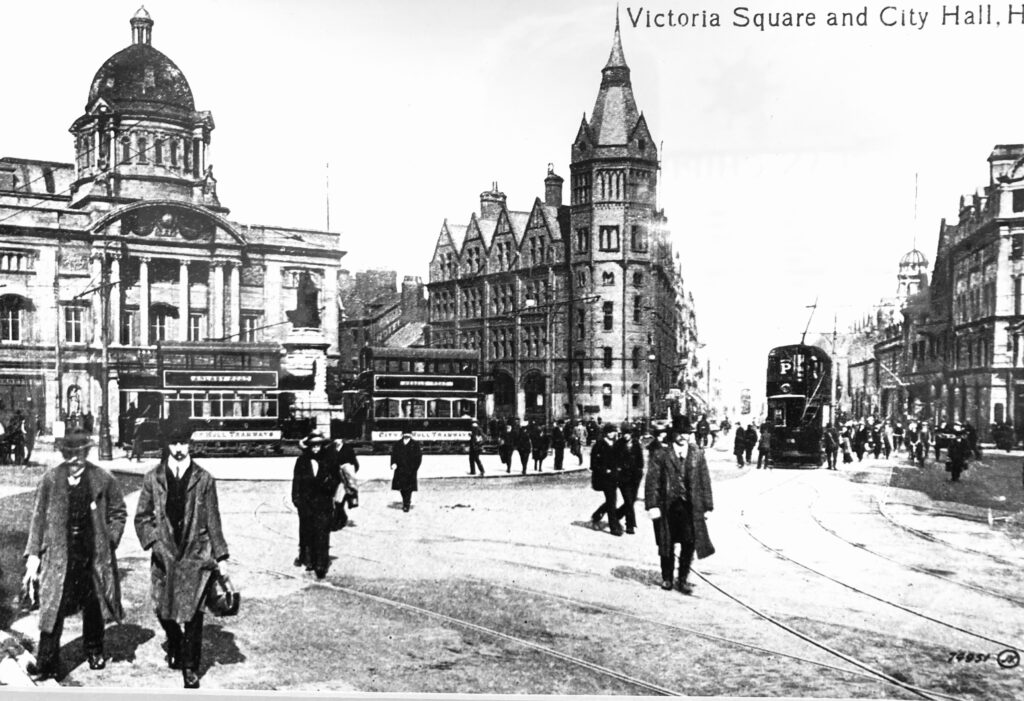
In noting construction was still underway more than six years after the laying of the foundation stone, the less-than-complimentary tone of the article was perhaps a nod to what had gone on before. For the long-running saga of the ambitious building project had turned many people against it.
The process of laying out a new public square which the City Hall would eventually overlook had started in 1890 following the clearance of houses, back streets and some small businesses. Sixteen years later, members of Hull Corporation property committee were getting understandably worried over the apparently sluggish progress on the new venue. By October 1906 it was being reported there was “considerable anxiety” over the issue with work on the basement and 15 planned shops “at a standstill”. At a meeting in May 1907 they requested the main contractor, George Panton, attend the next committee.
“The committee said the matter was so serious that they would like to see him. They did not want to break the contract but pressure had been brought to bear upon them,” it was reported. When he did appear, Panton said the delays were not his fault and that was the truth. “You are the contractor, whose fault is it?” asked a committee member. Panton insisted he was trying his best but claimed “unfortunate circumstances seem to be continually turning up”.
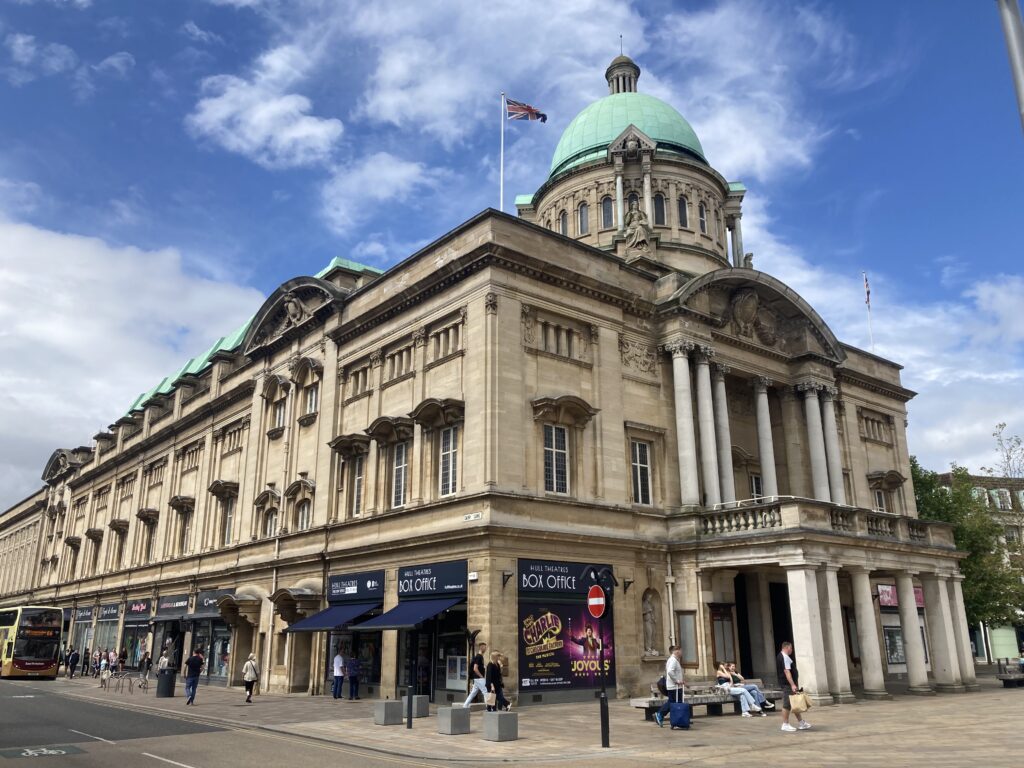
Another councillor then described employing just 34 men on the job as “perfectly ridiculous”. Panton said the size of the workforce wasn’t the problem, it was “getting the stone on the building”. City architect Joseph Hirst, who had designed the new concert hall, art gallery and shops which formed the building, revealed he had written over 50 letters to Panton complaining about delays.
Ten months later Panton was back before the committee being asked again when the building would be finished. Legal action had even been considered when piling was halted because the ground excavation work had not been completed. Committee chairman Alderman George Hall warned if sufficient progress was not made in the next fortnight the contract would be terminated. “The position is very grave and the committee’s patience is exhausted. We are the laughing stock of the town,” he added.
As we now know, the hall was eventually finished but there’s no official plaque to record exactly when that was. After all the fuss, perhaps it was just thought unwise to do so.

Dave Windass of Humber Street Gallery takes us to a place where we can all appreciate a public artwork.