
Hull playwright Maureen Lennon joins Burnsy to talk about (amongst other things) her new play Mary and the Hyenas, which has just opened at Hull Truck.

Hull playwright Maureen Lennon joins Burnsy to talk about (amongst other things) her new play Mary and the Hyenas, which has just opened at Hull Truck.

As Hull learns another major road in the city is to close for 6 months, our bridges and culverts correspondent Angus Young plunges into the reasons why.
Celebrated mathematician and philosopher John Venn never actually saw the Hull bridge with its colourful design commemorating his famous diagram of overlapping circles. The current Drypool Bridge opened in 1961 some 38 years after his death. Venn was born in Drypool parish but by the time the original Drypool Bridge (sometimes referred to as Salthouse Road Bridge) opened in 1889 he was working as a lecturer at Cambridge University. His most famous book was called The Logic of Chance in which he championed the frequency theory of probability. He claimed probability should be determined by how often something is to occur as opposed to educated assumptions. Had he been around today, Venn would have almost certainly worked out the high probability of urgent repairs being required sooner rather than later on the structure given a funky makeover in his honour during Hull’s year as the UK City of Culture.
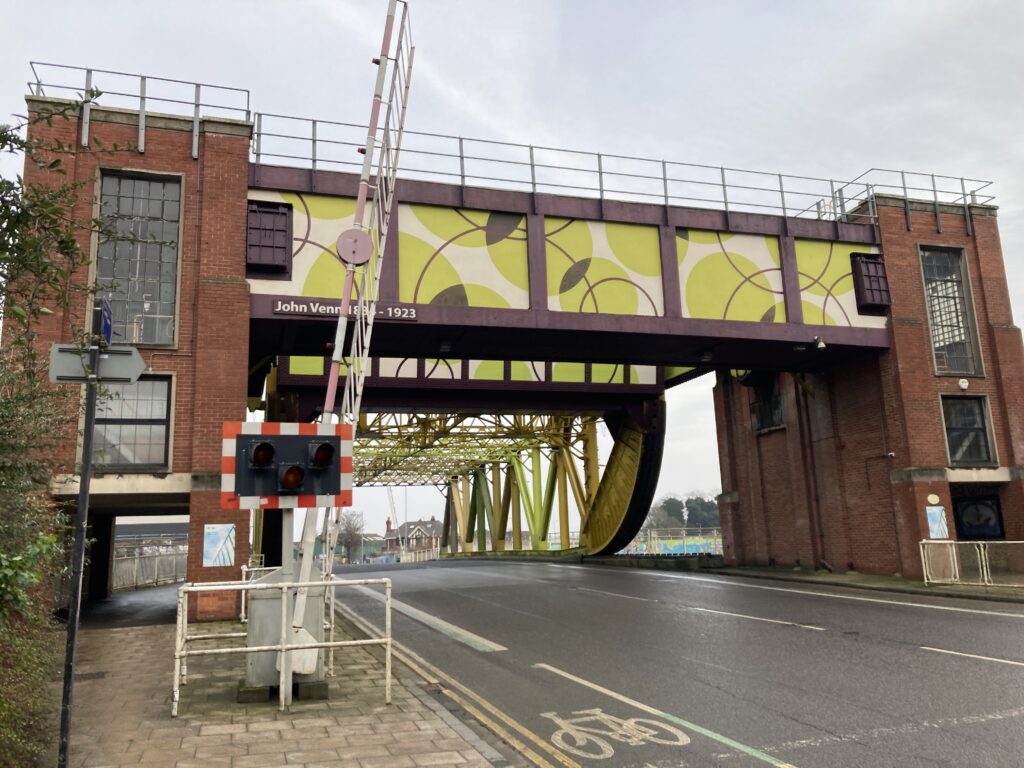
The bridge is expected to close to road traffic for six months in April to allow for repairs to be carried out with the most pressing work likely to centre on a series of rapidly-crumbling concrete support columns under the fixed east span. How the columns came to be in such a bad state still remains something of a mystery.
Bridges in Hull are subject to general inspections every two years. Typically, these involve visual examinations without securing close access. A more thorough principal inspection is carried out on each structure every six to 10 years. In these, inspectors get within touching distance of all elements of the crossing. Bridges that carry traffic are subject to structural reviews every 12 to 20 years. These reviews take into consideration any changes to assessment guidance codes and the condition of the structure to check if there is a need for a full assessment to be made.
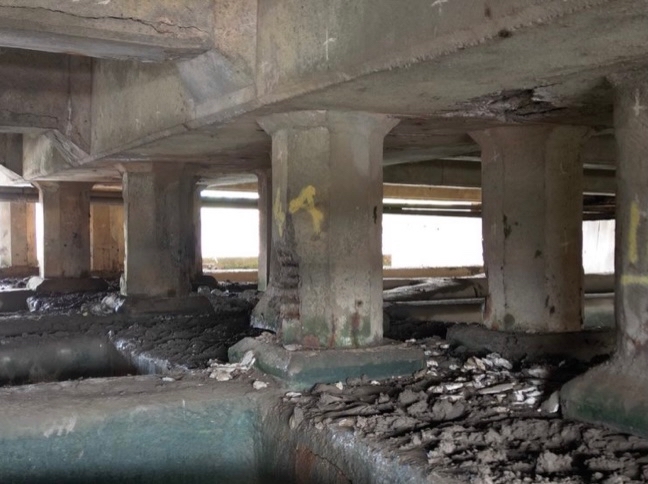
However, a series of special inspections were being carried out at Drypool Bridge every six months following concerns over sections of the bridge being unable to maintain its 40-tonne weight limit. Extensive deterioration of the columns had not been picked up as an issue in the previous inspection. Six months later, they were serious enough to trigger an emergency 16-day closure of the bridge.
Why such speed? Two suggested reasons have been put forward. Either the concrete was finally showing its age or the immediate marine environment of salt water and silt and had finally taken its toll. It’s quite possible both factors played a part along with the fact that the structure is now much more encased in silt than it ever was, reflecting the wider build-up of silt and mud in the River Hull in recent years as a result of less river traffic and less dredging. Or someone just missed it six months earlier.
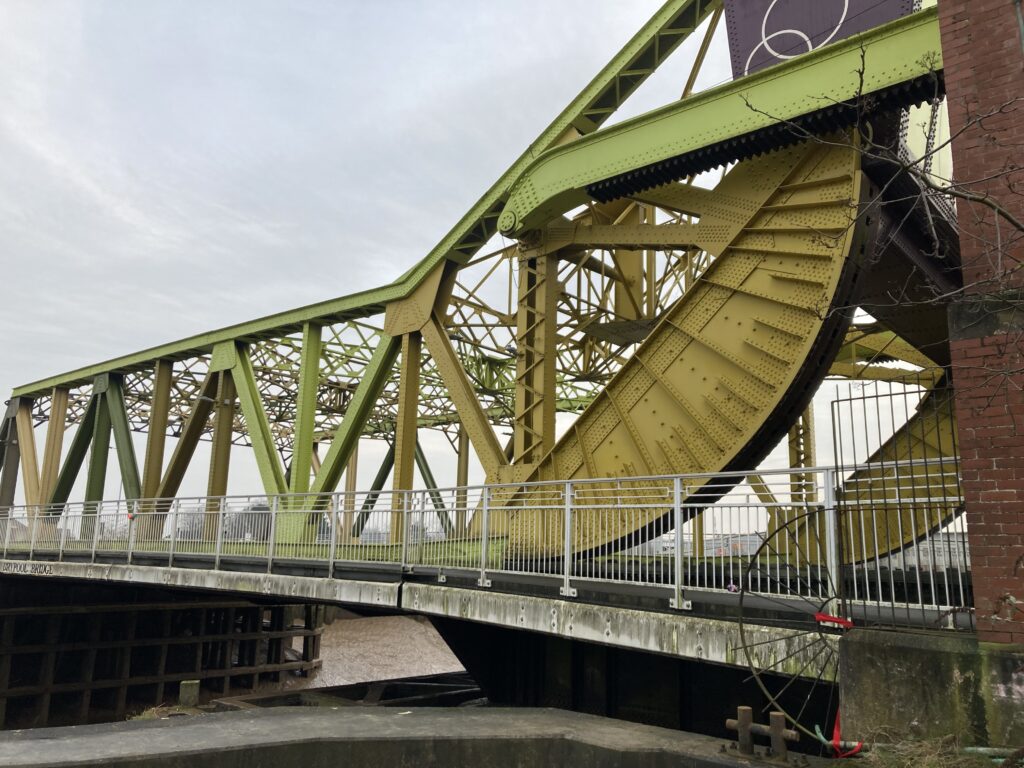
Such is the urgency to maintain the bridge’s 40-tonne weight limit, councillors recently bit the bullet and agreed to the work starting on site as soon as possible instead of waiting any longer. It means the six-month project will clash with the ongoing disruption caused by the National Highways upgrade of the A63, bringing extra headaches for motorists.
Would Venn have approved of all this? Perhaps. Would he have brought along a machine he also designed and built himself to automatically bowl cricket balls and aim it at whoever was responsible? Having previously seen a prototype machine clean bowl an Australian test star four times, I think in all probability he would.

Amy Thompson discovers a space where knitters, readers, artists, adults and kids find their happy place.

One of Hollywood’s most lauded craftsmen used to live on the Avenues. Who knew? Well, Hull Tour Guide Paul Schofield knew. Obviously.

Like the legendary time lord? Well Ally-mai is back with her best picks for books that complement the Gallifreyan gadabout.

Our unusual industrial buildings correspondent felt compelled to investigate an intriguing building and he discovered it has a rich heritage.

As regular Curiosity contributor Dean Wilson will testify, the Wincolmlee area of Hull is full of weird and wonderful sights. Running parallel to the River Hull, it curves like a snake through the city’s historic industrial heartland and is lined with a variety of old brick buildings in varying states of disrepair. Near the tightest of one of those curves in the street is one property that is easy to miss.
Stood at a 90 degree angle to the pavement is what at first glance appears to be an old house dating from the Victorian era. Painted in fading cream, it boasts two prominent first floor bay windows and two distinctive chimney stacks on the modest-sized slate-covered roof. It’s clearly much older than an adjacent towering former brewery warehouse. A roller shutter covers what seems to be a doorway on the gable end facing the street and most of the windows are boarded up.
Intrigued, I headed into the office of a tyre-fitting business next door to ask the man behind the counter if he knew who owns it. He chewed on a pencil for a while before answering: “Don’t know.” I ask if he has any idea what it was last used for. After another lengthy chew, he replies: “I’ve been here 20 years and it’s always been like that. Empty.”
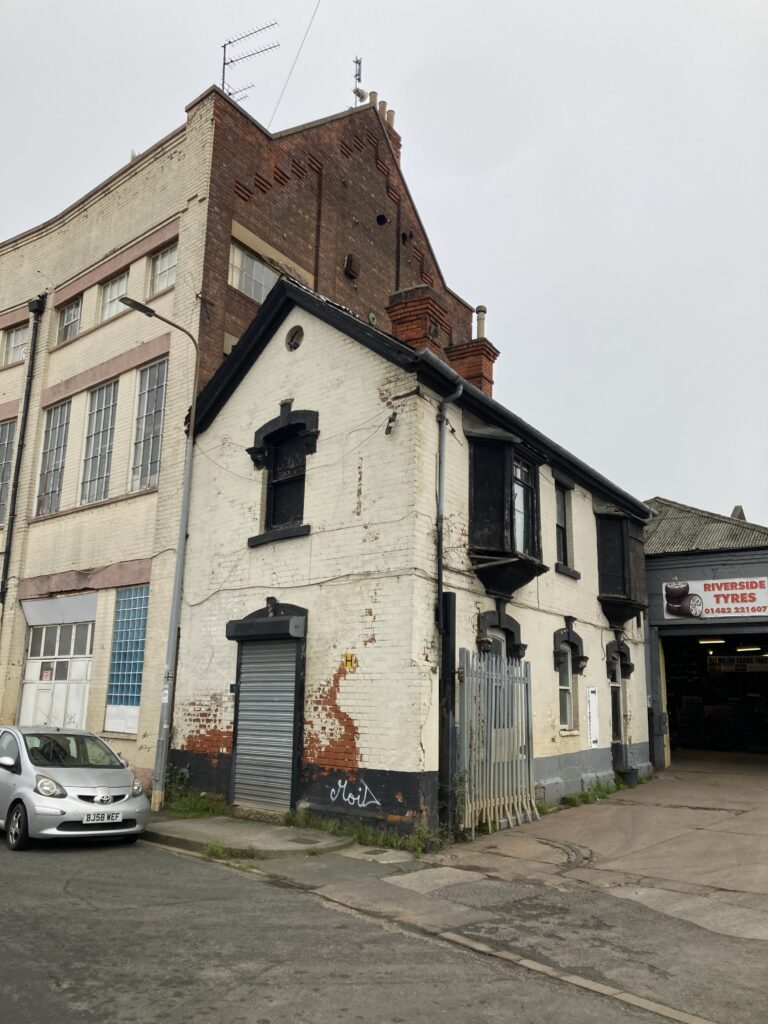
Sensing I wasn’t getting anywhere fast, I dipped into the archives to discover it’s the original office of seed crushing firm Willows Holt & Willows Ltd. which once operated a huge mill at the site. Built in 1875, the mill was the brainchild of industrialist John Green Willows who went on to become Lord Mayor of Hull a decade later. The office almost certainly dates from that time and its unusual position would have given those working inside a clear view of the main entrance yard at the mill.
At its peak, crushing seeds to extract oil for a variety of purposes was big business, involving numerous companies employing hundreds of people working in mills in the Wincolmlee area. The wealth generated for the owners of these firms was huge. When Willows Holt & Willows was merged with several others in Hull to create British Oil and Cake Company Ltd, John Bouch Willows – who inherited the business from his late father – became a director of the new mega firm.
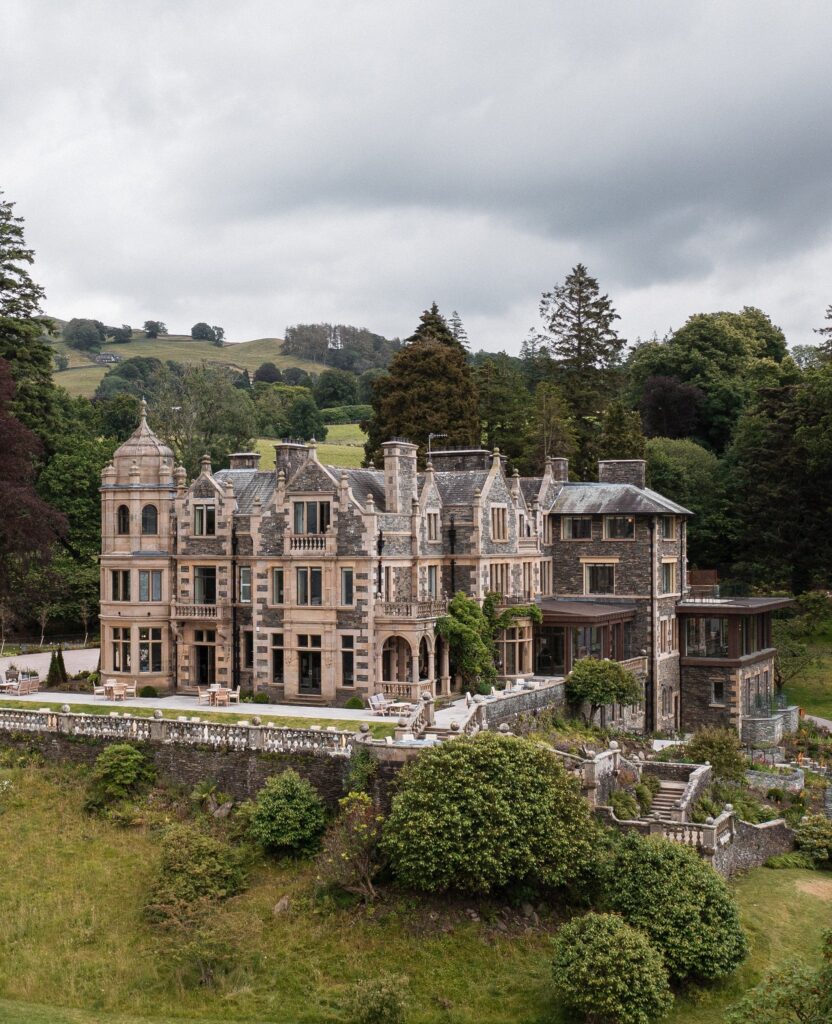
When he retired, he was rich enough to buy Langdale Chase, a huge mansion set in six acres of gardens on the edge of Lake Windermere. It’s now a luxury hotel. Both father and son would have spent time in the company office where mill manager Francis Virtue was probably based. According to trade directories, Mr Virtue also lived next door at a time when the immediate neighbourhood looked very different. As well as his house, there was a nearby pub the Ferryboat Tavern which was later bombed during the Second World War.
Another snippet from the archives also shows Mr Virtue was busy coming up with new engineering ideas while based in his office. A listing in the January 23 edition of the London Gazette in 1877 says: “Francis Virtue of Hull, in the county of York, has given the like notice in respect of the invention of “improvements in machinery for measuring, compressing and moulding oil, seeds or other materials now commonly compressed wholly in hydraulic presses.” Backed with funding from Heritage England, a new project called Seeds of Change and led by Humber Field Archaeology has recently been launched to celebrate the area’s seed-crushing history. Hopefully, the old office will feature in that too.

Arlo of HU5 wasn’t lazy when it came to asking, so we’ll be equally keen to answer.

Curiosity’s man with his ear to the wire, Angus Young, comes back to the podcast to tell Burnsy where we are with all the big jobs in town.

A street that’s not a street takes actor Rachel Dale down the same fascinating path as prime ministers and kings.

We’re all heard the story, but can Amy Thompson and City Archivist Martin Taylor (with his big pillow) scotch the tale?