
Programme Director Lisa Wedgner explains how Generation Hull is young people the chance to shape the creative future of the city.

Programme Director Lisa Wedgner explains how Generation Hull is young people the chance to shape the creative future of the city.

Illustrator Liz Million? Doing our quiz at Big Malarkey? That can mean only one thing – chaos. Ally-mai attempts to reign her in.

When it comes to being hard, reports our aqua toughness correspondent, it seem nothing beats the water round here.
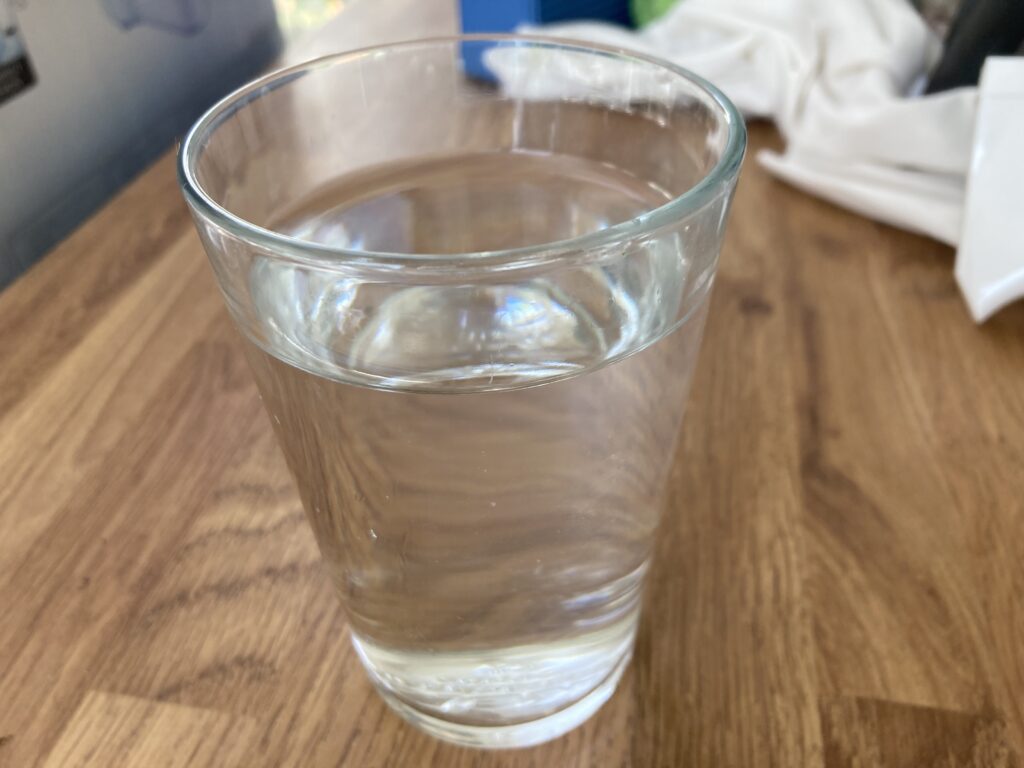
It’s not often Hull gets to be at the top of a UK league table. But that’s exactly what happened recently when some bright spark at wellness brand Kollo Health decided to rank 50 cities across Britain on how hard their drinking water is. It turns out Hull’s wet stuff is not just hard, it’s very hard. In fact, it’s the hardest there is. Harder than London, Luton, Oxford and Cambridge who also made the Top Five.
The reason behind this new accolade actually lies beneath us. Hull draws its water supply from a chalk aquifer beneath the Yorkshire Wolds, giving it levels of hardness typical of southern England despite being in the north.
So what is hard water? Our very hard water contains the country’s highest concentrations of dissolved materials, primarily calcium and magnesium carbonate. These minerals come from limestone and chalk that water can filter through before reaching the water table. As we sit on a thick seam of chalk, our tap water is nearly 19 times harder than the soft water supply in Inverness. It’s also six times harder than that of Leeds and more than five times harder than Sheffield’s.
The soft water in Scotland, Wales and parts of northern England is also the result of geology. Granite, basalt and slate are all far less soluble and contribute very few minerals to the water.
Water hardness is measured in milligrams of calcium carbonate per litre and there’s even an official UK classification system determining what’s soft and what’s hard. In case you’re wondering, very hard drinking water is 310 mgL CaCO3 or above while the softest is between 0 and 60. In the most recent standings Hull topped the UK charts with a whopping 380 mgL CaCO3, well ahead of London and Luton who were both on 320.
While being Number One naturally provides Hull with bragging rights, there’s also a downside because very hard water does create a host of household problems. Kettles and coffee machines are the most obvious casualties as limestone builds up on heating elements, forcing them to work harder and use more energy. A heavily-scaled kettle can use up to 12 per cent more electricity than a clean one.
Washing machines and dishwashers suffer too as limestone clogs up pumps, heating elements and water jets over time, Without regular descaling, appliance lifespans can be reduced significantly. Boilers and pipes can also lose efficiency and ultimately fail as a result of limescale deposits. Because of this, experts recommend using a filter or a water softener to improve taste, reduce limescale and extend the life of appliances.
Hull’s very hard water means soap doesn’t lather particularly well but rinses off much better than if you’re living in a soft water place like Inverness. Many people also find that hard water leaves their skin feeling drier than soft water while hard water is generally believed to have a better taste than its softer counterpart.
There’s also evidence to suggest very hard water is beneficial to human health because it’s a good dietary source of calcium and magnesium. Some studies have even claimed that populations in hard water areas have slightly lower rates of heart disease. Scarlett Gray, registered dietician at Kollo Health, said: “Water hardness has a genuine impact on daily life, from the way skin and hair feel after washing to the limescale build-up in kettles and appliances that millions of households deal with every day. Hull’s position at the top of the national table is striking, particularly given that most of Yorkshire records soft water. For residents, understanding just how hard their local water is can be the first step towards managing its everyday effects.”

Maritime historian Dr Robb Robinson of the Uni of Hull tells the fascinating tale of a bold action by HMS Rose.

Marianne is from Circo Rum Ba Ba and we met her at the Big Malarkey where she told us all about her favourite twizzly tricks.

Freedom Festival boss Phil Hargreaves talks to Burnsy about the 2026 festival and gives insights into the how, why, what and where of putting Freedom together.

Our city circumvention correspondent Angus Young takes a look at 200 years of a place designed to avoid our city.
As the industrial revolution picked up pace in the early 19th century, Britain was changing fast and canals were the main way of moving coal, iron, wool and manufactured goods from inland towns to the coast for export. The Aire and Calder Navigation Company already controlled a vast network of canals connecting Yorkshire’s industrial centres but it faced a problem – it was forced to rely on the busy and expensive port of Hull. Hull’s main docks and quays could charge a fortune for access so the Aire and Calder bosses came up with a radical alternative. They would build their own port and their own town.
The result of their endeavours was Goole, until then a tiny settlement on the banks of the River Ouse. 2026 is the bicentenary of the town marking the construction of the town’s first street and the creation of Britain’s furthest inland port. Although eventually eclipsed by the railway, the canal route into Goole was an example of Victorian engineering innovation with specially-designed boats called Tom Puddings carrying West Yorkshire coal in compartments and linked together in long ‘train’ while under tow by a tug.
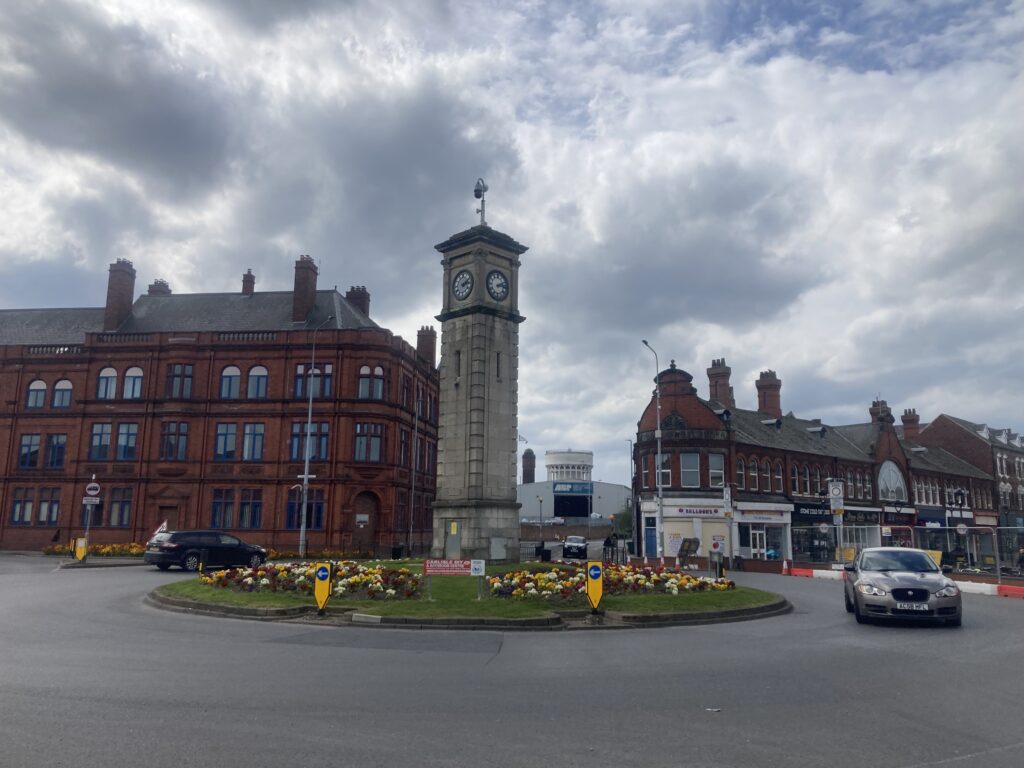
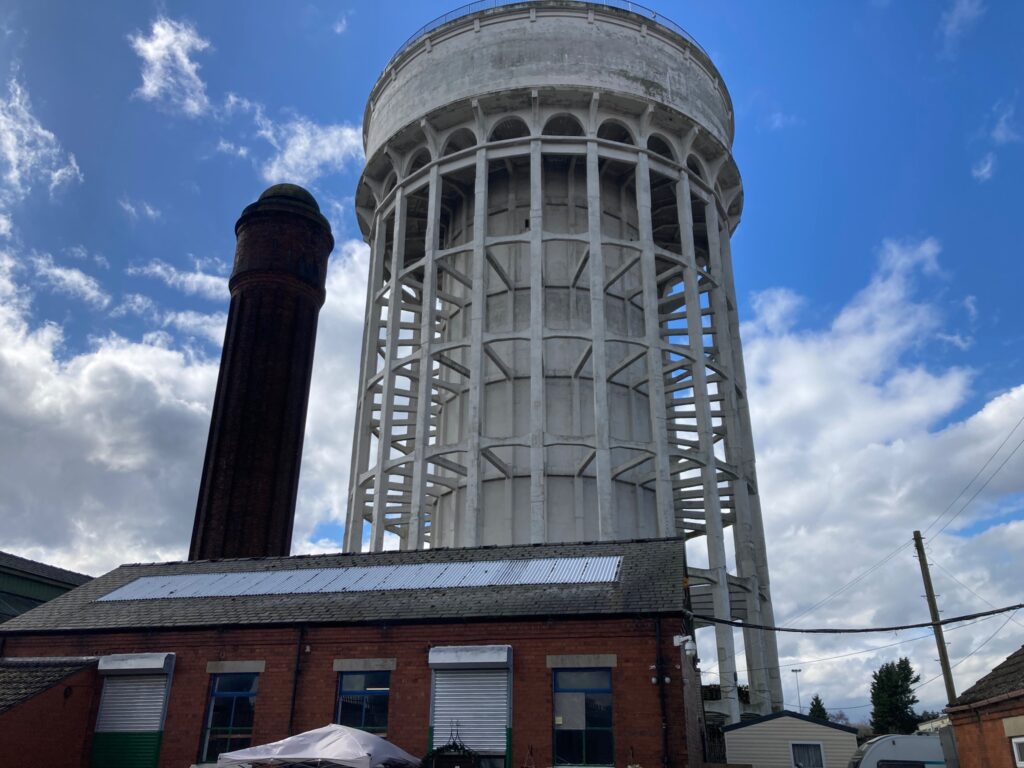
Two centuries on, Goole remains slightly unusual. It’s a place created because of transport and shaped by trade and engineering rather than medieval markets or ancestral estates. The town’s grid layout, dockside character and industrial heritage all trace back to decisions made in 1826 by a canal company focused on efficiency and profit. As well as the iconic twin water towers (known as ‘the salt and pepper pots’), there’s a clock tower built 100 years ago to celebrate the town’s centenary.
Ten years ago Terence Smith made national headlines when he became Goole’s Mayor at the tender age of 19 and, in doing so, became the UK’s youngest ever elected mayor. These days he works as Hull East MP Karl Turner’s senior parliamentary research assistant but he remains fiercely proud of his Goole roots. He said: “Goole isn’t just where I grew up, it’s the place that shaped the person I am today and gave me a sense of belonging from an early age. Some of my happiest memories were made here and, as I’ve grown older, my appreciation for that remarkable town has only become stronger.
“Goole has a rich history that runs through every part of our community. From its proud maritime and industrial heritage to stories passed down through generations, that history gives it an unique identity and a deep sense of pride. It’s something that should be celebrated and protected for future generations.
“If you ask me what makes Goole special, my answer will always be the people. I was fortunate enough to meet so many incredible individuals who give their time, support their neighbours and work tirelessly to make the town a better place. Their community spirit, resilience and compassion are what make Goole more than just a town, they make it a family.”
Angus Young

Artist Lucy Brooke, of the Feminine Urge Collective, heads into the Museum Quarter to highlight a wall you may not be familiar with.

Artist and analogue advocate Stewart Baxter talks us through the reasons why and how he arrives at his creative decisions.

Is yet another beautiful Hull building being left rot ahead of demolition? Our derelict heritage correspondent Angus Young hopes not.
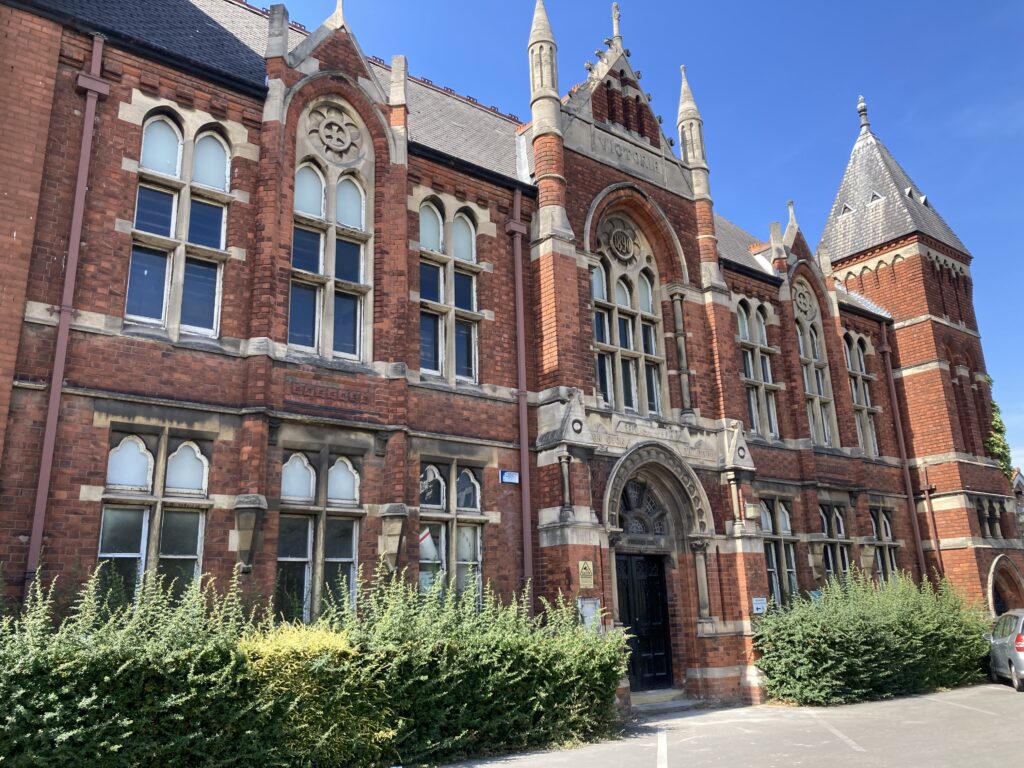
What would Victorian architect Samuel Musgrave make of his elegant buildings today? For a start, he might wonder how and why many of them are no longer around.
St. Silas’s Anglican Church in Barmston Street was consecrated in 1871 and held regular services until 1967. It was demolished two years later. Home Bay in Madeley Street opened in 1880 as the Refuge for Aged Fishermen and their Widows. It was later known as Madeley Chambers but eventually disappeared in the early 1980s as part of a wider clearance programme to make way for the new-look A63 dual carriageway. Musgrave’s extensions to the Sculcoates Union Workhouse in Beverley Road were added in 1883. They included new school buildings, staff accommodation and four domed towers. Older readers might remember it as Kingston General Hospital which was finally demolished in 2002 to make way for a new school.
However, others have survived. Had he been around today he would probably chuckle at his 1886 Corn Exchange in Beverley housing a chic department store. He might also approve of his Fish Street Day Schools overlooking Trinity Square now forming part of the neighbouring Old Grammar School Museum. And he would be very pleased that his United Reformed Church in Hornsea is not only still standing but remains a place of worship just as he envisaged in his 1872 design.
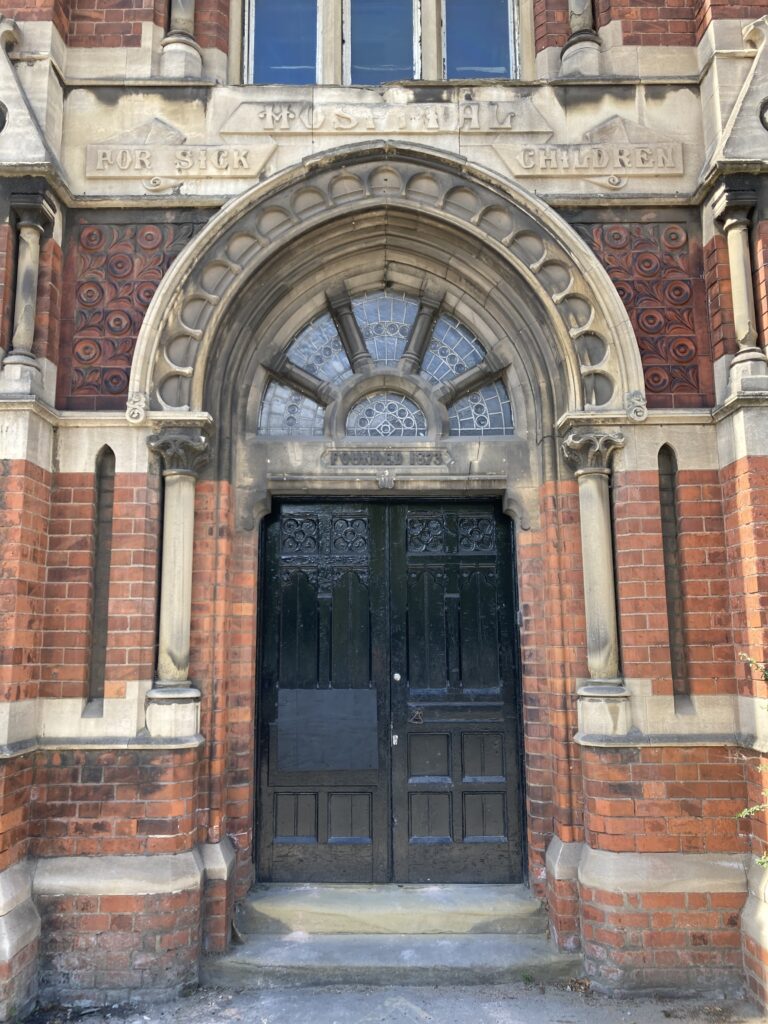
As for his extraordinary Gothic landmark in Hull’s Park Street, like the rest of us Musgrave might be wondering what is actually going on.
His original 1891 design for the Victoria Hospital for Sick Children includes many familiar features – towers, pinnacles and a large, flamboyant main entrance door. It could easily double as Harry Potter’s Hogwarts School of Witchcraft and Wizardry. A larger extension was added in 1920, requiring the demolition of one of the main towers on Musgrave’s original building. It operated as a hospital until 1967 when patient care was transferred to Hull Royal Infirmary but various health services remained based at some parts of the site until 2020.
After being sold, the Humber Teaching NHS Foundation Trust said farewell to their former home. “The building – though maintaining its beauty in the way of an impressive staircase, colourful tiling on the floors and magnificent high ceilings – has well and truly seen better days,” said the trust.
So what’s next ? In 2021 planning permission was granted to convert the building into 60 apartments and to build a new three to five-storey complex at the site to add another 65 residential units. Since then very little has happened.
The wider site – previously known as Victoria House in its NHS days – is owned by property developer James Ledger who has previously converted a number of historic buildings into residential use, including the former Charterhouse school, James Reckitt Library and the Winding House on Victoria Dock. Whether he still intends to go-ahead with the ambitious facelift project in Park Street or sell the site is unknown. We asked for an update but, as yet, have not received a reply.
Having stood largely empty for the best part of a decade, let’s hope someone can help bring a new lease of life to Samuel Musgrave’s masterpiece.
Angus Young