
Emily is part of the Feminine Urge Collective and has an eclectic taste in films, as this one proves.

Emily is part of the Feminine Urge Collective and has an eclectic taste in films, as this one proves.

Northern PMs are nothing new, as our political premier correspondent Angus Young reports, but few were top dog as long ago or far away as this one.

In case you have noticed it, we’ve now got a Northern Prime Minister. Andy Burnham was born in Aintree in Liverpool and, until his recent elevation, was best known for being Mayor of Greater Manchester for the last nine years. Not since Harold Wilson has the Westminster lobby made so many jokes about flat caps and whippets.
Of course, Hull’s own John Prescott came close to being Prime Minister when he served as Tony Blair’s deputy. However, despite often being portrayed as a non-nonsense straight-talking Northerner, Prezza actually hailed from Prestatyn in Wales.
So who was the son of Hull who made it all the way up the political ladder to become a Prime Minister?
The answer to this very good pub quiz question is Sir John Hall. Never heard of him? There are probably two good reasons for that. For a start, Hall was born in Hull just over 200 years ago so he’s not exactly still on the tips of everyone‘s tongues in the city. Secondly, his political career took off on the other side of the world.
Hall was born in St. Mary’s parish of Hull in 1824 , the third son of a Navy captain called George Hall who had become a prominent shipowner. His father would later become Warden at Trinity House. Young John was initially sent to a boys’ boarding school in North Ferriby run by Presbyterians who refused to conform to the Church of England It seems the Hall family weren’t short of a bob or two because he was later sent to school in Switzerland at the age of ten and then continued his education in Hamburg and Paris.
He returned to England to work in London for a German shipping agent before joining the General Post Office but later decided to emigrate to New Zealand at the age of 27. The move was said to be triggered by a book he had read on sheep farming and job opportunities offered by officials in the Canterbury region, which encouraged immigration from Britain and Ireland. John persuaded two of his brothers to join him and they eventually established a large sheep farming business.
In his new home, he also became active in local politics in Christchurch, becoming a local councillor before being elected as a Member of Parliament in 1850. He found time to return to Hull in 1860 for a couple of years, marrying the sister-in-law of one of his brothers at Holy Trinity Church. The bride’s father was an attorney who also owned the Duke of Cumberland pub in Cottingham.
In 1879 he became New Zealand’s Prime Minister, holding the position for three years. He was knighted at the end of his time in office and briefly retired from politics only to return as an MP in 1887.
In New Zealand, he remains best known as a champion for the women’ s suffrage movement, personally presenting a petition to the country’s parliament in 1893. Sir John made a great spectacle of it, bringing the petition written on a continuous sheet of paper in a wheelbarrow into the main chamber before theatrically unrolling it down a central aisle until it thumped into a wall. He later steered the bill through parliament, making New Zealand the first country in the world to give women the vote.

Actor Jess Morley has a particular, personal reason why she likes to chip in at this Hull charity.

You may have seen the show at Freedom Festival last week. Here are Ruby and Lottie of The Herd explaining what it is.

Will works for Rix Petroleum in Hull and does his best to keep everyone safe.

It may appear to be just some fields of grass, but the meadows are essential ecological spaces which need protection, as our greenbelt governance correspondent Angus Young reports.
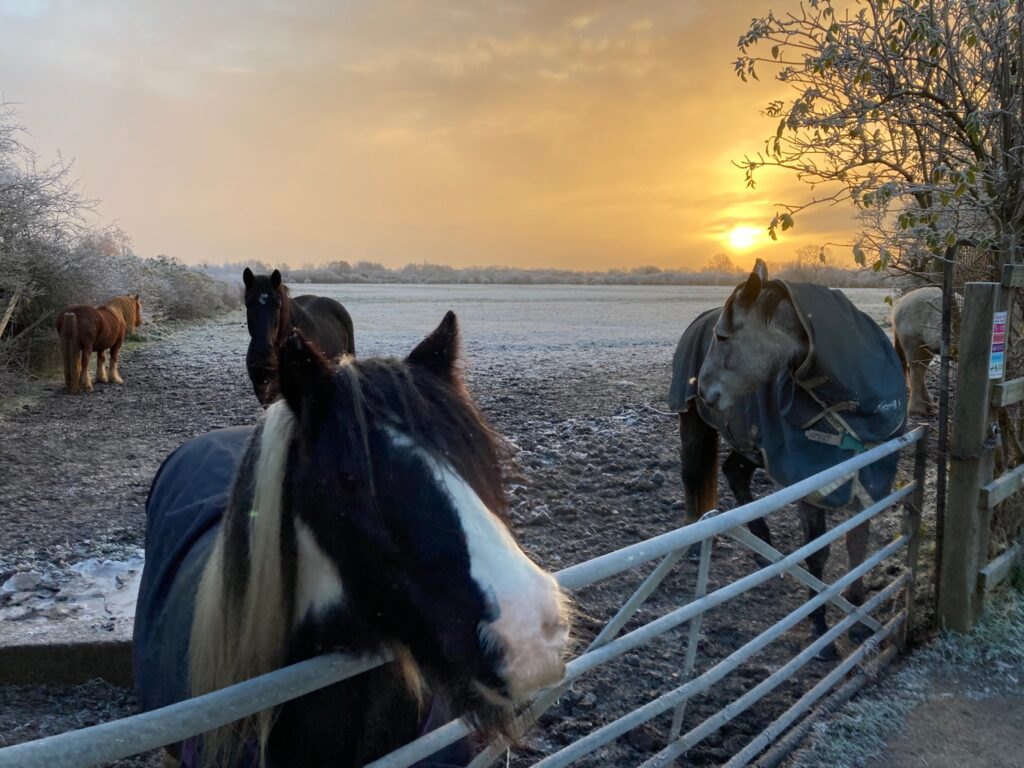
The fields lying either side of Priory Road act as a green boundary between Hull and Cottingham. They also happen to be almost the only surviving relic of the neutral grasslands that once covered the River Hull valley before the arrival of 20th century chemicals-based intensive agriculture. If you are wondering what a neutral grassland is then read on. (Also read on if you’re not – Ed)
According to the Hull Biodiversity Action Plan, the qualifying criteria appears to be somewhere that has not been treated with herbicides or artificial fertilisers. The Plan notes such unimproved semi-natural grasslands in Hull are rare and the best ones can be found on the pastures at Priory Meadows and Snuff Mill fields which have been traditionally maintained for over a century. In that period, the only incursions have been the construction of the Humberside Police HQ, two semi-detached houses standing opposite in splendid isolation and, more recently, the Priory Woods cemetery.
Despite the recent prolonged dry spell, it’s mainly a wet grassland peppered with hollows, ponds and ditches that provide important breeding grounds for frogs and newts and feeding grounds for kestrels and barn owls. They also support a rich variety of flowering plants and plant species typically found in unimproved grassland, such as Adder’s Tongue, Cowslip and Pepper Saxifrage.
Rohan Lewis, who carries out local plant surveys for the Botanical Society, visited Priory Meadows earlier this summer. He said: “I was astounded not only by the colours – the purple of the Knapweed, the blue of Devil’s-Bit, the yellows of Cinquefoil and Meadow Buttercup – but also by the presence of plants like Meadow-Rue, Pepper-Saxifrage and Betony, whose nearest sites otherwise are mostly in the floodplain of the River Derwent.”
However, he was less impressed by the impact of grazing horses which are kept on the grasslands. “All this land is owned by Hull City Council and though not technically greenbelt land, it has been preserved from development and leased out for grazing, mainly by horses. Unfortunately some tenants have shown little regard for anything but the opportunity to graze as many horses as possible. Some of the fields are now nibbled almost bare and Green-Winged Orchids, which used to occur there, have not been seen for years.”
Happily, there’s a new push to manage some of the Meadows in a more eco-friendly way. A new community interest company has recently taken on a new lease from the city council covering 11 fields. It hopes to restore hedges and clear encroaching scrub from some of the fields as well as creating more public access and reducing grazing on three fields to the west of Priory Road.
Rohan added: “Members of Hull Natural History Society have been out this month performing an in-depth botanical survey on the fields covered by the lease. This data is being fed back to Natural England and will hopefully lead to the award of grant money to Priory Meadows CIC so that the improved management can get underway.”

This question was asked at the Big Malarkey by Miyah, aged 9 , of HU7. So we went and found out.

Sophie, from the Daisy Appeal (and a couple of her scientist chums) outline how schools across our region can enter this amazing competition.

It’s all well and good to remember bin day, but what happens after you’ve put them out for collection? Our refuse destination correspondent went and found out.
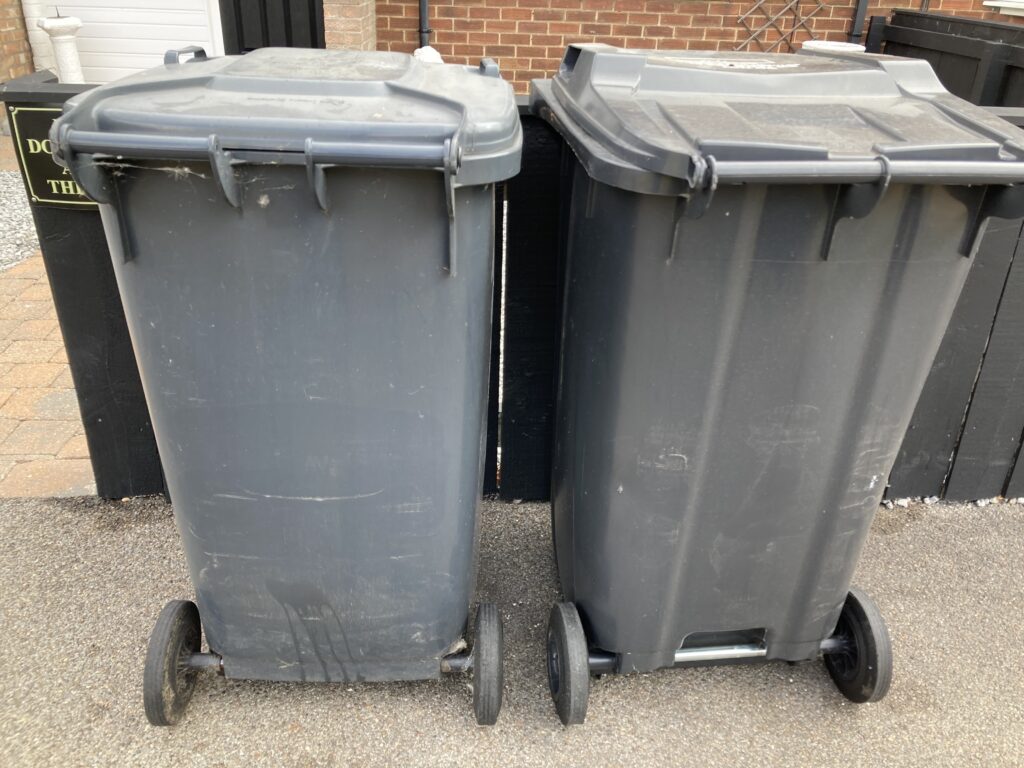
We all do it. It’s bin day so the right bins are wheeled out into position, they’re emptied into the back of a bin lorry and taken away. Once the vehicle is out of sight, it’s the end of our most familiar weekly transaction with Hull City Council.
For most of us, where all that rubbish ends up is of little concern once it’s left the street. So where does it all go from there?
Once upon a time it was all simply dumped in landfill sites. Back in 2006 both local councils in Hull and the East Riding adopted a new joint waste strategy at boosting recycling and composting while reducing the amount of household rubbish going into landfill. The idea was to lift recycling rates above 45 per cent. At the time, it was an ambitious target. Three years earlier, Hull’s recycling rate was just six per cent.
Today the city’s rate is just below 50 per cent – significantly higher than both the regional average across Yorkshire and the national average. Since 2006, the council has developed a network of household waste recycling centres alongside its traditional weekly collection service for all residents and commercial customers. The current system sees the waste we sort into different-coloured bins at home ultimately ending up being used for different things.
Brown bin rubbish – garden and food waste – is sent to Biowise Ltd. in Willerby where it is turned into compost for use in agriculture and horticulture. The contents of blue bins – plastic, metal, glass, paper and card – heads up to Hartlepool where J&B Recycling where items are re-processed back into other products which are then sold to firms across the UK and abroad. Finally, the non-recyclable black bin rubbish, often referred to as residual waste, initially stays in Hull, being delivered to Geminor UK’s facility in St. Mark Street where it is processed and turned into refuse-derived fuel (RDF) for use in energy-from-waste plants.
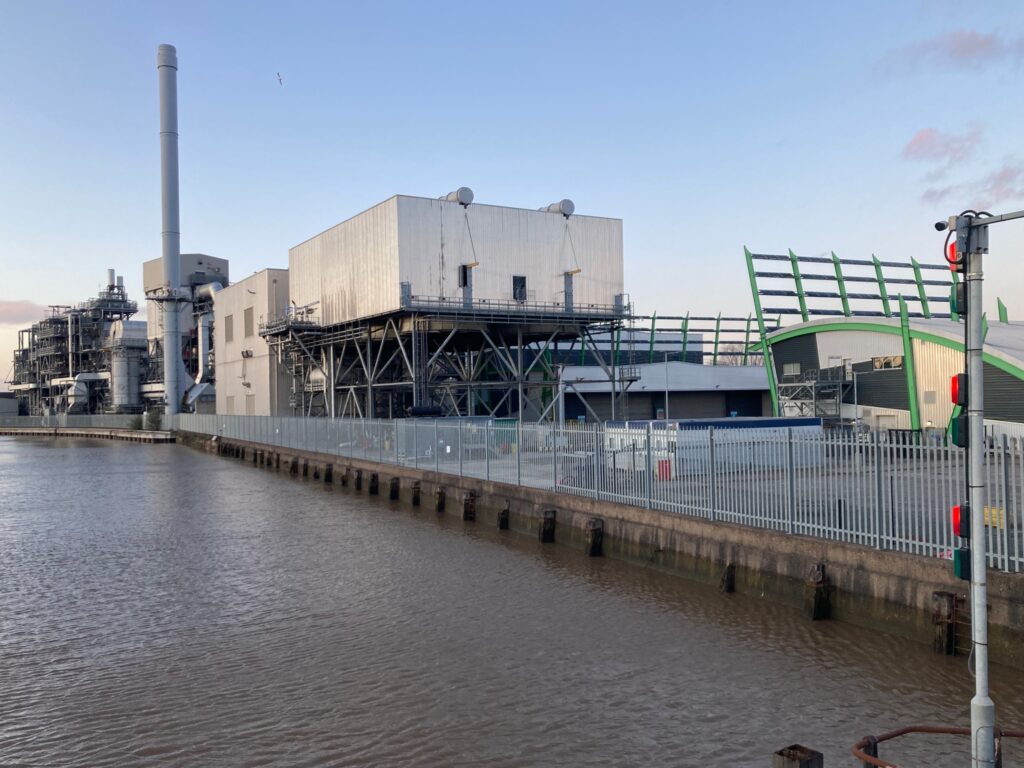
The original destination for this RDF was meant to be the nearby Energy Works complex in Cleveland Street but technical problems at the facility forced a re-think and Geminor has recently upgraded its processing plant with a new RDF baling and wrapping production line. This has taken the site’s annual capacity up to 150,000 tonnes and now sees waste being sorted, shredded, magnetically separated, baled and packaged before being transported to customers in the UK and loaded onto bull carrier ships at Albert Dock in Hull for export to Nordic countries.
So remember the next time you chuck something in your black bin, it’s highly likely that it will end up powering an energy plant in Sweden. However, your black bin rubbish could soon be doing the same thing much closer to home as Energy Works is set to re-open soon under new owners and operators.
Now that’s what I call recycling in your back yard.
Angus Young

Design journalist and East Hull lass Leanne Cloudsdale selects a West Hull classic for personal reasons.