
Once a significant industrial and residential area of Hull that, as Hull Tour Guide Paul Schofield explains, is now a lost borough.

Once a significant industrial and residential area of Hull that, as Hull Tour Guide Paul Schofield explains, is now a lost borough.

From boats to bogs to B-wing, journo and music writer Phil Ascough has witnessed bands in very odd spots. Here, he recalls just a few.

It’s festival time, with Humber Street Sesh again hitting the high notes last weekend and Freedom Festival soon to follow – between them bringing an array of belting live entertainment to some of the more unlikely venues in and around Hull city centre.
Sesh takes over car parks and crams stages into the quieter corners of the Fruit Market. Freedom will take performances into the galleries and theatres as well as spilling into the streets, playing to the potential of our fantastic public squares and gardens.
I recall spending a large chunk of a Freedom Festival Saturday afternoon in 2013 watching two plays in a garden shed in Queen Victoria Square. The memory set me thinking about the most unusual places I’ve seen a band and, in Hull alone, there are quite a few.
On a church, as it was at the time, on the deck of a ship, in a public loo, and even in Hull Prison. Somewhere there’ll be a clever creative who can add to that list.

The gigs which turned city centre landmarks into makeshift stages were the work of HullBID as part of the build-up to Hull Trinity Festival in 2014.
The centrepiece for the festival was Hull Minster, back in the days when it was Holy Trinity Church. Friday night featured performers including Jody McKenna and Emma Fee inside the building. Saturday’s line-up included Life and Black Delta Movement in Trinity Square, and on Sunday the same stage hosted headliners Toploader, The Talks and Pearl’s Cab Ride among others.
But it was the programme of promotional gigs a week or so before the festival that caught the imagination. Grimsby band Young Jack did a short set on the deck of the Spurn Lightship at its berth in Hull marina. Bud Sugar climbed to the top of the church and a played a few songs on the roof.

Somehow all the members of the Hillbilly Troupe and their sizeable entourage managed to squeeze into the public loos under King Billy’s statue for their show, but they suffered no ill effects from getting up close with the cubicles and urinals.
But my favourite venue off the beaten track remains Hull Prison, for the story behind it and the incredible impact it had on the audience. It was back in 1990 and I was working in Bermuda and had returned to Hull for Christmas eager to catch up on that year’s rising stars of the Adelphi.
Paul Jackson, who knew a great band when he heard one and was never given to hype, had sent me a demo cassette by Tombstone Graffiti. I’ve still got it. Six songs, a bit fuzzy on the old Sony Walkman but, to borrow from the opening track on their Eat Yourself Whole album, a revelation.

By the time I saw them at the Adelphi they’d changed their name to Kingmaker and were working towards that debut album. But they only played four songs, I asked where I could see them again and they said the only gig before I was due to fly off would be in Hull Prison.
I “broke in” by volunteering as a roadie for Looking for Adam, the support band which featured Curiosity supremo Dave Lee on drums. I also submitted a review to the Yorkshire Post where, in a spell of more than six years before heading to Bermuda, my journalistic duties had included writing rock and pop columns, with a strong focus on the Adelphi and its wealth of wonderful local and touring bands.
The paper duly published the piece on its reviews page, the 10 paragraphs appearing under the “Hull Prison” heading alongside reports from highbrow theatres in Leeds and York.

The gig took place in the young offenders unit with the bands being met by an audience which was simultaneously sullen, stroppy and lairy. Having served their apprenticeships at the Adelphi and far less illustrious establishments, both bands knew the ropes.
The details have faded into the dim and distant past but, according to the review, Looking for Adam won the crowd over by giving away copies of their new single, Sal Paradise. Kingmaker chatted easily with the young inmates and accompanied one of their number through an impromptu rap. It was said there would be a booking waiting for him at the Adelphi on release.
The review concluded: “More bands are being lined up but there are no plans to bring comedians to a place which has enough of its own. Asked by Looking for Adam if they had any questions, one prisoner replied: ‘Can you smuggle me out in that big speaker?’”
Phil Ascough

Hull’s trendiest art gallery have invented a new way to look at art, and it’s catching on across the UK.

We bumped into ace actor (and friend of Curiosity) Jess Morley at Big Malarkey and she had some suggestions for us for feeding the mind.

This sounds like an April Fool gag, but it honestly isn’t. Hippos used to live wild in Hull, insists our unlikely ungulate correspondent Angus Young.
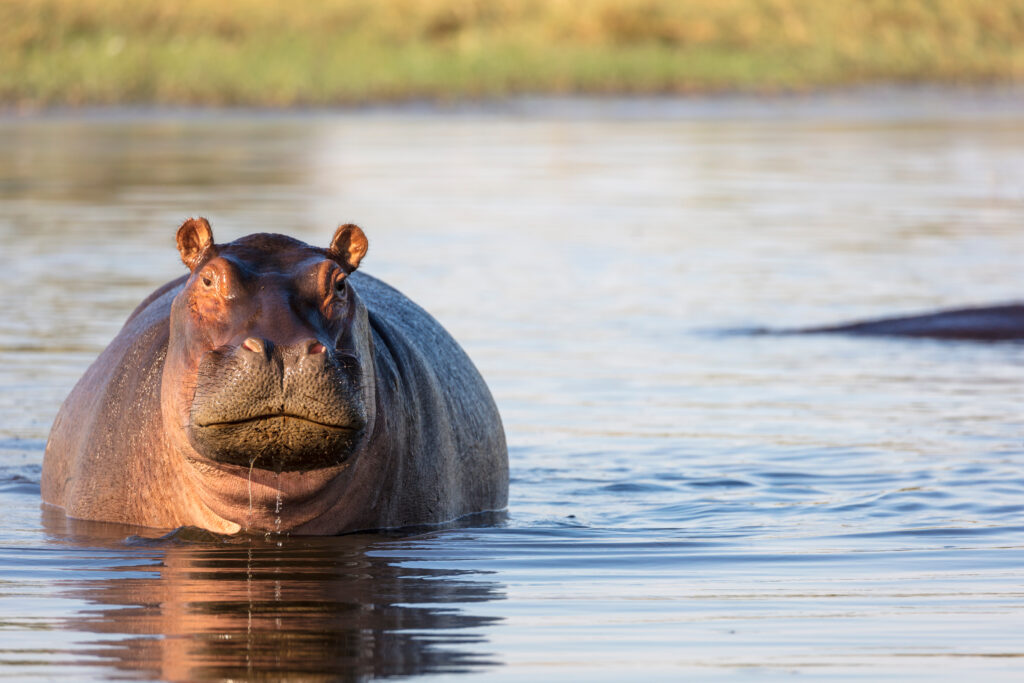
Picture the scene. You’ve taken the kids to the Humber Bridge Country park (Switzy! Ed.) and afterwards you’re all having an ice cream on the Foreshore. Then, as you take in the views across the estuary, a large hippopotamus emerges from the water and starts heading your way. Unlikely? Well, not if you happened to be standing in roughly the same spot about 120,000 years ago.
Back then, hippos roaming about in Hessle were almost certainly a thing. Hull University biologist Dr Africa Gomez says the past existence of hippopotamus in Britain is well documented with fossils found in Wales, across southern England and as far north as Newcastle. “The hippos from the last interglacial period belonged to the same species as today’s African river hippo,” she explained. “They would have likely shared similar behaviour and habitat; they would wallow in slow flowing water during the day in noisy herds and emerge to feed on nearby grassland at night, following well-trodden trails.”
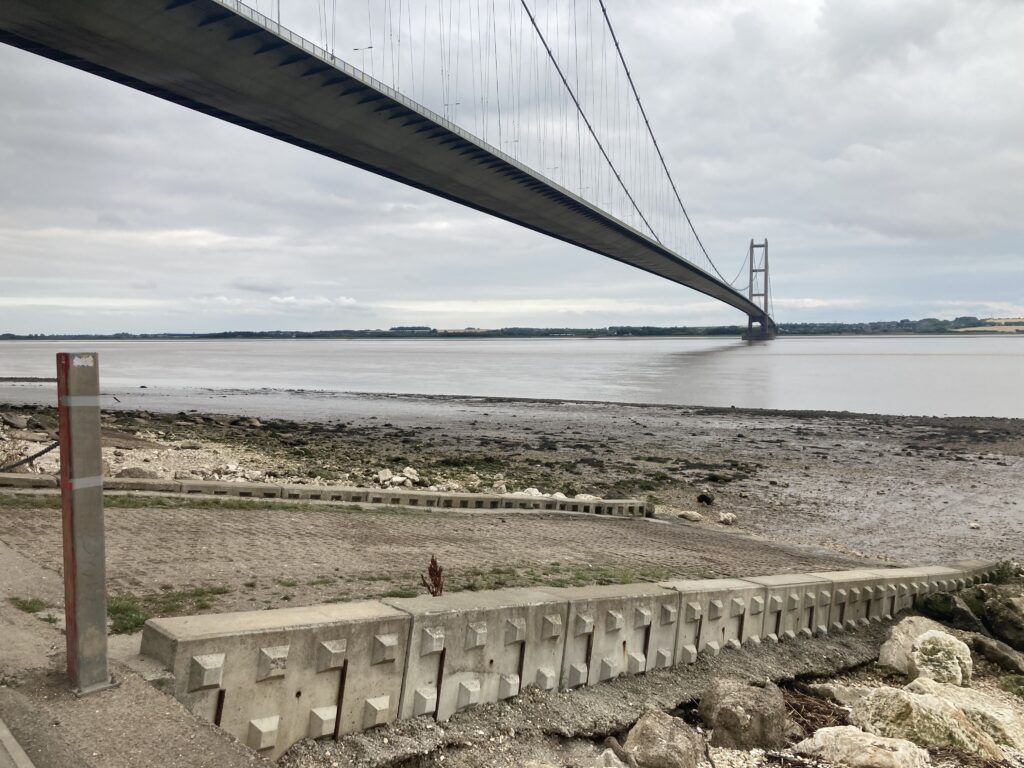
Numerous hippo fossils – mainly teeth – have been found across Yorkshire confirming they lived near all the major river basins in the region, including all the tributaries of the Humber. “The presence of hippo fossils in a site is a good indication of mild winters and a warmer climate than we have today,” said Dr Gomez. “The Humber, with its main tributaries the Ouse and the Trent, would have been a hippo hotspot.”
The main hazard for the Humber hippos would have been avoiding being swept out to sea. At the time, the coastline was much further inland than it is today with chalk cliffs running from Hessle near the Humber Bridge via where Beverley and Driffield now stand before reaching Sewerby near Bridlington.
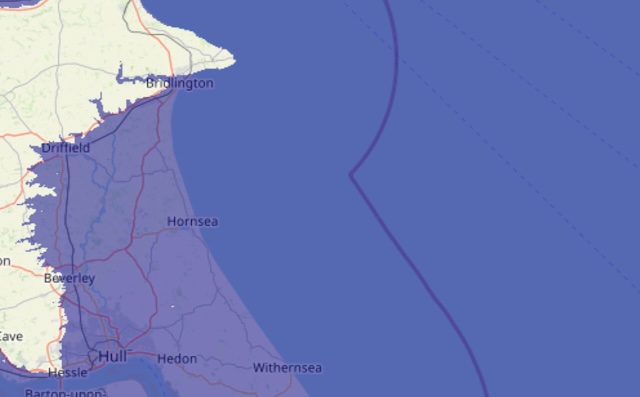
Dr Gomez is so enamoured with the period that she has devised The Last Interglacial Coast Trail on her Wild At Hull blog, a walk in stages following the East Yorkshire coastline as it was back then. Using public rights of way as close as possible to the ancient coast, she’s mapped out eight 10-12 km stages to follow. “The last interglacial is a glimpse of the last time Britain had thriving ecosystems without humans, during a period with a similar climate than today,” she said. “If I could time travel, even for a single day, I’d like to visit the British Ipswichian (named after an excavated site site in Suffolk where interglacial flora was discovered). Time travel is unlikely to happen but researching that period of time, visiting the sites and using our imagination to try and visualise in an informed way how our environment would have looked then is something we can do. This thought gave me the idea for this walk.”
As well as hippos on the Hessle to Cottingham leg of the walk, Dr Gomez also attributes a different contemporary interglacial creature to each subsequent stage. As a result, she catalogues beavers, brown bears, giant elks, narrow-nosed rhinos, straight-tusked elephants, cave hyenas and cave lions, all of them inhabiting the same place we live in today.
Angus Young

Artist Lucy Brooke has a very clever cheat for her favourite street in the city and we heartily approve.

Author and fan of popular music Nick Quantrill heads down De Grey Street to find where a remarkable talent was born.

Director of Humber Street Sesh, Justine, gives us the low down on her highlights.

Some unique reptilian ornaments on a busy Hull road form a mystery our serpentine adornment correspondent Angus Young tries to solve.
Hull Zoological Gardens might have closed in 1861 but its legacy lives on in and around Spring Bank. There are a pair of bear sculptures climbing poles at one end of Albany Street and a small statue of a hippopotamus at the other, a pub called The Polar Bear and a series of paving slabs on Spring Bank itself featuring elephants. All of them are nods to Gardens’ animal attractions but what about a nest of often-overlooked snakes?
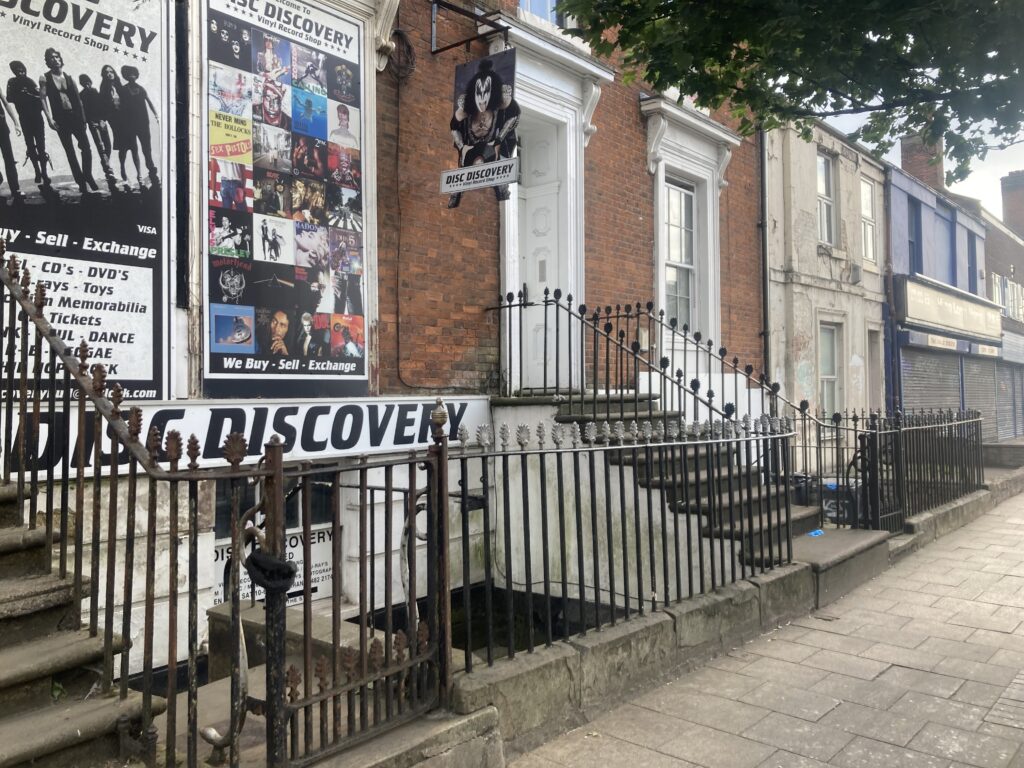
Four eye-catching wrought-iron serpents form part of the railings fronting two town houses in Belgrave Terrace which fronts Spring Bank. The three-storey terrace was built around 1830 and is similar in style and design to those in Albion Street and Jarratt Street. Each house in the terrace has a basement accessible via steps and stone staircases up to each front door. Older readers might recall The Silhouette nightclub being based in one of the town houses in the 1970s and 1980s,
Today, second hand vinyl record shop Disc Discovery has been trading from one of the basements since 1989. So what about the snakes?
It’s not known whether they were included in the original design and it’s slightly odd that they only feature either side of just two of the gated entrances on the terrace. If they are original features, they pre-date the Zoological Gardens by a decade. The pair which lead to Disc Discovery have been painted silver at some point while the neighbouring pair outside of Number 55 are black. A couple have old, presumably abandoned, bike locks are attached to them,
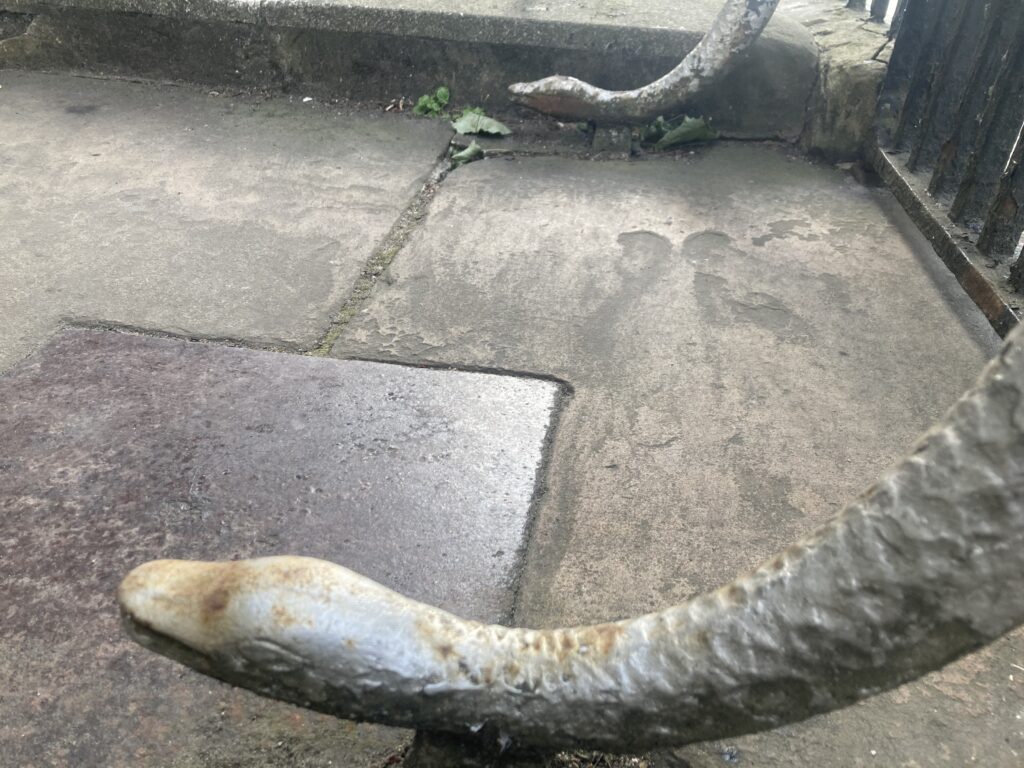
Their proximity to the Gardens might have been an inspiration if they weren’t part of the terrace when it was built but there’s no record of when or even why they appeared or who made them. It’s not even clear whether others might have existed further along the terrace only to disappear at some later date.
What is known is children’s author Amy Walton was born at Number 55 in 1849. She was the daughter of the Rev. John Deck, vicar at the nearby St. Stephen’s Church, and her best-selling novels, written under the name Mrs O.F. Walton, included Christie’s Old Organ, Little Dot and A Peep Behind The Scenes. She later lived in Park Street but after marrying Octavius Walton, who was her father’s curate, she moved to Jerusalem where her new husband took charge of a ministry on Mount Zion.
Were the serpents part of Amy’s childhood? It’s likely they were. As a decorative feature, they form part of an official Grade II listing which includes both Nos. 53 and 55 as well as the external railings. Unlike others in the terrace, the two properties retain most of their original external features.
As far as I’m aware, the surviving snakes are unique. However, why they were commissioned in the first place remains something of a mystery.

Quizmaster Ally-mai put illustrator Ben Rothery through his paces at the Big Malarkey this year.