Where Can You See Fossils In Hull City Centre?

Save the jokes, this is a serious geological article by our geology, biology and paleontology correspondent Angus Young about the prehistoric artefacts to be found littering the centre of Hull.

Fossils in sandstone in Hull city centre. (Shoes model’s own.)

Spare a thought for poor old fossils. First they die, then they hang around embedded in rock for millions of years not bothering anyone in particular and suddenly through no fault of their own they’re turned into fuel which could well end up destroying the planet. Before the climate change apocalypse happens, there’s probably just enough time to see some of the little blighters in their natural state the next time you pop into town.

I’m not talking about casting an eye over the geology section at the Hull and East Museum or taking a trip to Dinostar on Humber Street, although both are worth a visit. Instead, try spotting them hiding in plain sight dotted about the place on decorative stone used to clad numerous buildings you normally pass by without giving a second glance.

Before setting off, it’s probably best to heed the advice of Hull Geological Society members Ron Harrison and Mike Horne who published their own fossil-spotting guide back in 1991. “To attack shop fronts with a bottle of acid and a 2lb geological hammer in the name of science may be regarded as a little anti-social by the police!” The pair suggest taking a magnifying glass instead and warn that curious stares are to be expected from people in the street wondering why you’re examining a wall in microscopic detail.

While many of the shops and businesses have changed since they came up with a suggested two-hour stroll around the city centre, the various stones, fossils, crystals and unusual minerals they identify are still present and correct. The exception is the crystal-filled Larvikite granite used to clad the Burton building in Whitefriargate which was removed as part of the current restoration of the 1930s Art deco landmark. Happily, new Larvikite – known as ’Blue Pearl’ – is being installed after being sourced from the same quarry in Norway where the original was taken nearly a century ago..

Other exotic stones used to decorate buildings in the city centre include red granite from Finland on the Punch Hotel in Queen Victoria Square, Italian marble on Calla cafe bar in Whitefriargate and Italian travertine on McDonald’s in Jameson Street.

As for the fossils, they come in all shapes and tiny sizes. There’s a 350 million-year-old Horsetail in the sandstone steps of the Ferens Art Gallery. Back in the day, the plant formed the forests that dinosaurs lived in. The galley’s predominant Portland stone is also peppered with fossils from the Jurassic period.

Across Queen Victoria Square, the City Hall’s limestone pillars feature Burrow fossils, which are the remains of holes or tunnels once dug into the ground or seabed by animals looking for a place to live. The limestone statues on either side of the hall’s main entrance contain the shells of Bivalves, an aquatic mollusc which first appeared more than 500 years ago.
Probably the most striking display of fossils can be seen in the marble facade of Williamsons solicitors in Lowgate. While most of the marble has unfortunately been covered by advertising signs for the company, you can still see fossilised corals, Crinoids (distant relatives of starfish) and extinct sea sponges called Stromatoporoids within the green and grey-coloured stone.

If you fancy a tougher challenge, try finding a bullet-shaped squid-like Belemnite in one of the bricks of the former Job Centre in Market Place.

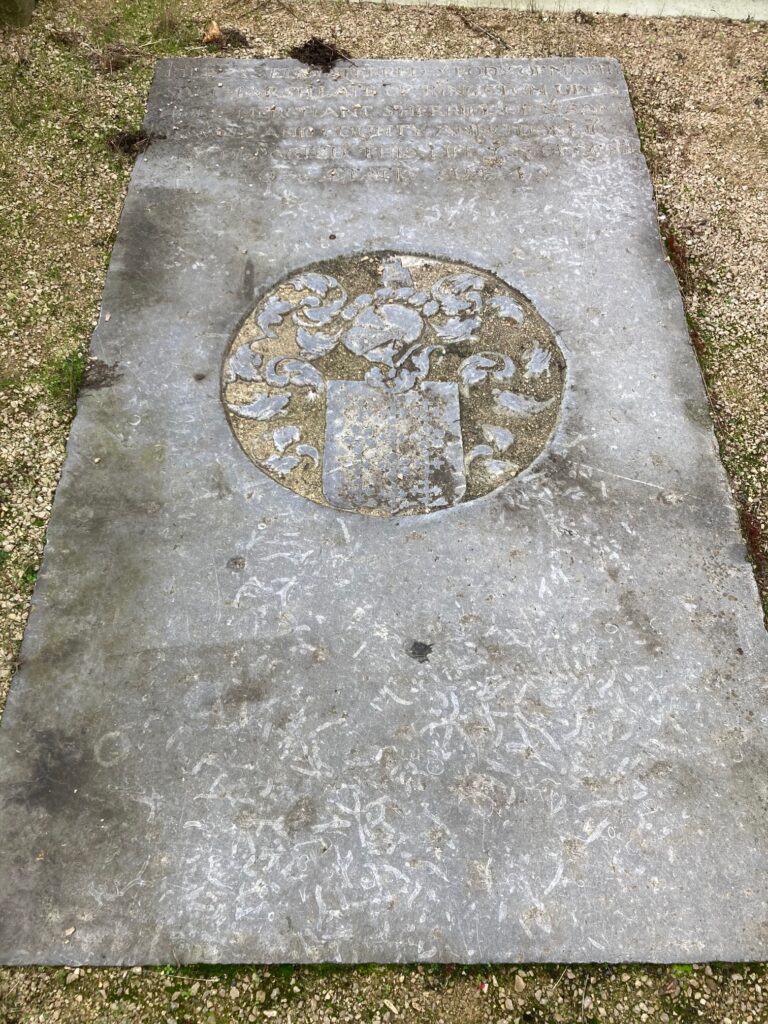
Finally, there are fossils galore inside and outside Hull Minster captured forever in a series of commemorative burial ledgers laid on the floor and made from Carboniferous Tournai marble originally sourced from Belgium.

Angus Young

Why Is There A Tower On Victoria Dock?

It’s a fair question and one which only* Hull Tour Guide Paul Schofield can answer.

*Other people can answer this question but we’re trying to build Paul’s confidence up.

How Do Flamingos Sleep?

A question asked by Florence of HU10 which may have a more surprising answer than you might expect.

Did Bransholme Have A Castle?

There is some evidence to support the theory, so we sent our medieval structures correspondent Angus Young to have a poke around.

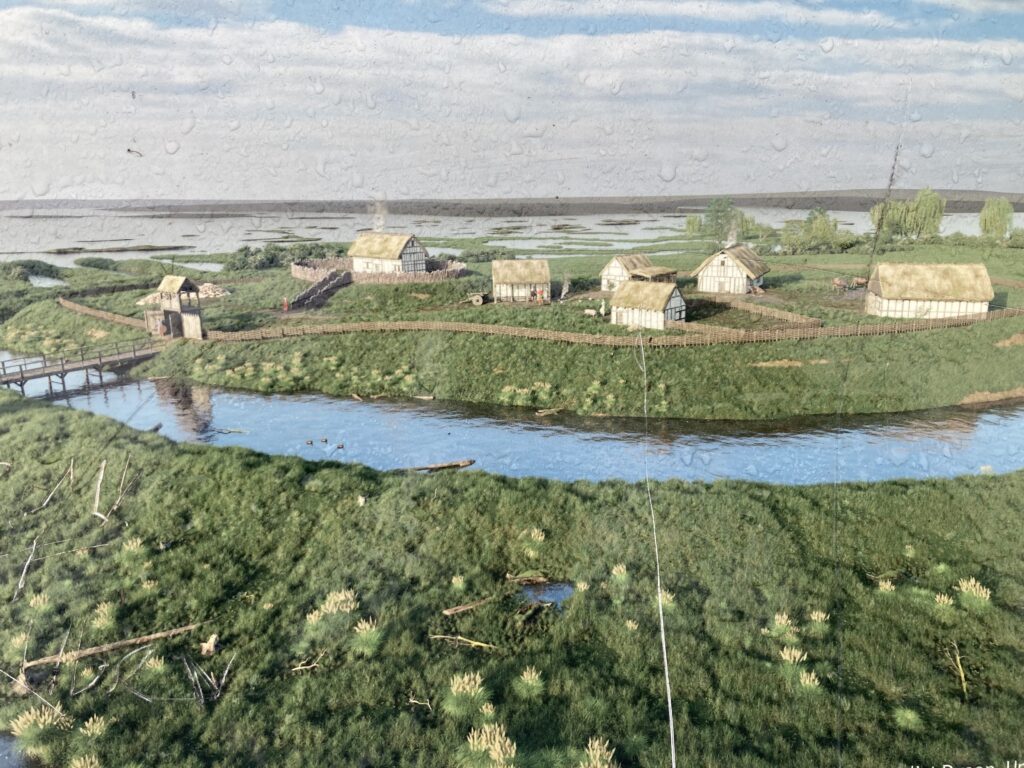
Roughly a mile from the edge of Bransholme and just over two miles from the village of Swine, a tree-covered mound overlooks pancake-flat fields. Mystery surrounds exactly when this man-made raised earthwork was first constructed. Some say it might have been a small Roman outpost, others point to the similarity with the much larger site of Skipsea Castle which is now thought to date back 2,500 to the Iron Age.

What is known through historical documentation is that a castle is first recorded as standing on the oval mound in 1292. However, it wouldn’t have been a huge castle with ramparts, high stone walls and turrets. Instead, the main building would have almost certainly been made from timber and was probably no larger than a modern day detached house.

The mound would also have featured a cluster of adjoining smaller timber buildings including stables, stores, workshops and a small chapel along with accommodation for the servants of whoever lived there. Circled by a timber fence, the mound was also protected by a moat or ditch which can still be traced today on aerial images of the site. The surrounding land was not drained until the later Medieval period so the castle would have sat on an island overlooking marshland.

Its location was no accident either as it lies next to Holderness Drain. Although the drain itself was built in the late 18th century, it replaced a more natural watercourse which provided a key transport route through the swampland – the ancient equivalent of the A63.

Image: Benedict Dyson

A digital reconstruction of how the castle may have looked in this period can now be seen on a new information board installed at the site courtesy of Benedict Dyson, a masters student in digital archaeology at York University who was recently commissioned by the Environment Agency as part of a major flood alleviation project on the surrounding land. The same project has added extra protection in the form of metal kissing gates aimed at restricting access to motorbikes.

Unusually for a Scheduled Ancient Monument, no archaeological excavation has ever been carried out there although amateur treasure hunters have reported numerous finds in nearby fields over the years. The first recorded castle resident is Sir John de Sutton who in 1352 was charged with having built “a castle, crenelated and battlemented at Bransholme, in which (the) castle and houses are one and the same tenement”. The charge was the equivalent of building something today without planning permission but, after some lobbying and the payment of a fine, a licence was granted by King Edward III along with a Royal pardon. It’s likely Sir John’s castle was built as a status symbol rather than for any military or defensive purpose, replacing the previous timber structures with something more robust.

What happened to the castle is not really known. Ownership passed down the family line for a few generations but references to it dry up in local history books to the point where the site eventually becomes known as Mansion Hill, suggesting a large country residence rather than a castle. Even the date when it was last used for human habitation is not known. There’s no surviving stonework above ground, just an overgrown hill and a few trees.

Even so, it’s worth a walk along Castlehill Road out into the open countryside just to soak up the atmosphere of an ancient site right on the city’s doorstep and imagine a time when someone actually called it home.

Angus Young

What is Baby Bounce?

Don’t worry, it isn’t some sort of weird sport. It’s far nicer. Amy Thompson went to East Park Library to for a cuteness overload.