
Teacher and writer Chris Speck asked us if he could tell us about his favourite view in the city, so we happily obliged.

Teacher and writer Chris Speck asked us if he could tell us about his favourite view in the city, so we happily obliged.

Hull Fair has been going for over seven centuries but only moved to Walton Street a mere 136 years ago. Our cub reporter Angus Young finds out why.
On your annual trip to Hull Fair, have you ever wondered how it got to Walton Street in the first place? The answer partly involves a foul-smelling drain, a railway company and the thwarted ambitions of a Victorian developer.

Well before the fair moved to the site in 1888, the western side of Walton Street was already one of Hull’s new working-class neighbourhoods. The man responsible for most of it was James Beeton, the owner of a successful basket and furniture manufacturing company in High Street who, by the late 1850s, was also a significant landowner. Two of his landholdings lay either side of the River Hull, off Holderness Road and Anlaby Road. Both were initially used to grow willow to supply his business with raw materials but as Hull’s population began to boom, Beeton spotted an opportunity and turned them for new housing.
As a leading figure in the Hull, Beverley and East Riding Freehold Land Society, he also wielded a degree of political power as membership of society secured legal voting rights in elections. Beeton named a street after himself in his new Somer’s Town estate in East Hull but went a step further in West Hull by naming the new neighbourhood Beetonville.
Most of Beetonville’s housing, shops and pubs to the west of Walton Street started to take shape in the 1860s, forming a network of terraces reaching Albert Avenue which was laid out from 1874. It even had its own church. Until then, Walton Street had been little more than a country lane between Anlaby Road and the ancient Derringham Bank, what is now known as Spring Bank West.
The lane marked Hull’s old municipal and parliamentary boundary and was bordered by fields and a few farms but Beeton’s new housing changed all that. However, not everyone was pleased with the results. Crowded living conditions and poor drainage led one critic to describe Beetonsville as “a perfect quagmire and a dismal swamp” while an alderman viewed it as a “paradise for frogs”. The problem centred on an old open drain running parallel along the eastern side of Walton Street.
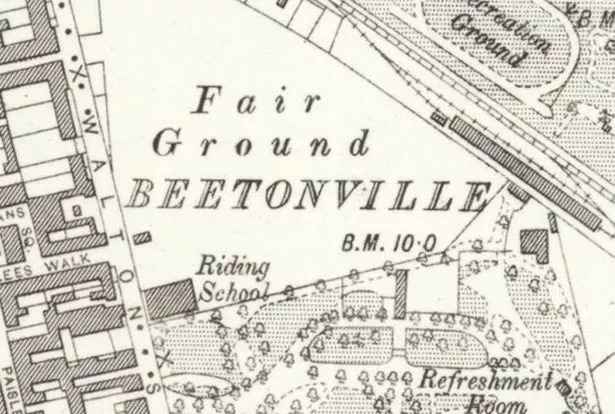
Originally constructed to drain surrounding agricultural land, it soon became an outlet for human effluent from the housing across the road which eventually flowed into a series of ponds created to extract clay to be used for bricks for the new homes. Together with its surviving pig and dairy farms, Beetonville quickly became infamous for its toxic cesspools but they didn’t deter Beeton himself from living there, first in a house called Willow Glen off Walton Street and later in his own grandly-titled Beetonville Hall just off Albert Avenue where a surviving original boundary wall can still be seen today.
The presence of the drain perhaps partly explains why Beeton did not attempt to buy the land on the eastern side of Walton Street to build more houses. However, two other factors were also at play.
Opened in 1846, the Hull to Bridlington railway line formed a boundary to the land in question. Overall, the North Eastern Railway Company owned around 50 acres, which included a sidings yard. Whether Beeton attempted to buy the railway land is not known but it would have been a logical move for a confident house-building developer even with the problematic presence of the open drain. The land’s future was certainly a talking point at the time as the idea of a new recreation ground and public park was aired for the first time in a newspaper article when his vision for Beetonville was already becoming a reality.

As it turned out, ownership of the land finally changed hands in 1878 when Hull Corporation agreed to buy it from the railway company. Beeton had died six years earlier, perhaps frustrated at not being able to expand Beetonville eastwards.
We know little of Beeton’s relations with the Corporation but, as a key figure in the Freehold Land Society, it’s more than likely they did not see eye-to-eye on development issues. Whereas building Beetonville made him a rich man, the Corporation’s vision for the open space across the road was very different.
In 1885 the new 32-acre West Park was officially opened with the remaining land to the north set aside for fairs and visiting shows. Three years later, Hull Fair moved there from its previous home at Corporation Field off Park Street and has been held at Walton Street ever since.
As for Beetonville, nearly all of it was demolished and replaced with council housing in the early 1980s. Only two small terraces and the church’s vicarage remain along with a couple of faded street names on gable ends of buildings on Anlaby Road marking entry points to a largely forgotten neighbourhood.

AT last, your chance to discover not just how to do dye sublimation but also what the heck it is. @burnsy asks the question of the ever-informative Librarian Matt.

Yes, you know, but not everyone does. So Hull Tour Guide Paul Schofield lays out the facts behind the anomaly.

News that the Maritime Museum is on target for re-opening reminded us of Red Guitar Lou Duffy-Howard’s favourite sculpture. She’ll see it again soon.

Cameron from Griffin Primary School asked the question, so we sent the new office lad Kyle to count them all. He was gone absolutely aaaaaages.

We’ve had a lot of people asking what’s going on with various major works and public realm projects so this episode Burnsy welcomes journalist Angus Young (who has had his ear to the ground in Hull for so long he’s got yellow lines painted across his head) to discuss to the current state of affairs.

Best known for her Youtube channel Storytime with Hannah and Patrick, Hannah Levy gives us a list of her favourite picture book writers.

Call me Ishmael! He’s at it again! Our cub reporter Angus Young just can’t help digging up obscure tales of random connections to the city.
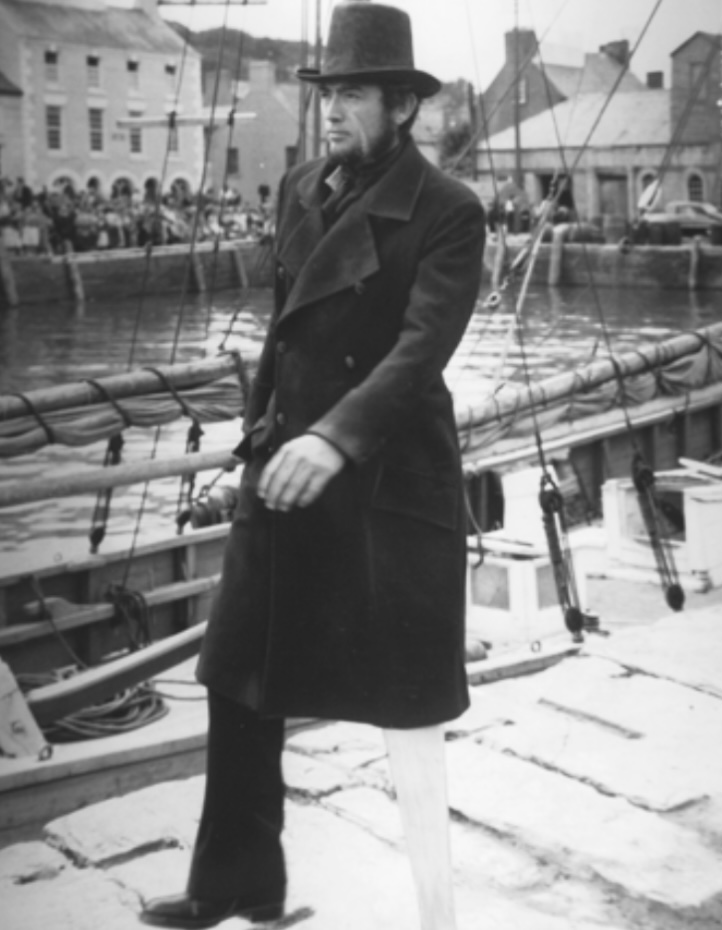
There was a special reason for film fans to flock to Hull’s cinemas in November 1956 to see the latest Hollywood blockbuster Moby Dick. Starring alongside Gregory Peck as the obsessed Captain Ahab in the adaptation of Herman Melville’s famous novel was a very familiar ship. Two years earlier companies at St Andrew’s Dock normally engaged in maintaining Hull’s distant-water steam trawling fleet had been chosen by the film’s director and producer John Huston to help convert a three-masted schooner into Ahab’s whaling ship Pequod. Huston himself would later visit Hull to check on the progress of the work.
Originally built in 1866 in Lancaster and named the Ryelands, the vessel spent most of her working life transporting cargo around the British coast. However, in 1948 she was sold to film company RKO Pictures to be used as Long John Silver’s pirate ship Hispaniola in the Walt Disney adventure film Treasure Island. Treasure Island was a box office hit and Scarborough Council cashed in by purchasing the ship and mooring it at the harbour, converting the lower decks into an aquarium full of tropical fish.
By then, the council had also commissioned a quarter scale replica of the galleon to sail on Scarborough Mere as another visitor attraction. This mini Hispaniola was built in Hull by engineering firm Charles Pearson Ltd. and made its maiden voyage on the Mere in the summer of 1949. In its first summer season, it carried nearly 46,000 passengers to an island in the middle of the Mere where buried plastic doubloons were waiting to be discovered.
A few years later with Huston’s Moby Dick on its production schedule, Elstree Studios bought the Hispanioloa and hired the expertise of the company behind its replica to oversee its conversion from an 18th century English pirate ship into a 19th century American whaler. The resulting refit was extensive and involved a number of specialist firms based at the fish dock and in Hull.
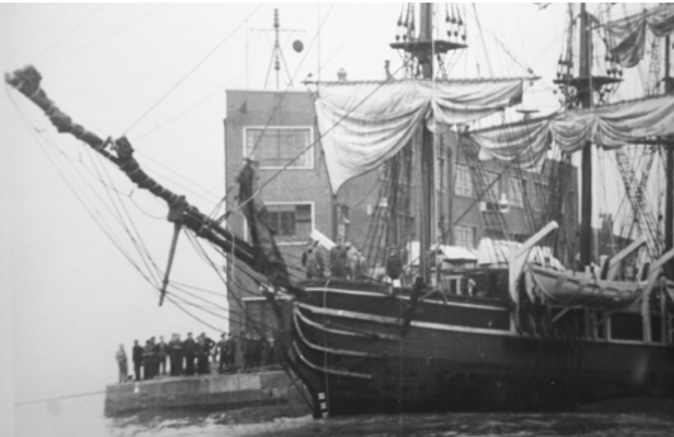
The sails were made by ship chandlers and sail makers E.E. Sharp & Sons whose former premises in High Street is now part of the Sailmaker’s Arms pub. The rigging was made and fitted by Hall’s Barton Ropery which had a factory on St Andrew’s Dock while a team of carpenters and skilled craftsmen from engineering firm Humber-St Andrews not only created an entirely new cork deck for the ship but also designed and made numerous period features. They included the type of small boats used in close-quarters whale-hunting and the ship’s large wooden figurehead reputedly based on a real-life female chief of a 17th century Native American tribe although not the same tribe that gave the ship its name.
Peck’s performance as the Pequod’s captain divided opinion at the time of the Moby Dick’s release but is now regarded, along with the film itself as being the definitive big screen adaption of Melville’s novel.
The ship later appeared as the Sultana in the 1956 TV series The Buccaneers starring Robert Shaw as the captain of a swashbuckling crew of pirates. Four years later the ship was back in the same dock in Lancaster where it had been built after being bought by businessman Peter Latham. It was moved her to Morecambe to operate as a museum.
In 1972 the ship was sadly destroyed by a fire but the story doesn’t quite end there. Back in Scarborough, the Hull-built mini Hispaniola is still taking tourists for pleasure trips having relocated from the Mere to the town’s seafront.

Ask poet Dean Wilson about his favourite street and not only do you get a fun answer, you also get a free poem. Who could want for more?