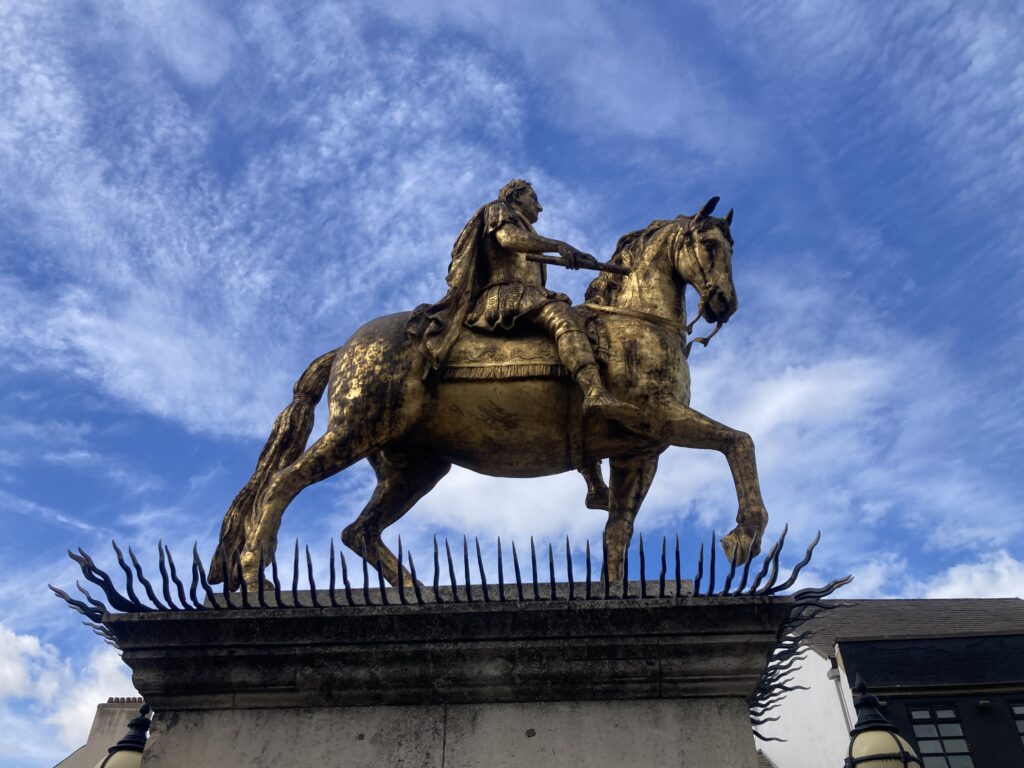
One of Hull’s oldest graveyards has re-opened and, as our cemetery creeping correspondent Angus Young finds, it’s a good place to sit and comtemplate cheese.
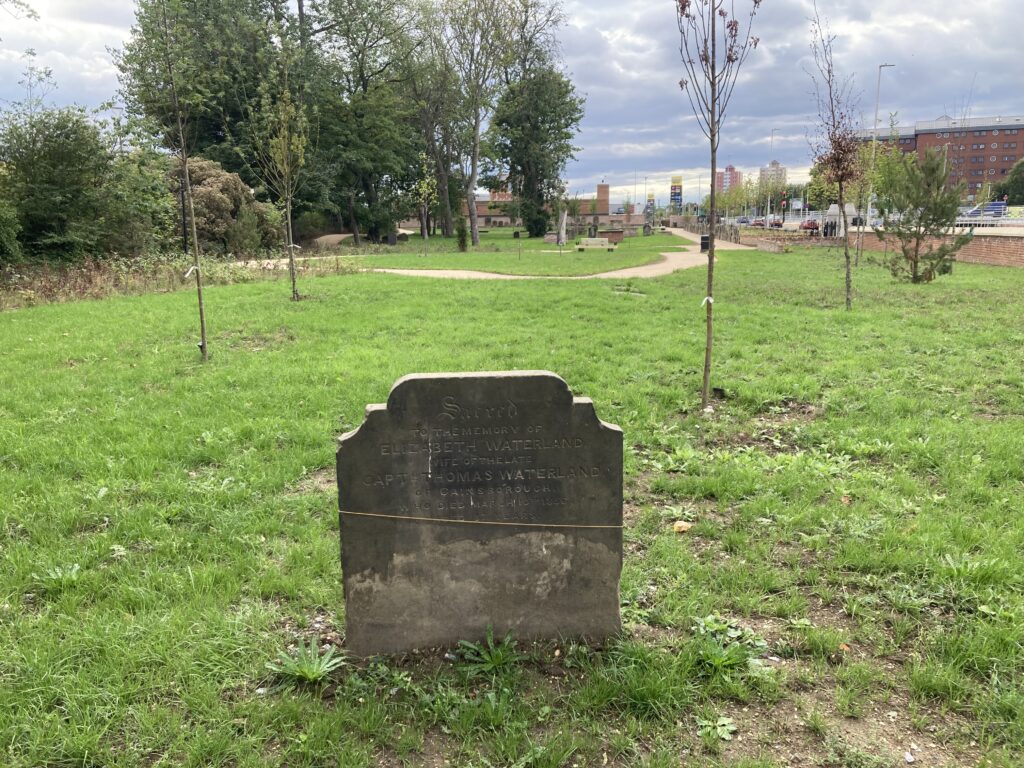
Last year we asked the same question with construction work on the nearby Castle Street underpass nearing completion. Back then, the burial ground squeezed between the A63 and the Holiday Inn car park was still in a bit of a mess. Part of the site had been excavated to make way for a new slip road as part of the £200m National Highways upgrade and was slowly being put back together.
During the excavation, nearly 10,000 bodies were sensitively removed and later re-buried within the grounds, giving archaeologists an unprecedented opportunity to conduct the largest ever study of a post-medieval burial ground in Northern England. As well as providing an insight into the lives and deaths of those buried there between 1783 and 1861, the excavation also discovered the footprints of various buildings dating back to the 13th century.
Now, along with the new-look A63, the re-designed Trinity Burial Ground has re-opened as a public space with landscaping work now completed. Visitors who remember the original layout will immediately notice there are far fewer large mature trees but there are plenty of new ones planted as replacements. Two entrances directly overlooking Castle Street include the original stone pillars which look like they’ve been cleaned up. Each entrance also features impressive new wrought iron gates complete with decorative tridents.
Once inside, it’s initially hard to get your head around the fact that you’re standing in the middle of an historic site. There’s a new boundary wall, freshly-planted saplings, a couple of modern wooden seats and a neatly-finished curving pea gravel footpath. Because the old tree cover has been substantially thinned out, the views across Castle Street are expansive with the Connexion Live arena most prominent.
Instead of attempting to return headstones back to their original positions, a number are now placed alongside the winding footpath. Some are fixed to a low brick wall, others are attached to the side of a new pumping station designed to ensure the nearby underpass doesn’t flood during heavy rainfall. It’s a clever way to display some of the headstones and reading some of them immediately transports you back to another age. Even so, I’m certain there were many more before the excavation work which makes me wonder where the others have ended up.
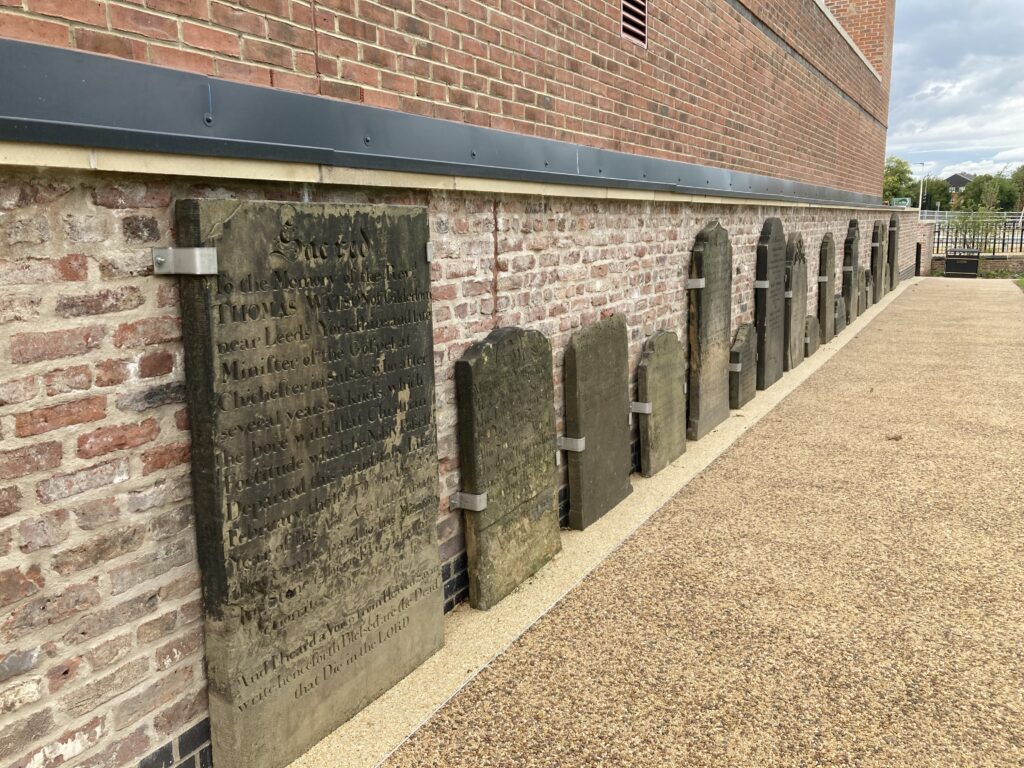
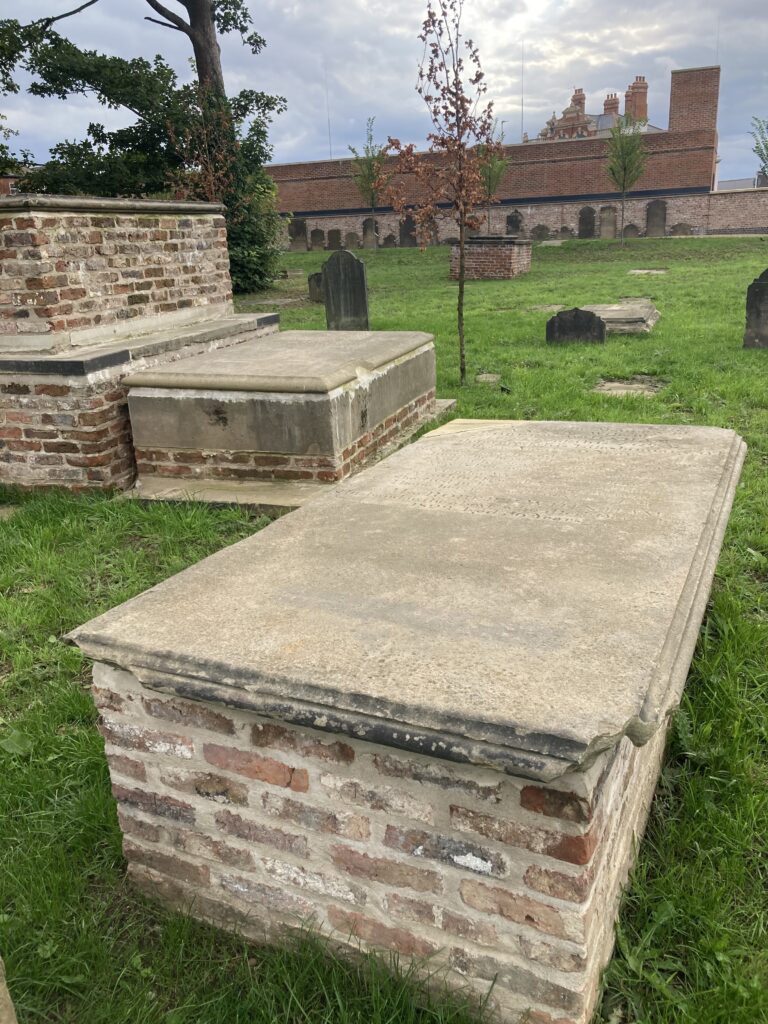
The surviving ones also seem to be a bit random in terms of their condition. Some are still fairly intact and legible, others are now simply jagged lumps of eroded stone. A small number of headstones and larger stones laid flat over family tombs are still scattered across the grassed area of the burial ground.
My eye was drawn to one of the tombs marking the resting place of Hull Master Mariner Richard Gibbon, who died in April 1805 aged 67 years old. As well as his maritime title, the inscription on the tombstone also proudly records his “49 years in the Cheesemongers employ in London”. Perhaps Richard ferried cheese between the two ports for most of his working life. I’d like to think he was successful. The size of his tomb certainly suggests he was.
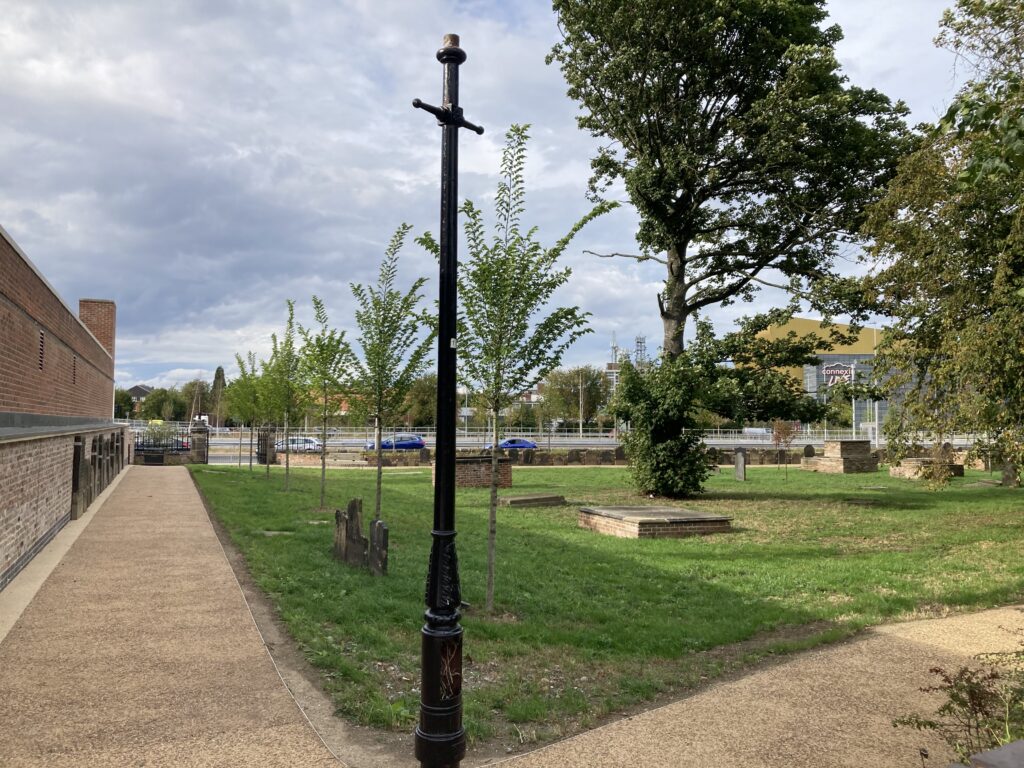
Most of the headstones are clustered at the western end of the burial ground. Curiously, the eastern end hardly has any. When I visited, one of them still had an identity tag attached, presumably an aid for the construction team piecing the site back together. Elsewhere a couple of old lamp posts have been retained albeit without any actual lights in them while some of the wilder undergrowth I remember from the old days has somehow survived next to the boundary with the hotel car park.
Overall, it makes for an interesting detour if you happen to be visiting the nearby Marina or popping in for a pint in the Whittington & Cat pub across the road. However, given its long history stretching back centuries, the site could really do with a few information panels telling its story. At the moment, there’s nothing to explain what lies beneath and you have to visit Hull Minster to see an exhibition of some of the finds discovered during the excavation.
A bit of joined-up thinking linking the two would surely be a sensible step if there’s any cash left in the Castle Street pot.
Angus Young