
When we asked theatre type Andy Pearson this question we didn’t expect him to pick something from his own house. Fair does, though, it is a good one.

When we asked theatre type Andy Pearson this question we didn’t expect him to pick something from his own house. Fair does, though, it is a good one.

Sports writer Tony Collins takes a look at a true worldwide boxing pioneer, who came from Cott.

Jason leads a team at Ideal Heating, so he would seem ideally placed to answer this question.

Here, as our environmental oversight correspondent Angus Young reports, is a new way for you to help sort the planet out.
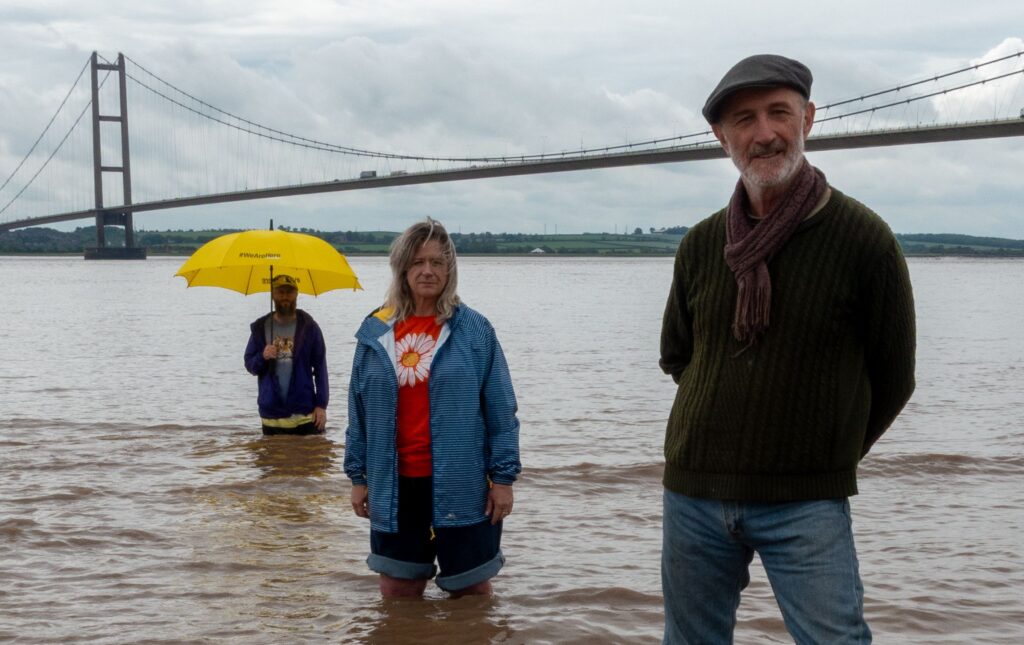
The simple answer to today’s Curiosity question is anyone and everyone. Launched recently, the Rights Community Action project aims to encourage local people to get involved in a citywide response to issues around climate change. Organisers say it’s a chance for ordinary people to be part of the solution by using their passion and local knowledge to help Hull thrive in a changing world. The starting point is simple; people living with climate risk should be involved in decisions that affect them.
Funded by the National Lottery’s Community Fund, the Community Climate Stewards project will run for the next five years with a focus on three areas on the East Coast of England – Hull, Skegness and Lowestoft. Kate Macdonald, joint coordinator of the project in Hull, said that local people know their communities best, so it makes sense to involve them in decisions about their future. “Local people know where flood water gathers in their areas. They know where the green spaces are that need protecting. More than that, they have a stake in their neighbourhoods – it’s where they work and shop and where their children go to school but all too often people think that decision making is out of their control. We want to change that – to recognise that local people are the experts and to show them how they can get involved in these important decisions that are shaping their communities’ futures.”
Louis Dorton, joint coordinator, added: “I love Hull – the land, the people, the rivers. For me this project is about collaboration, across political, economic and even species divides – we all need to be involved in decisions about our future. A lot of us have had our heads in the sand when it comes to floods, droughts, housing, food and all these connected issues. This project is about our right, as the people who live here, to look after the place we call home, building skills and processes to survive, thrive, adapt and be healthy, and to shape the world we want to live in.”
The first opportunity to put this into practice comes as Hull City Council starts a public consultation on its new Local Plan, which intends to set out a long-term vision of how the city will develop and change over the next 15 years, including where new homes, jobs and infrastructure should be located. As part of the consultation, Community Climate Stewards will be encouraging local residents to get involved in not only looking at the big picture but also helping to shape how their local areas can respond to climate change.
One example of this is already taking place in North Bransholme where residents are exploring ideas on how their neighbourhood can adapt to future climate challenges. Affordable low-carbon housing, local food growing and community energy generation are just three ideas being discussed.
Group member Andrew Dorton said: “We really want it to be affordable, and if people are involved in building their own home, that’s one way to lessen the cost. We would also want to incorporate as much electricity generation as possible to make the houses environmentally efficient and just have one area for parking, rather than cars being all over the place.”
The project officially started a couple of days ago and to help local people get involved, the project plans to run a series of community mapping workshops around the city. The first took place on August 8 and 10 at Ground Gallery on Beverley Road, near the city centre, with residents invited to take a walk around the local area and think about and discuss the community’s environmental resources and challenges, share local knowledge and identify priorities for the future.

To answer questions asked by you at the Big Malarkey this year, we gathered experts to sweat it out in the hottest room in Hull.

Kerry is not only a film buff, she’s also a milliner. So who better to deal with this question?

HS2? Hull? The links (quite literally) don’t exist. Or do they? Our speedy transit correspondent Angus Young gets us back on track.

HS2 bills itself as the most significant addition to the UK rail network in over a century. Once open, it will connect London and Birmingham in under an hour and enhance connections to Manchester, Liverpool and Glasgow. So what’s it got to do with Hull ? After all, we’ve been patiently waiting decades for the electrification of the main line in and out of the city and even longer for someone to fix the toilets at Paragon Station. We also happen to be 100 miles away from the actual HS2 route.
However, Hull is playing a significant role in the ongoing construction of the high-speed railway without most people knowing anything about it. That’s partly due to the fact that our contribution to HS2 is tucked away on a remote railway sidings at the far end of a West Hull industrial estate better known as the home of the Aunt Bessie’s Yorkshire pudding factory. The 11.6-acre site at Priory Sidings was last used as a rail freight container terminal in 1987 and has been derelict ever since until relatively recently.
However, now it’s been transformed into a hi-tech rail logistics hub by the UK division of Austrian-based rail group Voestalpine. The old sidings have not only been upgraded but are being re-connected to the main rail network, allowing it to be used to store and assemble specialist track parts up to 70 metres long destined for the HS2 line.
The components being used are manufactured in Germany before being brought to Hull by rail via the Channel Tunnel. Thanks to Brexit, the arrival of EU goods also means the site is officially classed as a Border Control Post. Designed to operate safely and reliably at speeds of up to 320 km per hour, around 180 switches and crossings will be made by Voestalpine for HS2. The company’s contract also includes around 77 rail expansion devices for track on viaducts and bridges and around 70 lower-speed switches and crossings for two rail depots.
Keen to avoid having to transport the track sections by road, Voestalpine spent three years searching for a suitable rail-based site in the UK before settling on Hull. Once assembled at Priory Sidings, the completed sections are sent directly by rail for installation between London and the connection with the West Coast main line at Crewe.
In order to reduce long-term costs and improve performance, the rail track, switches and crossings will be mainly set into concrete slabs instead of the ballast commonly used on the UK rail network. Known as slab track, this system is typically used on metro networks and some international high-speed rail lines to provide a higher frequency of service and less maintenance.
The new logistics hub is going to create 20 jobs when it’s fully up and running which is good news. As for trainspotters keen to see a piece of the action, the nearest viewing spot to see a length of hi-tech HS2 track trundle past is Hessle Station.

Jade Wreathall, of HU7 Hive, takes a look at Holderness House, the former home of Thomas Ferens.

Heather asked us this question at the Big Malarkey this year, so we thought we’d find out by trying to set most Hull world record ever.

Once a significant industrial and residential area of Hull that, as Hull Tour Guide Paul Schofield explains, is now a lost borough.