How Many People Live In Hull?

To save you having to go round and count them all, we sent our cub reporter Angus Young out to find the most accurate answer he could.

We are able to chart Hull’s population back to 1377 but the first records of how many people lived in the town don’t tell the full story. Instead, they only show who was paying a poll tax which required everyone over the age of 14 who was not exempt to pay a groat to the Crown. Inevitably, the poorest inhabitants were excluded from the count. Overall, 2,366 taxpayers were listed in Hull making it the 25th largest town in England. By contrast, Beverley was in 12th spot with 3,994 taxpayers. The 1377 records also established there were 693 tax-paying households in Hull with nearly one in six sufficiently wealthy enough to keep servants.    
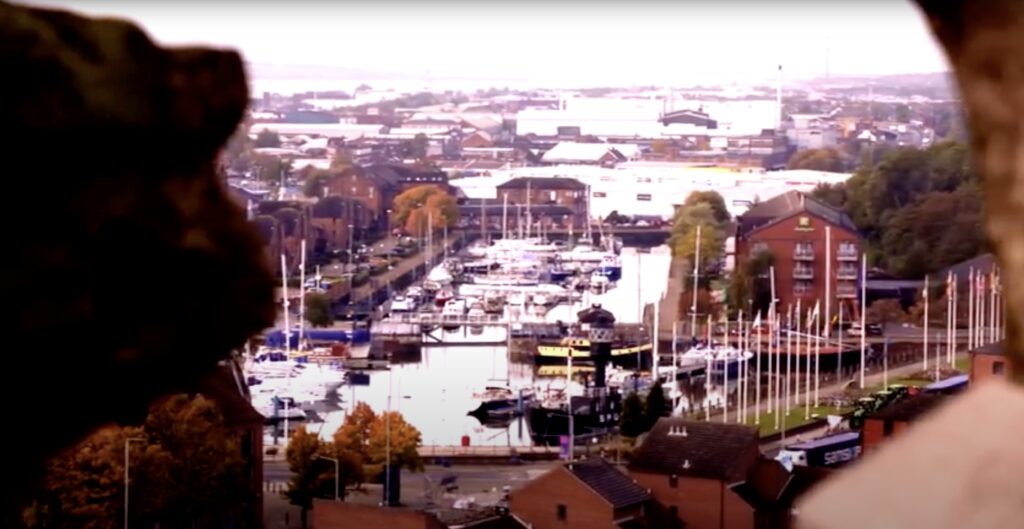
A bit of Hull, yesterday

Medieval headcounts in Hull were also hampered by plague. In 1349 the Black Death is believed to have killed around half of the town’s population while plagues in the late 15th and early 16th centuries featured lockdowns, entire streets being gated off and strangers being banned from entering the town. Things were so bad at one stage that no official town records were kept for two years. Despite this, Hull’s population always recovered and continued to grow.

When Robinson Cruse author Daniel Defoe visited Hull in the early 1720s, he was not only struck by its bustling port but also by how many people were squeezed into such a small place. “The town is exceedingly close built, and should a fire ever be its fate, it might suffer deeply on that account; ‘tis extraordinarily populous, even to an inconvenience, having really no room to extend itself by buildings,” he wrote. At the time, around 7,500 people lived in Hull, hemmed in by the Medieval town walls and the natural boundaries of the Humber estuary and the River Hull with a military fort on its east bank. By then, Hull was booming but, as Defoe had noted, there was physically nowhere to expand.

That all changed in the 1770s when part of the walls were removed to allow for the construction of the town’s first dock which eventually became Queen’s Gardens.

The first Census in 1801 recorded a population of 22,000. By then, plans were in the pipeline to dismantle what was left of the walls and extend the town southwards to the estuary itself by using material excavated to create the dock. 

The industrial revolution and the development of more docks would transform Hull as new areas of housing were developed beyond the Old Town. Free of the constraints of brick walls and water, the city boundaries were extended four times between 1882 and 1935. By the time of the 1901 Census, the city’s population had grown to 236,772.

This remarkable upward trajectory was briefly slowed by the First World War when around 7,000 men from Hull were killed in action.

In the Second World War there were an estimated 1,200 civilian fatalities in addition to military personnel but by 1950 the population was up to 356,138.

The city’s population peaked in 1961 when 368,000 were recorded as living here but then followed four decades of slow but steady decline with families reducing in size and parents increasingly looking to move their children into schools in the neighbouring East Riding. However, over the last two decades Hull’s population has started to grow again.

Between the last two censuses in 2011 and 2021, the population increased by 4.1 per cent to around 267,010 thanks mainly to the development of Kingswood and an influx of people from Poland, Romania and other EU countries.

Angus Young

CuriosityCast Ep.05 Emma Hardy MP

This episode Burnsy welcomes the member of parliament for Hull West & Haltemprice Emma Hardy, who answers questions on politics, parliament and smells.

Watch on this site (Video)
Listen on Spreaker (Audio)

Where Can I Play Chess In Hull?

With the British Chess Championships visiting Hull, we took the opportunity to ask the question Where Can I Play Chess In Hull?

Where Can You See The Oldest Genitals In Hull?

Amongst stiff competition, our cub reporter Angus ‘Scoop’ Young gets to the bottom of the tale.

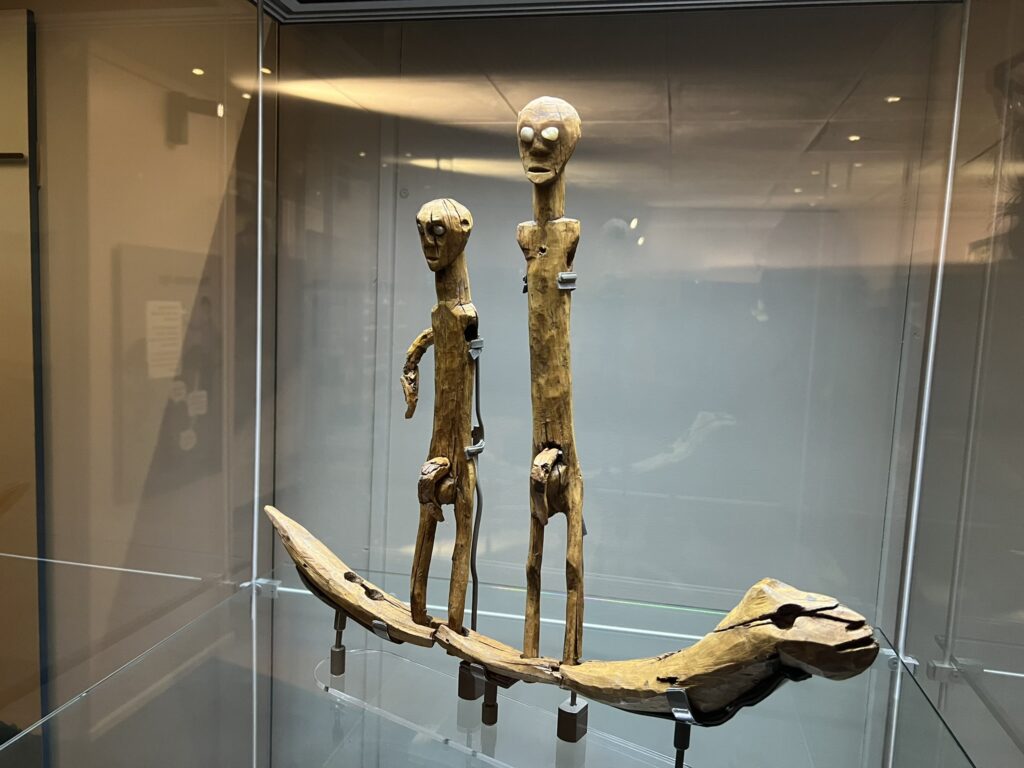
It might not be the question on most peoples’ lips but the answer lies in a dark room off High Street. The next time you visit the Hull and East Riding Museum head for the exhibition space dedicated to the Bronze Age. Housed in a glass cabinet are a a couple of prehistoric penises attached to a group of small but recognisably human figures together with a boat complete with a carved serpent’s head.

Between 35 and 41 cm tall and made from yew, the five wooden figurines were accidentally unearthed by labourers digging a ditch close to Roos, near Withernsea, in Holderness in 1836. Thanks to modern day radio-carbon dating, experts now know they are around 2,600 years old. Clay removed from the ditch had preserved them. Strikingly, the eyes of two of the figures appeared to be made from sparkling rocks, later identified as quartzite. The haul also included various attachments which included tiny wooden shields, paddles and, er, something else.

The finds were brought from Roos to the premises of the Hull Literary and Philosophy Society which had been founded 14 years earlier to promote literature and science among its well-heeled members by hosting exhibitions and a programme of public lectures. When it came to cleaning and restoring the figures, it was evident each one had been made with empty slots for arms as well as similar holes in each groin.

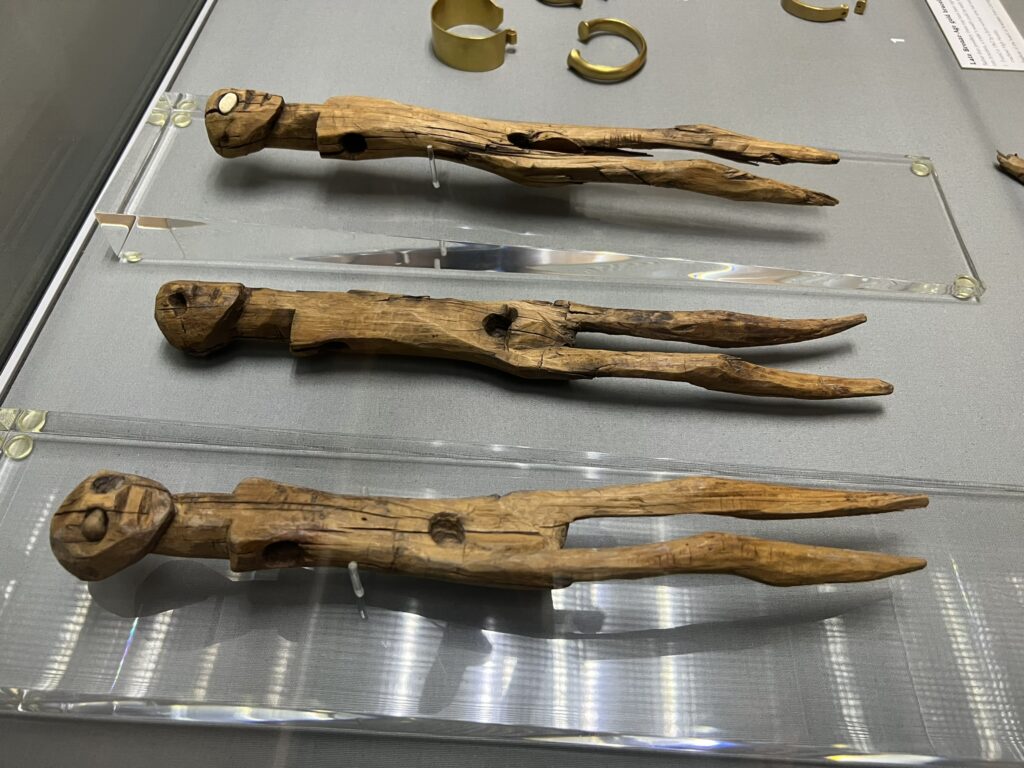
As no obvious wooden arms had been retrieved from the ditch, it soon became clear that some of the items were actually detachable wooden genitals. However, the idea of exhibiting prominent penises proved too much for prudish Victorian sensibilities. Imagine the embarrassment!

Deciding they were too risque for public display, the offending organs were instead glued into the shoulder sockets and passed off as arms, albeit tiny ones. The gaping holes left in the figures’ groins were conveniently ignored for the next 150 years until a reappraisal of the finds was carried out when it was decided to return the private parts to their rightful locations.

The conservation work not only removed the Victorian glue and varnish but also provided experts with an opportunity to study the figures in closer detail. They established subtle differences, not just in height and girth but in the fact that some had nostrils and others didn’t. It was also concluded a second boat must have been originally buried as the surviving one only had space for four of the five figures retrieved from the clay.

What were they for? Archaeologists now believe their burial spot was a sacred site where offerings could be made, perhaps to ancient gods or ancestors. Even their detachable genitals are now thought to have been a way of making the figures male or female at any one time, reflecting the shape-shifting myths surrounding the Norse god Odin. The type of clay also suggests the site was once near a watercourse and this tallies with similar finds across Europe where seemingly important items from the period have been deliberately deposited in rivers, marshes and marshland.

Now known as the Roos Carr figures, they are not unique with nine other similar surviving examples in Britain and Ireland. They range in date from 2,500BC to 148BC and are made from different woods – ash, pine, yew or oak. Some are definitely male while others, like our crew, have removable genitalia and could be male or female. Only one in Scotland is unambiguously female.

Two years ago East Yorkshire’s most historic bits and bobs finally made the national spotlight when the Roos Carr figures were loaned to the British Museum as part of an exhibition on the era of Stonehenge.

by Angus Young